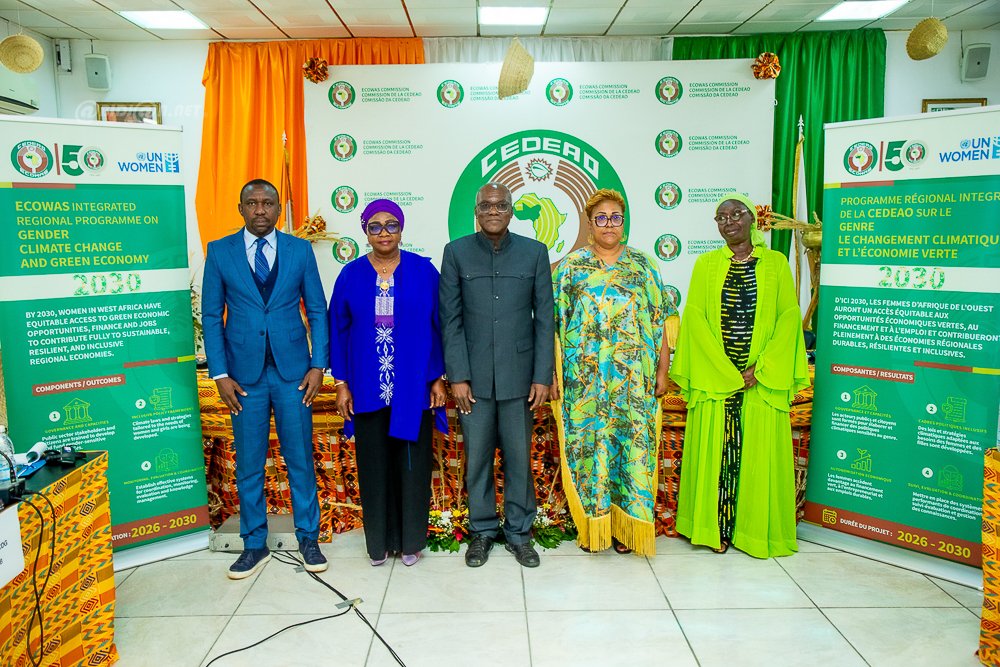
West Africa unites to integrate gender into climate resilience strategies
The Economic Community of West African States (CEDEAO) has convened a pivotal two-day regional workshop in Abidjan, Côte d’Ivoire, focusing on gender equality, climate change, and the green economy. The event brings together policymakers, regional institutions, and technical partners to address the urgent challenges of ecological transition in West Africa.
Organized by the ECOWAS Centre for Gender Development (CCDG) in partnership with UN Women, the workshop centers on the theme “Gender-responsive climate action and green transitions in West Africa.” Its primary goal is to lay the groundwork for a unified regional program that enhances women’s participation in environmental policies and green economic opportunities.
During the opening session, CCDG Director Sandra Oulaté emphasized the critical need for inclusive approaches to tackle climate impacts across the subregion. She highlighted that women—particularly in rural and agricultural sectors—are disproportionately affected by climate disruptions, facing greater vulnerability to droughts, land degradation, and resource scarcity.
The proposed 2030 regional initiative aims to bridge gaps in women’s access to green financing, sustainable employment, and leadership roles in environmental decision-making processes.
Representing the Ivorian delegation, Louis-Philippe Boni, Deputy Minister for African Integration, commended Côte d’Ivoire’s strides in gender and environmental policies, citing reforestation efforts, energy transition programs, and initiatives to boost women’s representation in leadership.
He also urged strengthened collaboration among CEDEAO member states to improve women’s access to green financing mechanisms and amplify their contributions to regional climate strategies.
By the workshop’s conclusion, participants will finalize key priorities for the regional program, including funding allocations, operational frameworks, and a multi-year implementation roadmap.
Dr. Namizata Binaté, representing Côte d’Ivoire’s Ministry of Women, Family, and Children, underscored the disproportionate impact of climate-induced disasters—such as floods and land degradation—on rural women. She advocated for greater inclusion of women in climate policy decision-making bodies to ensure their needs and perspectives are prioritized.
Echoing this sentiment, Dr. Kalilou Sylla, ECOWAS Commissioner for Economic Affairs and Agriculture, stressed the vital role women play in West Africa’s agricultural economy—despite systemic barriers to productive resources and financial services. He framed gender equality as a cornerstone for building climate-resilient economies across the region.
Comments are closed, but trackbacks and pingbacks are open.