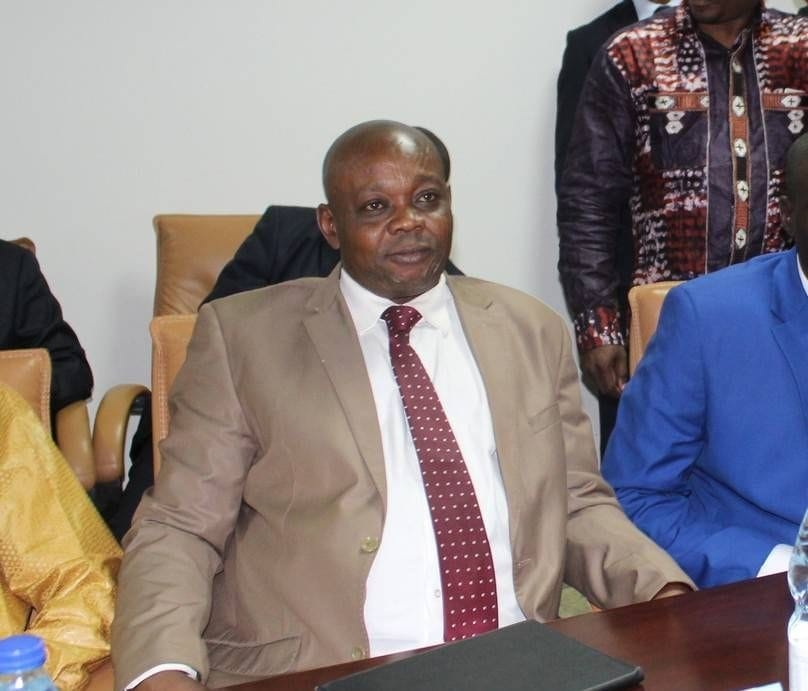
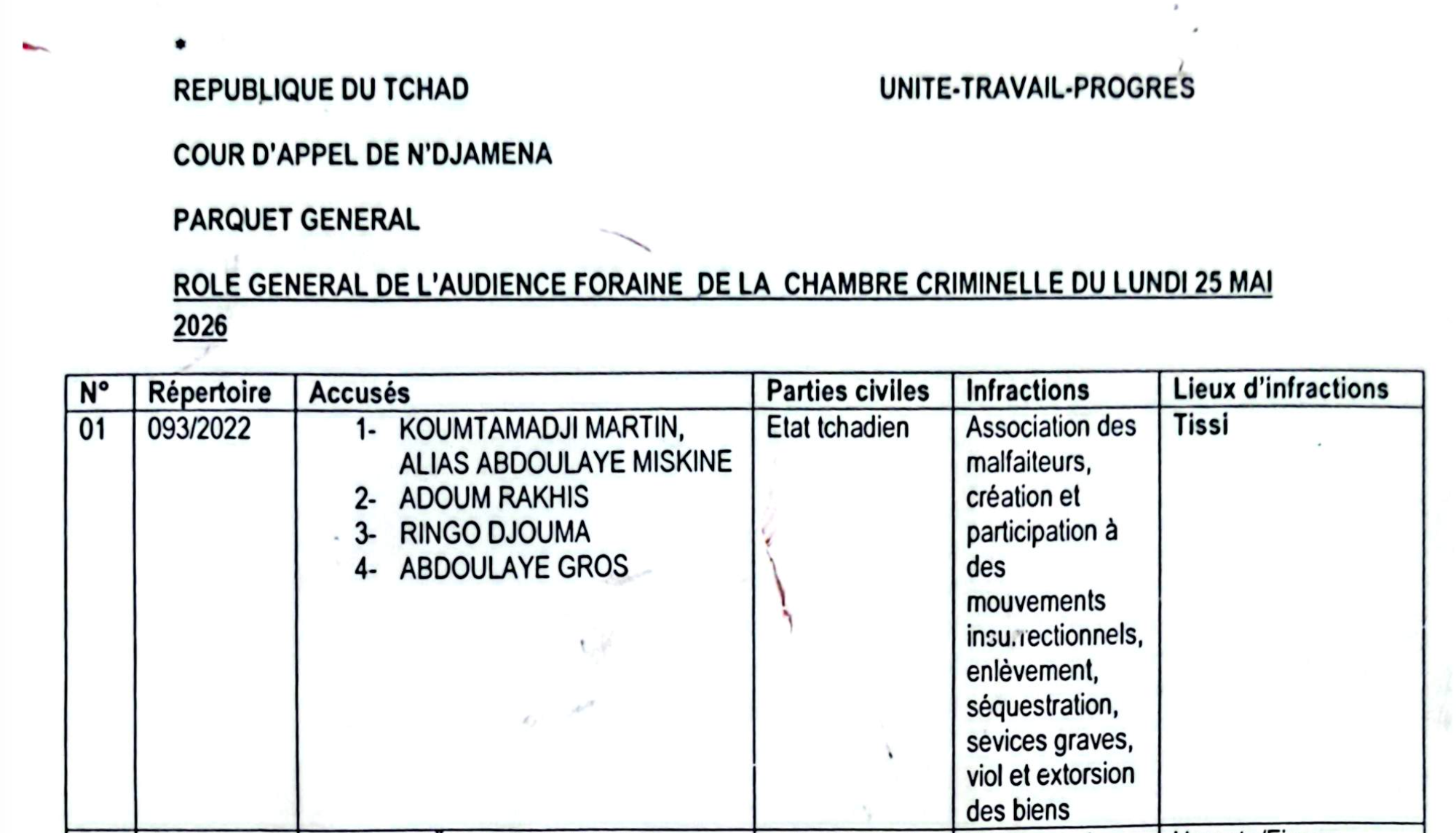
The legal proceedings involving General Abdoulaye Miskine, also known as Martin Koumtamadji, have hit another significant roadblock. Despite being listed on the docket for the criminal chamber’s hearing at the N’Djamena Court of Appeal on May 25, 2026, the case was abruptly pulled from the schedule. This development prolongs a legal saga that has seen the general held for years without a verdict.
Serious charges and co-accused
Under file number 093/2022, Abdoulaye Miskine is named alongside several other individuals, including Adoum Rakhis, Ringo Djouma, and Abdoulaye Gros. The group faces a litany of serious allegations stemming from incidents in Tissi. These charges include forming a criminal association, leading insurrectionist movements, kidnapping, illegal detention, severe physical abuse, sexual assault, and extortion.
Years of detention at Klessoum
Since his arrest in N’Djamena in November 2019, Abdoulaye Miskine has spent more than six and a half years behind bars at the Klessoum detention center. The hearing scheduled for late May was reportedly halted following the sudden passing of a court clerk. However, the lack of a new date has fueled speculation regarding the true nature of the delay in this sensitive case.
Insiders suggest the case has been shelved indefinitely due to external political influence. This comes despite the long duration of his imprisonment and persistent demands for a fair trial from both his legal team and his family. Abdoulaye Miskine, once at the helm of the Front démocratique du peuple centrafricain (FDPC), remains a figure of significant interest in African news today.
Political and regional implications
Although the République centrafricaine formally sought his extradition, Chad has maintained custody of the general. His involvement in the 2019 Khartoum Peace Agreement adds layers of diplomatic complexity to an already tangled judicial process, making it a focal point of Africa politics English reporting.
Health concerns and humanitarian crisis
The physical condition of the prisoner is a growing concern. Relatives have frequently reported that Abdoulaye Miskine suffers from hypertension, kidney failure, deteriorating eyesight, and severe weight loss. His health reached a critical point in 2025, leading to multiple hospitalizations and a hunger strike triggered by the seizure of his medical supplies.
Currently, the judicial system in Chad offers no clarity on when, or if, the proceedings will resume. The sudden removal of the case from the court’s calendar highlights the ongoing friction between judicial requirements and the broader security and political interests of Chad and the République centrafricaine. The situation remains in a state of total suspension, with no immediate path toward a trial or release.
Comments are closed, but trackbacks and pingbacks are open.