East of Democratic Republic of Congo: ambitions of Nangaa and Kabila for Kinshasa spark divisions within AFC/M23
The latest report from the United Nations Group of Experts on the Democratic Republic of Congo (DRC) sheds light on deep internal fractures within the Alliance of the Congo River/February 23 Movement (AFC/M23). According to the document, tensions between political and military factions are intensifying, fueled by divergent ambitions and resource disputes.
Military leadership under pressure
The report highlights persistent challenges to the authority of General Sultani Makenga, who continues to lead the AFC/M23 despite growing dissent. While his command remains nominally intact, several factions within the movement, along with regional actors, have openly contested his leadership. Rwanda’s involvement in supporting military and political leaders of the AFC/M23 is also underscored in the document.
Political ambitions versus military constraints
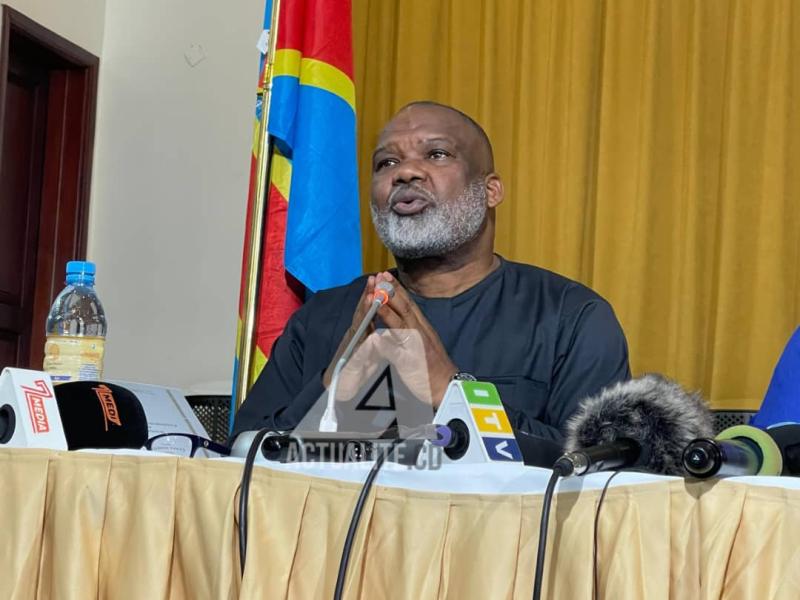
Key political figures such as Corneille Nangaa, former head of the Independent National Electoral Commission (CENI), and Joseph Kabila are reportedly pursuing ambitions to seize power in Kinshasa. However, these ambitions clash with the military leadership’s reluctance to expand operations beyond the North-Kivu and South-Kivu provinces. The report notes that:
«While figures like Nangaa and Kabila push for broader political influence in the capital, most M23 military leaders oppose any military expansion beyond their current operational zones. Disputes over resource access and distribution have further strained internal cohesion.»
Resource disputes and territorial divisions
The AFC/M23’s occupied territories have been reorganized into three «defense zones,» each under the command of different generals:
- General Baudoin Ngaruye oversees the first zone, covering Nyiragongo, Rutshuru, and Lubero;
- Brigadier General Justin Gacheri Musanga commands the second zone, which includes Masisi and Walikale;
- General Innocent Byamungu leads the third zone in South-Kivu.
The report estimates the AFC/M23’s combat force at approximately 30,000 fighters, drawing from a mix of former members of the National Congress for the Defense of the People (CNDP), the historical M23, recent recruits from the diaspora, and captured or defecting Congolese security forces personnel.
Stalled peace processes and regional tensions
Despite the existence of the Washington Agreement and ongoing mediation efforts under the Doha Process, the report paints a grim picture of the security and humanitarian situation in eastern DRC. Tensions between Kinshasa and Kigali persist, with each party interpreting the Washington Agreement differently, complicating its implementation nearly a year after its signing. The Doha Process, which was expected to inject new momentum into negotiations, has also failed to yield significant progress, further delaying efforts to resolve the crisis.
Broader implications for regional stability
The findings underscore the urgent need for coordinated regional and international action to address the AFC/M23’s internal divisions and prevent further deterioration of security conditions. The report’s release comes at a critical juncture, as the humanitarian crisis in eastern DRC continues to escalate, with no clear path toward resolution in sight.
Comments are closed, but trackbacks and pingbacks are open.