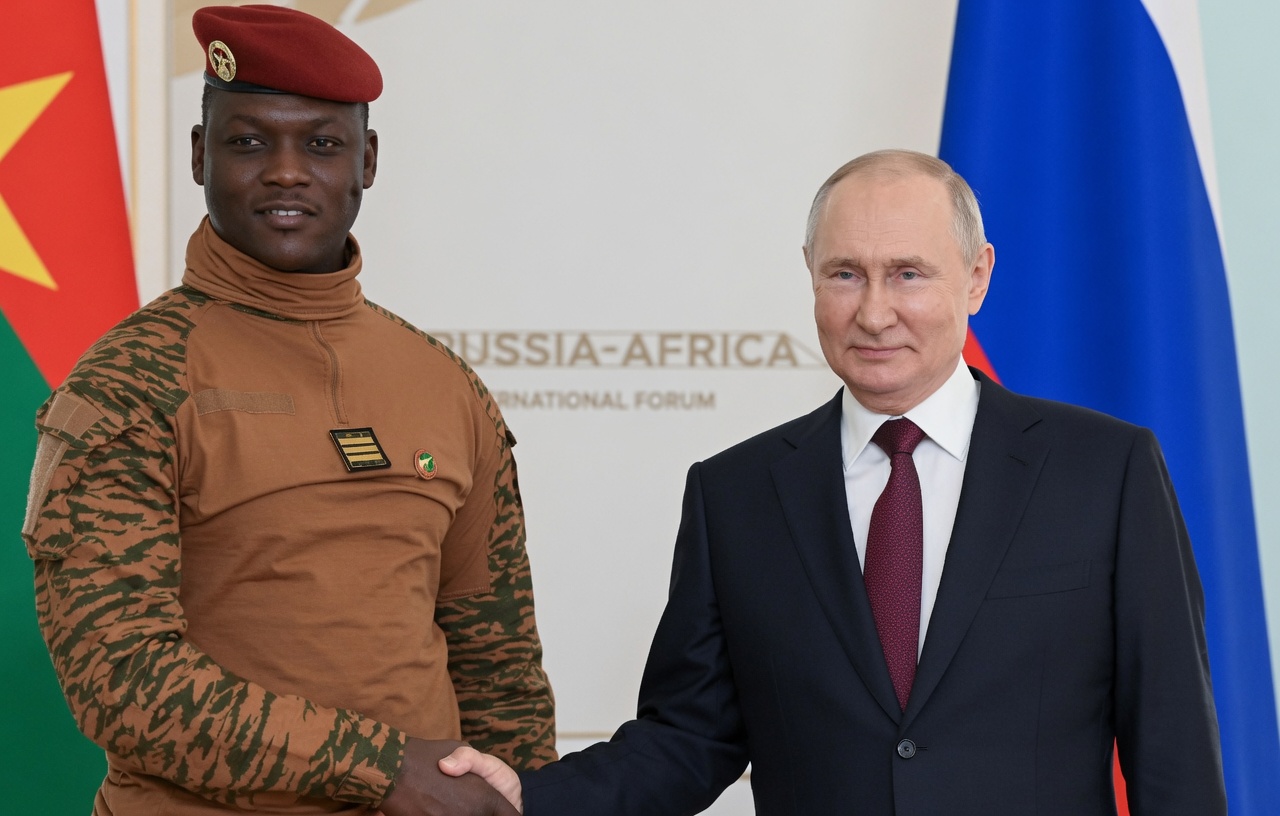
Ouagadougou’s pivot to Moscow: promises vs. reality
Since deepening ties with Russia, the authorities in Ouagadougou have framed the partnership as a strategic breakthrough, positioning Moscow as a reliable ally in the country’s pursuit of security and self-determination. Official statements highlight a relationship built on mutual respect, the absence of political strings, and a so-called “win-win” dynamic. Yet beneath the polished rhetoric lies a more complex picture—one that raises questions about the true depth and sustainability of this collaboration.
Sovereignty through new alliances: a trade-off?
By diversifying its diplomatic partnerships after distancing itself from several Western nations, Burkina Faso has signaled a return to a more autonomous foreign policy. However, swapping one dependency for another does not necessarily equate to genuine sovereignty. A truly balanced partnership requires not just the freedom to choose allies but also the capacity to avoid becoming overly reliant on a single partner in critical areas such as defense or natural resource management.
Security gains elusive despite military ties
The security landscape remains one of the most pressing challenges. Despite closer military cooperation with Russia, the country continues to grapple with relentless attacks, widespread civilian casualties, and persistent insecurity across multiple regions. Mass displacements and the unrelenting pressure from armed groups underscore the limits of this partnership in altering the balance of power on the ground. The assertion that military collaboration alone has transformed the security outlook appears premature at best.
Economic promises fall short of delivery
The narrative surrounding economic cooperation is equally mixed. While announcements of future investments and trade opportunities abound, tangible benefits for Burkina Faso’s economy remain scarce. Economic indicators remain strained, local businesses struggle under the weight of insecurity, and supply chain disruptions continue to hamper growth. Promises of cooperation must ultimately be measured by their real-world impact—not just the volume of declarations made in boardrooms.
Gold and wheat: a sovereignty equation under scrutiny
Recent discussions around a potential deal—exchanging gold reserves for Russian wheat—have sparked debate over what sovereignty truly means in practice. If a nation’s most valuable natural resource is leveraged to secure basic food supplies, does this reflect strength or vulnerability? The equation raises troubling questions: Is Burkina Faso now forced to trade its mineral wealth to meet its population’s nutritional needs? Such arrangements risk reinforcing economic dependence rather than fostering true self-reliance. Genuine sovereignty encompasses the ability to ensure food security, transform local resources into sustainable development, and improve living standards—not merely the freedom to select a new geopolitical partner.
Education: a glimmer of hope amid broader challenges
The educational dimension of the partnership offers one of the few positive notes. Programs enabling select Burkinabè students to study in Russia may contribute to building national expertise. Still, these initiatives remain limited in scope and cannot single-handedly address the systemic weaknesses plaguing Burkina Faso’s education system or the persistent unemployment crisis among young graduates.
No strings attached? A closer look at motives
The claim that Russia imposes no conditions deserves scrutiny. In international relations, no partnership operates without strategic or economic incentives. Moscow’s engagement in Burkina Faso aligns with its broader ambitions to expand influence in Africa, strengthen diplomatic footholds, and forge economic ties amid Western sanctions. Portraying this relationship as purely altruistic stretches credibility and warrants a more critical assessment.
The risks of over-reliance on a single partner
Concentrating diplomatic and economic relations around a handful of allies carries inherent dangers. Over-dependence on one power can constrict Burkina Faso’s diplomatic flexibility, deter investment from diverse sources, and complicate relations with other international actors. In a multipolar world, genuine diversification means maintaining open channels with multiple partners—not merely replacing one bloc with another.
The ultimate test: impact on ordinary citizens
The true measure of any international partnership lies in its effect on daily life. Sovereignty is not defined by diplomatic symbols or official statements but by tangible improvements in security, public services, economic stability, and opportunities for youth. On these fronts, the results remain disappointingly below expectations. Presenting the Russia-Burkina Faso partnership as an unqualified success, therefore, seems premature. While new avenues have opened, the acid test will be whether this alliance can deliver lasting solutions to the nation’s most pressing challenges. Until then, the narrative of a flawless “win-win” scenario remains more hopeful than proven.
Comments are closed, but trackbacks and pingbacks are open.