Eastern DRC warns Rwanda: geography makes us neighbors forever
- Politics
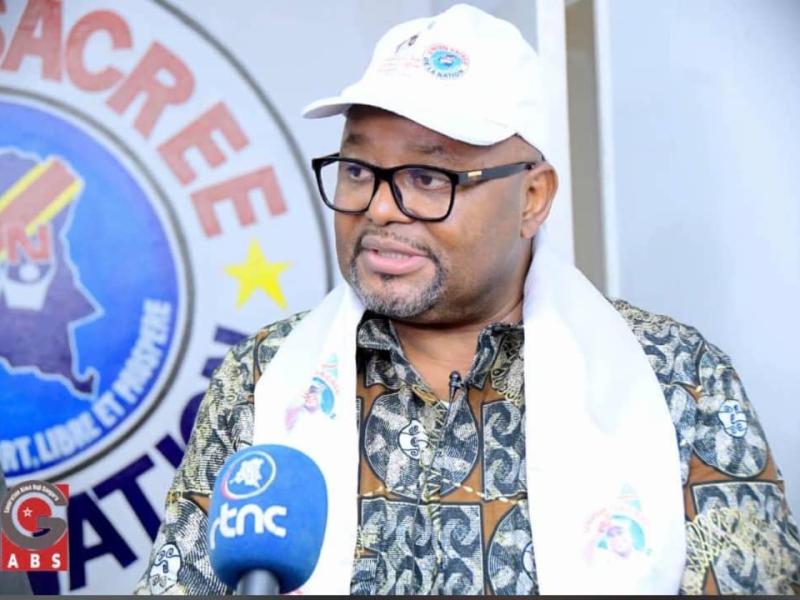
The President of the National Assembly, Aimé Boji Sangara, dedicated a significant portion of his address during the closing of the March ordinary session on Monday, June 15, 2026, to the alarming security situation in eastern Democratic Republic of the Congo (DRC). He described it as the primary concern for the national representation.
From the outset, he underscored the gravity of the situation on the ground. The President of the lower house expressed the National Assembly’s deep concern over the ongoing armed violence, particularly in North Kivu, South Kivu, and Ituri provinces, where civilian populations continue to bear the brunt of these conflicts.
“The security situation in the east of our country remains the main concern of national representation. As we conclude these proceedings, our thoughts immediately turn eastward. Rwandan aggression, coupled with the activities of the terrorist AFC/M23 group, and the horrific massacres carried out by ADF terrorists continue to spill the blood of our fellow citizens,” he declared.
In the same vein, Aimé Boji Sangara reiterated the National Assembly’s strong condemnation of the persistent armed violence and attacks against civilians.
The President of the lower house also paid tribute to the defense and security forces, as well as the self-defense groups fighting alongside the Congolese army.
“From this platform, the National Assembly once again condemns this deadly and unjust war in the strongest terms. This is an opportunity to pay a vibrant and solemn tribute to our armed forces, the FARDC, and the Voluntary Defense of the Nation, the Wazalendo, who fight day and night, risking their lives. To the battered populations of South Kivu, North Kivu, and Ituri, we say: the Nation has not forgotten you,” he affirmed.
In a particularly firm tone, Aimé Boji Sangara called for an immediate end to hostilities and external interference in the eastern part of the country. He reaffirmed the Democratic Republic of the Congo’s determination to safeguard its territorial integrity.
The Walungu representative in South Kivu and President of the National Assembly urged Kigali to recognize the regional imperative of prioritizing lasting peace between neighbors.
“To the Rwandan aggressors and their AFC/M23 auxiliaries, we say it is time for the Rwandan authorities to stop their destabilization maneuvers, halt the plundering of our resources, and immediately put an end to the extermination of our people. Neither expansionist ambitions nor violence will succeed in undermining our sovereignty. No portion of our territory is negotiable. Rwanda must understand that geography condemns us to be neighbors forever. War will only perpetuate a hatred that future generations will pay the price for, while lasting peace is the only path that benefits all,” he emphasized.
The security situation in this part of the country continues to deteriorate. Despite the Washington Agreement, brokered under the auspices of the United States, the Doha process led by Qatar with the support of the African Union, and the succession of evaluation meetings, the security and humanitarian crisis in eastern Democratic Republic of the Congo remains dire. Civilian populations across the country continue to be the primary victims of violence and forced displacement, exacerbating an already catastrophic humanitarian situation in an international context marked by dwindling funding for humanitarian aid.
In the face of this crisis, voices at national, regional, and international levels continue to call on all stakeholders to uphold the commitments made under peace initiatives. However, these appeals have so far yielded little tangible result. The gap between ground realities and diplomatic advances remains wide, with each party interpreting the agreements according to its own perspective, rendering their implementation increasingly uncertain.
Comments are closed, but trackbacks and pingbacks are open.