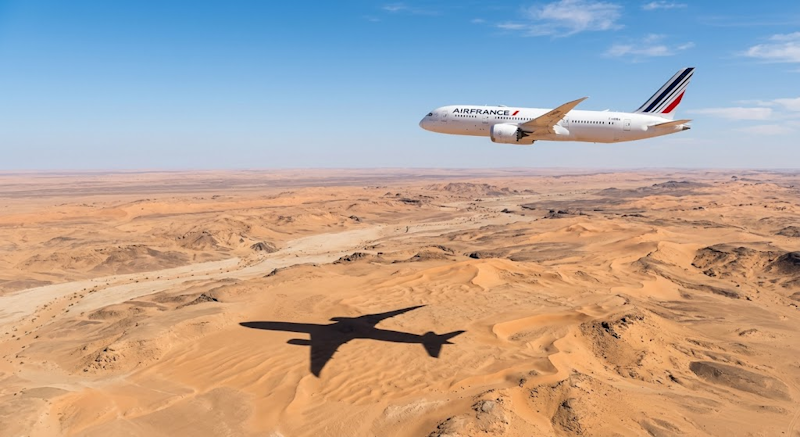

While the legal framework appears unambiguous, enforcement remains inconsistent. The recently updated aviation agreement between the European Union and Morocco explicitly excludes Western Sahara—yet European carriers continue operating flights to the disputed territory without adhering to this exclusion.
The European Parliament gave its green light to the revised protocol on July 8, 2026, formalizing the adaptation of the EU-Morocco aviation accord following Croatia’s EU accession. The vote passed with overwhelming support: 625 in favor, 16 against, and 20 abstentions.
Critically, the protocol serves only a technical purpose—aligning the original 2006 agreement with the Union’s expanded membership. It introduces no changes to the territorial scope of the aviation framework.
Lawmakers remain deeply divided over how the EU should address the practical implications of the accord. Many supported the protocol precisely because it neither expands nor alters the existing agreement’s application, in line with both European Court of Justice rulings and repeated clarifications from the European Commission regarding Western Sahara’s exclusion.
Opposition came from a vocal minority who argued that while the updated deal does not cover the territory, the Commission has failed to prevent EU airlines from flying to Western Sahara outside the legal parameters of the agreement—a practice they describe as a breach of both international and EU law.
The European Court of Justice has consistently ruled that EU-Morocco accords apply solely within Morocco’s internationally recognized borders unless the people of Western Sahara consent. In 2018, the Court concluded that the aviation agreement cannot be interpreted to extend to Western Sahara.
The European Commission has reiterated this stance on multiple occasions, instructing EU carriers that the aviation accord “does not apply to routes connecting an EU member state to Western Sahara.” Despite this clear legal guidance, several airlines continue operating services to airports in the occupied territory.
Notably, Ryanair has introduced direct flights from EU hubs to Dakhla, a city in Western Sahara, while other carriers—including Transavia (a KLM-Air France subsidiary), Air Arabia, and Spain’s Binter Airlines—have also maintained or resumed operations to the territory in recent years. Western Sahara Resource Watch has reached out to KLM-Air France and Air Arabia for comment but received no response.
Key takeaways
- The revised EU-Morocco aviation protocol does not alter the original agreement’s territorial scope.
- EU airlines continue flying to Western Sahara despite legal exclusions.
- The European Court of Justice has repeatedly confirmed that the accord does not apply to the territory.
- Discrepancies persist between legal interpretation and operational reality.
Comments are closed, but trackbacks and pingbacks are open.