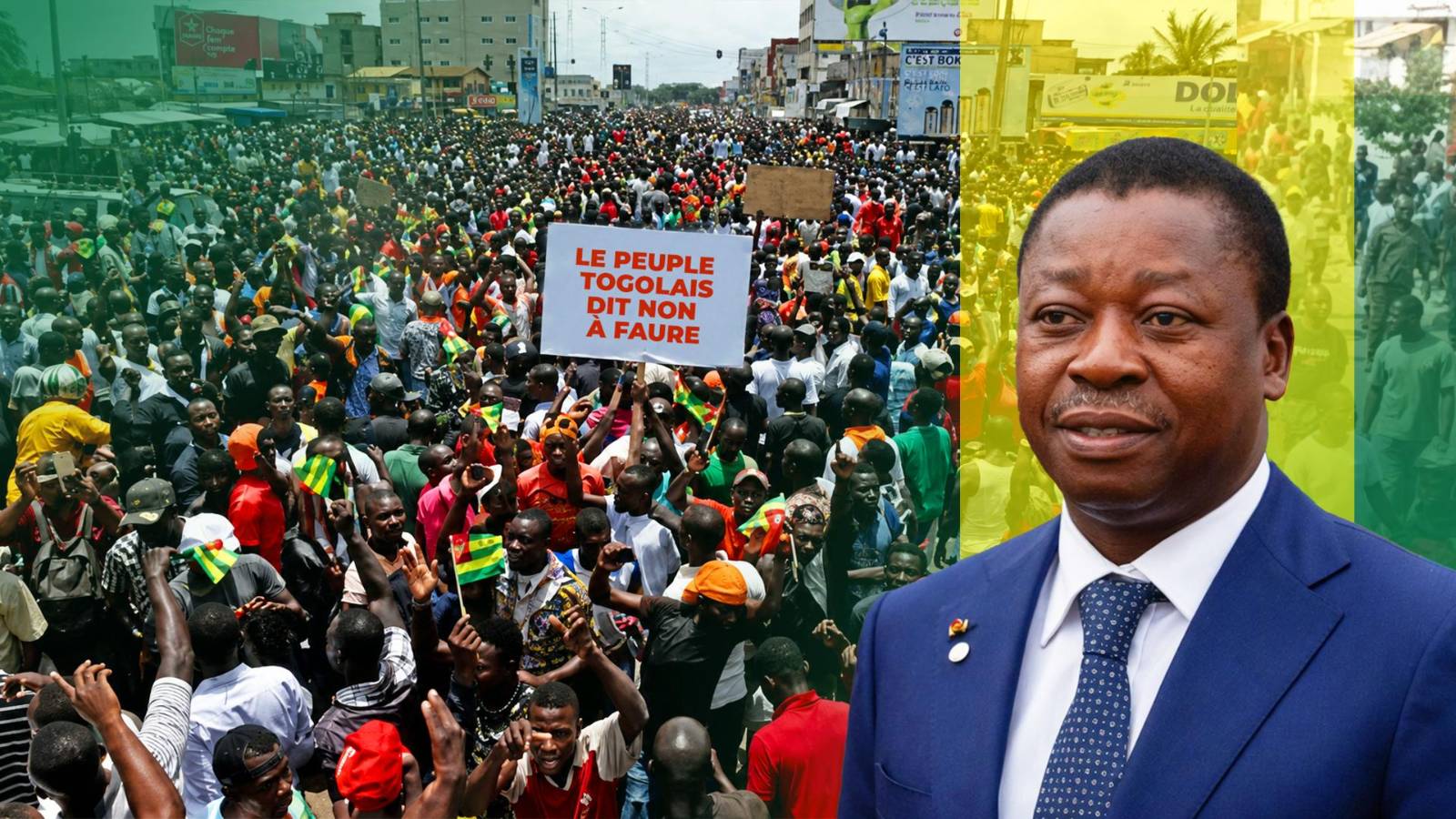
The youth of Togo face an increasingly unbearable dilemma: embark on the perilous journey of emigration to pursue a dignified life, or remain in a country where their aspirations slowly crumble under the weight of stagnation. This predicament has intensified scrutiny of President Faure Gnassingbé’s leadership, whose two-decade tenure is now widely criticized as the architect of dwindling hope among the nation’s youngest citizens.
For a significant segment of Togolese youth, the conversation has shifted from the mere possibility of success within the country to the pragmatic strategies required to escape it. Where previous generations once clung to the belief that their future could be built at home, many now view migration not as an option, but as the only viable path forward. This shift underscores a profound disillusionment—not just with institutions, but with the very idea that the state can foster an environment conducive to personal and professional fulfillment.
Economic aspirations versus grim employment realities
The narrative of economic modernization and sweeping reforms promoted by official channels starkly contrasts with the harsh realities of the labor market. While government statistics cite low unemployment rates, these figures mask a far grimmer truth: over 70% of young workers are trapped in underemployment or the informal sector, where stability and upward mobility remain elusive.
Each year, universities in Lomé and Kara churn out tens of thousands of graduates. Yet initiatives like the National Employment Agency (ANPE) and the National Coalition for Youth Employment (CNEJ) have proven woefully inadequate in addressing the scale of demand. Without viable opportunities, a substantial portion of this educated workforce is reduced to piecing together livelihoods through precarious means, rendering years of academic investment meaningless.
In this landscape of survival, even highly qualified professionals—engineers, lawyers, and economists—are forced into roles as motorcycle taxi drivers or street vendors, their expertise rendered obsolete by a system incapable of harnessing their potential. The consequences extend beyond individual disillusionment; they represent a systemic squandering of human capital, eroding the nation’s competitiveness, innovation capacity, and long-term economic prospects.
Compounding this crisis is the lack of high-value job creation. The industrial fabric remains underdeveloped, unable to generate sufficient skilled employment to absorb the influx of graduates. The economy continues to rely on low-productivity sectors, offering little in the way of career progression that aligns with the qualifications of the workforce.
A system entrenched in favoritism
The sense of injustice among Togolese youth is palpable. Families invest heavily in education, believing merit will pave the way to success. Yet in Togo, merit alone is no longer enough to secure a stable future.
Access to entrepreneurship and financing is a daunting hurdle. While initiatives such as the Youth Economic Initiatives Support Fund (FAIEJ) exist, obtaining credit without substantial financial guarantees or political connections is nearly impossible. Public contracts and lucrative economic opportunities remain concentrated in the hands of a select few tied to the ruling UNIR party. For the average young Togolese without influential networks—often dubbed ‘le piston’—the doors to social mobility remain firmly shut.
This perception of a system rigged in favor of relationships over competence fuels deep-seated discouragement. When academic achievement, hard work, and perseverance no longer guarantee success, the very foundations of social trust erode. The private sector, poised to drive job creation, is similarly stifled by administrative barriers, limited access to capital, weak purchasing power, and economic uncertainty, further dampening investment and hiring.
Emigration as the only path to survival
With prospects at home all but nonexistent, emigration has evolved from a distant dream to a matter of survival. This exodus manifests in two alarming trends for the nation’s future:
- Surging demand for visas: Daily queues outside the French Embassy, Campus France offices, and immigration agencies in Canada and Gulf States reflect the sheer scale of desperation among young Togolese seeking opportunities abroad.
- Brain drain in critical sectors: Hospitals are depleted of doctors, nurses, and engineers, while researchers, IT specialists, educators, and entrepreneurs relocate to more welcoming shores. The loss of these skilled professionals undermines the country’s ability to innovate, attract investment, and modernize its economy.
The irony is striking: Togo invests in educating its youth, only for the benefits to enrich foreign economies. Host nations gain from a workforce trained at the expense of Togolese families, while the country of origin struggles to replenish its professional elite, leaving it increasingly devoid of the very talent that should drive its development.
Political stagnation: the death of democratic hope
The economic despair is further exacerbated by a crisis of political confidence. For many young Togolese, the nation’s struggles are a direct consequence of a political system that refuses to evolve.
The controversial adoption of the Fifth Republic Constitution in 2024, which transformed the country into a parliamentary regime, has shattered the last remnants of hope for meaningful change. The reform is widely seen as a legal maneuver to indefinitely prolong President Gnassingbé’s grip on power, now under the title of Prime Minister. By eliminating any prospect of democratic alternation or generational renewal at the highest levels of government, the regime has pushed its youth to disengage from public life entirely, seeking salvation solely beyond the nation’s borders.
For some, the issue transcends economics. Without institutional renewal, a strengthened rule of law, independent judiciary, and genuine political competition, even the most well-intentioned economic reforms are doomed to fail. This conviction reinforces the belief that the future lies abroad rather than within Togo’s borders.
This disillusionment has also sparked a crisis in civic participation. Many young people no longer engage with political parties, civic associations, or public initiatives, convinced that their voices carry no weight in shaping national policy. This withdrawal weakens democratic vitality and deprives the country of the creative energy a generation could offer.
Can a nation thrive without its youth?
Critics attribute this bleak reality squarely to President Gnassingbé, whose 20 years in power have failed to cultivate an inclusive economic model responsive to the needs of a burgeoning youth population. Instead, wealth continues to flow disproportionately to a minority, while the majority grapple with precarity or the harsh reality of exile.
History demonstrates that no nation can sustain prosperity when its youth view departure as their primary aspiration. Successful economies are those that retain talent, foster innovation, uphold equal opportunity, and cultivate trust between citizens and institutions.
A pivotal question now looms over Togo’s future: how can a country aspire to development when its most dynamic, educated, and ambitious young people dream only of leaving? Until tangible solutions emerge—addressing unemployment, governance transparency, business climate improvement, and the democratic aspirations of its people—the nation will continue to witness the flight of its brightest minds, leaving behind a society at risk of losing the very forces that should propel its progress.
Comments are closed, but trackbacks and pingbacks are open.