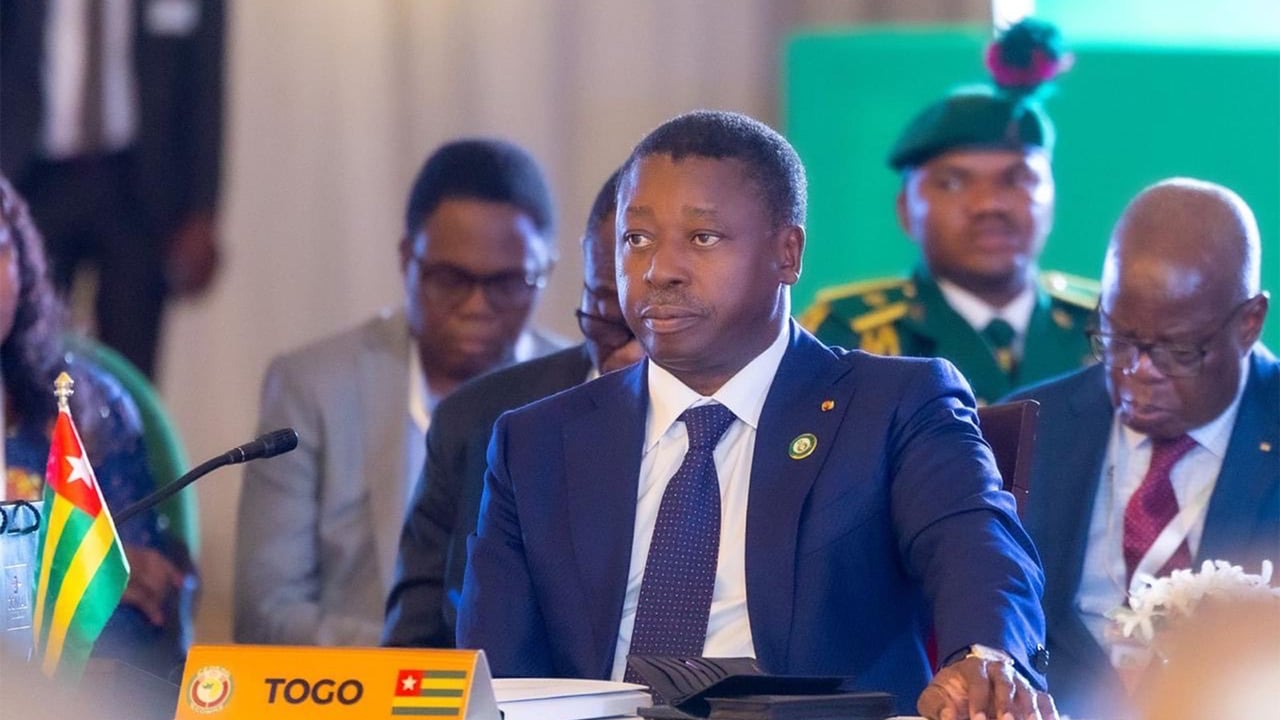

Togo’s diplomacy often speaks through silence. On March 9, Russian Defense Minister Andrei Belousov arrived in Lomé by plane. Though the visit was confirmed by a presidential source, it went largely unannounced. The next day, Faure Essozimna Gnassingbé welcomed him for a closed-door meeting. No official statement followed, leaving observers to read between the lines of this discreet yet significant diplomatic exchange.
strategic alliances in a shifting geopolitical landscape
In a region where alliances are increasingly fluid, Faure Gnassingbé is navigating a delicate balancing act. Togo maintains relationships with multiple power blocs, each with its own agenda:
- Russia: Strengthening ties through high-level visits and defense cooperation, despite international sanctions.
- ECOWAS: Preserving economic and political engagement with West Africa’s leading regional bloc.
- Alliance of Sahel States (AES): Engaging with a coalition prioritizing sovereignty and security cooperation.
This multi-vector diplomacy allows Togo to hedge its bets in an era of geopolitical fragmentation. By maintaining dialogue with all three entities, Faure Gnassingbé positions his country as a bridge between divergent blocs.
why Togo’s neutral stance matters
The absence of public declarations following the Belousov meeting underscores a strategy of discretion. Togo avoids overt alignment, which could isolate it in a volatile region. Instead, it cultivates relationships quietly, allowing flexibility to adapt to evolving circumstances.
This approach reflects a broader trend in African diplomacy, where countries leverage multiple partnerships to maximize benefits. For Faure Gnassingbé, the key lies in maintaining access to diverse partners without fully committing to any single bloc.
the challenge of maintaining equilibrium
Balancing relations with Russia, ECOWAS, and the Alliance of Sahel States is no small feat. Each entity brings different expectations:
- ECOWAS emphasizes democratic governance and regional stability.
- The AES prioritizes sovereignty and resistance to external interference.
- Russia seeks strategic partnerships, particularly in security and energy.
For Faure Gnassingbé, the challenge is to satisfy all parties without overstepping. His ability to do so could redefine Togo’s role in West and Central Africa.
The silent diplomacy of Togo under Faure Gnassingbé may well be its most powerful tool. By avoiding public posturing, the country positions itself as a pragmatic actor in a fracturing world.