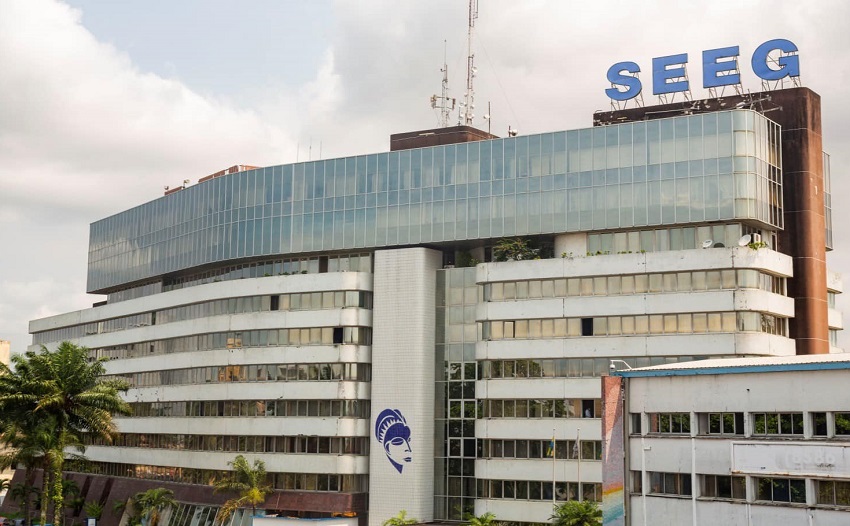
Gabon: mounting pressure on SEEG to deliver after trillion-fcfa investment
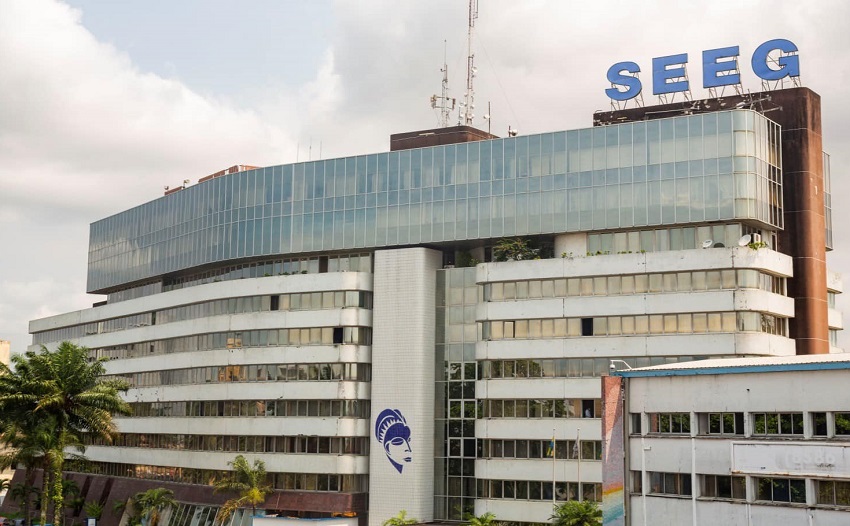
Libreville — After three years of emergency funding totaling nearly one trillion CFA francs, Gabon’s political leadership has publicly challenged the Société d’Énergie et d’Eau du Gabon (SEEG) to justify its performance. The unusually direct statement from the Union Démocratique des Bâtisseurs (UDB), the party founded by President Brice Clotaire Oligui Nguema, marks the first time the transition government has publicly questioned the state-owned utility’s results.
The timing is significant. While billions have flowed into the energy and water sectors, citizens in Libreville and across the country continue to endure daily blackouts, persistent water shortages, and aging infrastructure that has seen little meaningful upgrade. For the ruling party, the gap between investment and outcome has become politically unsustainable.
From emergency funding to public accountability
The UDB’s political bureau, led by Jean-Pierre Oyiba, has issued a statement sharply criticizing the management of SEEG. It argues that the state’s massive financial injection—meant to modernize production, rehabilitate facilities, expand capacity, and improve access to clean water—has not translated into tangible improvements for Gabonese households or businesses.
Households now bear the brunt through unreliable services, while industries face mounting costs from reliance on backup generators. The crisis has reached a tipping point, with the transition government’s credibility hinging on visible results in sectors that directly affect daily life.
Governance in the spotlight
The communiqué is more than a critique—it signals a shift in public accountability. Water and electricity are not just utilities; they are pillars of public health, education, and economic competitiveness. The UDB’s stance suggests that poor performance is no longer excusable with budgetary excuses or historical burdens.
The party is effectively calling for a reckoning: either the current management of SEEG delivers, or it must step aside. This represents a rare public acknowledgment that the crisis is not solely financial but managerial. By separating political will from operational execution, the UDB is signaling that the transition’s legitimacy depends on results, not just promises.
A test of the transition’s credibility
Since taking power in August 2023, the transitional authorities have pledged to improve living conditions for all Gabonese. Yet few issues resonate as deeply as consistent access to water and electricity. The SEEG dossier has become a referendum on whether the transition can deliver on its core promise: turning public investment into real improvements.
With public patience wearing thin, the UDB’s intervention signals that the era of unchecked delays and vague commitments is over. The question now is whether this pressure will lead to systemic reform, leadership changes at SEEG, or deeper structural adjustments in the energy sector.
For the people of Gabon, the proof will be simple: taps that run and lights that stay on. Until then, the calls for accountability will only grow louder.
Comments are closed, but trackbacks and pingbacks are open.