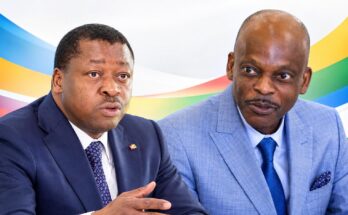
In a political landscape where public discourse frequently wavers between cautious silence and total agreement, President Brice Clotaire Oligui Nguema has made a significant statement regarding the future of Gabonese governance. The focus is shifting toward a fundamental democratic question: the relationship between those in power and the honest truth from the citizenry.
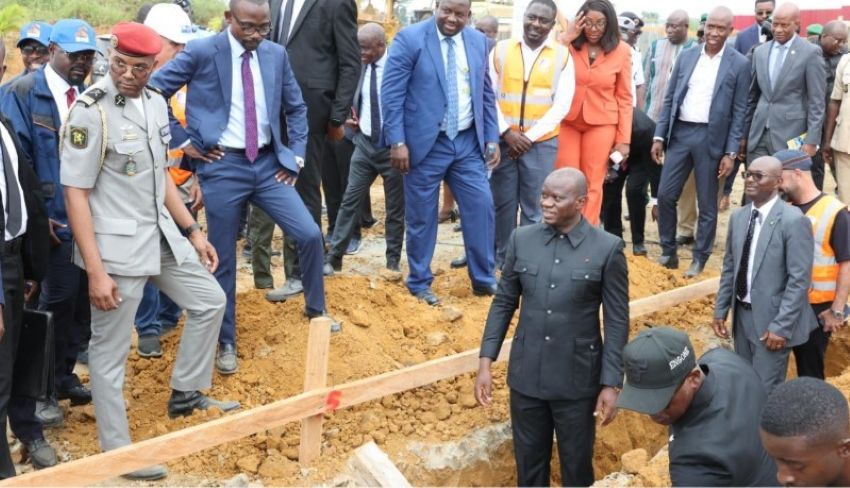
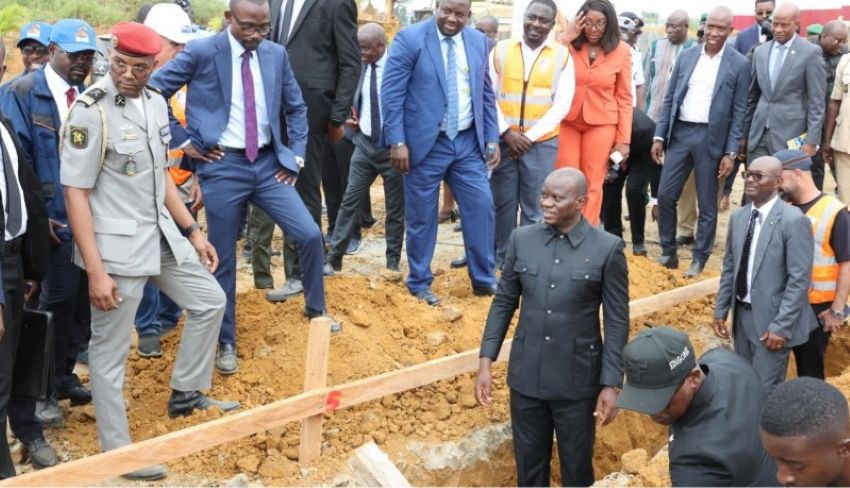
During the launch of a major housing project in Bikélé, which aims to deliver 3,100 new homes, the Head of State shared his vision with journalist Chamberlain Moukouma. He emphasized that a leader should not merely be surrounded by applause. Instead, he argued that sincere criticism is vital for refining public policy and correcting the course of the administration when necessary. This stance moves beyond standard political rhetoric, touching the very core of democratic accountability.
A departure from the culture of automatic praise
By openly stating that he needs to be told when his actions fall short, President Oligui Nguema is signaling a symbolic break from a political tradition often defined by the reflexive validation of authority. This position highlights a rare requirement in institutional leadership: the use of self-reflection and external critique as essential tools for effective management.
In this new framework, constant cheering is no longer viewed as a sign of political health. Rather, it is seen as a potential cause of collective blindness. The Head of State is calling for a transformation in the bond between the government and the people, one built on transparency and mutual responsibility.
This approach suggests that national progress in Gabon cannot be achieved through complacency. It requires a clear-eyed assessment of state actions, acknowledging both successes and failures with equal weight.
Constructive criticism as a pillar of national development
The president’s remarks rehabilitate an essential concept that is often sidelined in politics: the value of constructive feedback. Speaking the truth to those in power is not framed as an act of defiance, but as a civic duty aligned with the public interest.
From this perspective, public debate becomes a mechanism for continuous improvement rather than a theater for unproductive conflict. A mature society is one capable of recognizing progress while identifying flaws, thereby helping to elevate the quality of government services.
However, this shift requires a deep cultural evolution. It demands that citizens, social organizations, and the press adopt a mindset rooted in objectivity and a commitment to the common good. Criticism is no longer an end in itself; it is a catalyst for perfecting public policy.
Establishing a new dialogue in Gabonese politics
Beyond the speech itself, a broader philosophy of leadership is emerging. President Oligui Nguema appears to be championing a style of governance based on active listening, where feedback from the street serves as a steering mechanism for the state.
Under this model, the development of Gabon is no longer just about top-down decisions. It relies on a constant flow of communication between the rulers and the ruled. This dynamic requires a delicate balance between appreciating the work being done and maintaining a persistent demand for better results.
The dialogue facilitated by Chamberlain Moukouma, which has been shared across social platforms to foster civic awareness, is part of this effort to build a more informed and responsible public arena. Ultimately, the president’s message invites a rethink of political culture around three simple yet demanding pillars: praise when it is earned, critique when it is required, and always acting for the benefit of the nation.
In an environment where political posturing is common, this call for shared truth serves as a test of democratic maturity. It positions the citizen not as a passive observer of power, but as an active participant in its constant improvement.