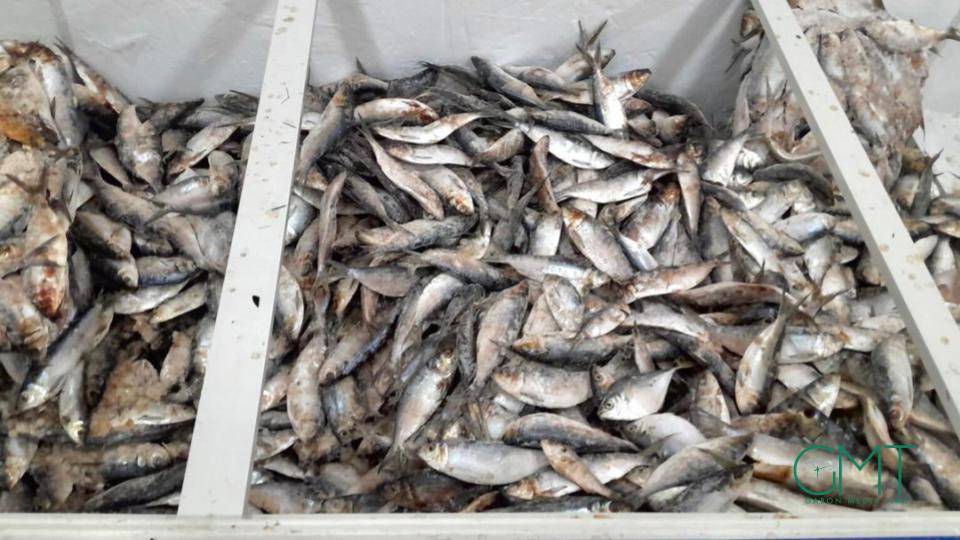
The Gabonese government has taken decisive action to safeguard the nation’s supply of aquatic products. A temporary prohibition on the export of sardine (Ethmalosa fimbriata) and the fish commonly known as “sans nom” (Heterotis niloticus) has been in effect across the entire territory since March 26, 2026. This critical measure, formally enacted through two ministerial decrees from the Ministry of Sea, Fisheries, and Blue Economy and subsequently published in the Official Journal on April 16, 2026, directly addresses a pronounced and growing scarcity observed within national markets. While these specific fish varieties continue to flow into markets in neighboring countries, particularly through border zones such as Cocobeach, authorities are now firmly committed to prioritizing local consumption and halting the uncontrolled departure of these vital resources.
Just this past May 30, Marie Françoise Dikoumba, the Governor of Estuaire province, undertook a visit to Cocobeach. Her mission was to unequivocally remind local fishermen, merchants, and transporters of the compulsory nature of this new regulation. This crucial awareness campaign comes at a time when the dwindling presence of sardines on market stalls is generating considerable apprehension among consumers. Officials contend that continued exports to adjacent nations are significantly contributing to an imbalance in the domestic supply, thereby exacerbating price increases and making it increasingly challenging for households to acquire a staple food item essential to their daily diets.
Preserving fish stocks and bolstering food security
The two aforementioned decrees explicitly outline that this temporary export ban is designed to streamline production and distribution channels, stabilize the internal market’s supply, and actively combat escalating prices. Furthermore, authorities are keen to enhance the traceability of fishery products, secure future export operations, and guarantee adherence to rigorous sanitary standards. This policy forms an integral part of broader governmental initiatives aimed at tackling the high cost of living and fortifying food sovereignty, both of which are declared national priorities.
The Ministry of Sea has also highlighted the mounting pressure on sardine populations within Gabonese waters, alongside similar concerns for “sans nom” stocks residing in the nation’s river and lake systems. By temporarily suspending exports, the state seeks to facilitate the regeneration of biological capital in heavily exploited areas, thereby ensuring the long-term sustainable management of these valuable species. Violators of this export prohibition face penalties stipulated under the Fisheries Code, which can include the confiscation of cargo, the revocation of fishing permits, and even legal prosecution, unless an exceptional authorization has been granted by the relevant administrative body.
Comments are closed, but trackbacks and pingbacks are open.