Maïmouna Dièye’s remarks about Ousmane Sonko spark controversy in Khombole
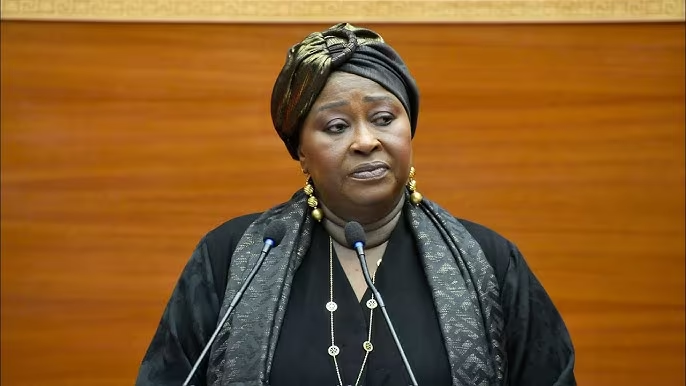
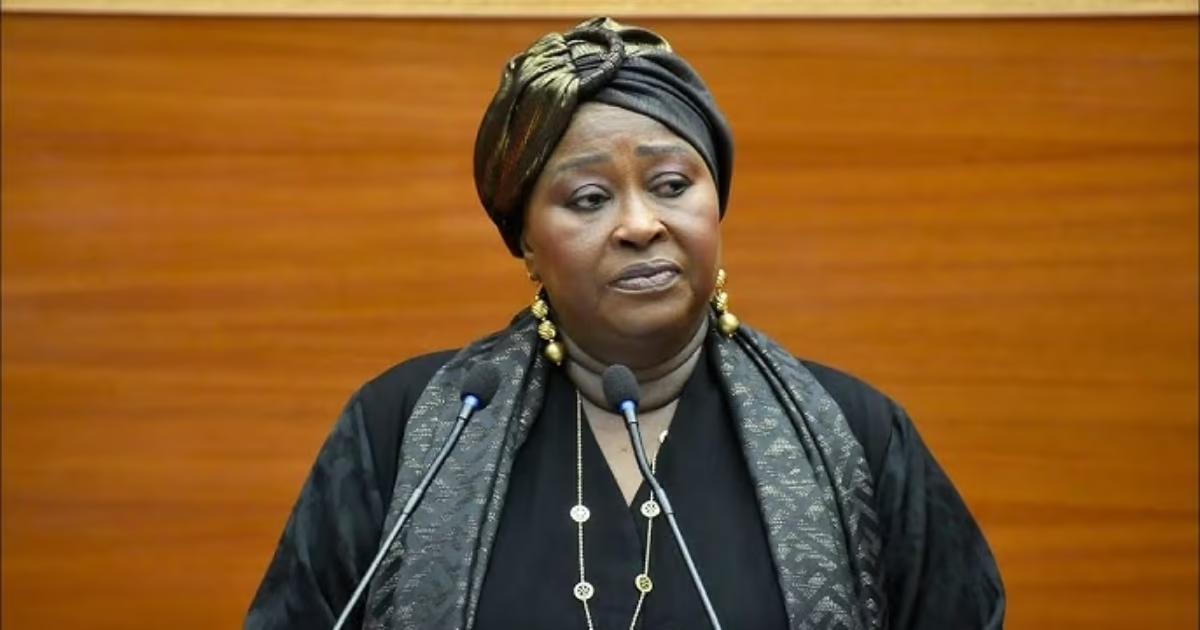
Maïmouna Dièye’s choice of words during a Saturday gathering in Khombole has ignited a fierce debate over the boundaries between political admiration and religious reverence in Senegal.
The phrase uttered by Maïmouna Dièye in reference to Ousmane Sonko struck a raw nerve, particularly due to its invocation of a sacred Islamic formula typically reserved for the Prophet Muhammad (peace and blessings upon him). The leader of Pastef appeared visibly uncomfortable, underscoring the sensitivity surrounding such religious connotations in political discourse.
Maïmouna Dièye’s remarks and their implications
During her speech, Maïmouna Dièye declared she was speaking “in the presence of Seyidina Ousmane Sonko Salalahou Aleyhi Wa Salam,” a phrase that blends a blessing with a title historically associated with prophets in Islam. The “Salalahou Aleyhi Wa Salam” suffix is an invocation reserved exclusively for the Prophet Muhammad and, in some traditions, for other recognized prophets. By applying this formula to a political figure, Dièye’s statement crossed a line that many consider sacrosanct—one that blurs the distinction between political respect and religious veneration. This breach of linguistic etiquette has sparked heated discussions about the ethical and theological boundaries in public discourse.
The controversy deepens when considering the broader implications: in Senegal, where religious sensibilities run deep, the appropriation of sacred language for political figures risks inflaming tensions. Critics argue that such language undermines the principle of separating the temporal and the divine, a cornerstone of Islamic theology. The debate isn’t just about a single phrase but about the growing trend of political sacralization—a phenomenon that religious leaders have repeatedly warned against.
Ousmane Sonko’s swift response
Ousmane Sonko moved quickly to address the incident, publicly clarifying that he neither seeks nor claims the spiritual status implied by Dièye’s words. In a statement laced with humility, he acknowledged the affection of his supporters while firmly rejecting the notion that he occupies a divine or prophetic role. “This honor belongs only to the Prophet Muhammad,” he emphasized, distancing himself from any attempt to elevate his political stature to a sacred plane. His reaction reflects the delicate balance political leaders must maintain in Senegal, where religious respect is both a cultural norm and a sensitive political issue.
The episode serves as a reminder of the fine line between admiration and idolatry in Senegalese politics. As the country continues to navigate its democratic journey, the incident highlights the need for political actors to tread carefully around religious symbolism, ensuring that their words do not inadvertently cross into territory reserved for the divine.