President GOÏTA inaugurates Mali’s largest hospital revamp initiative
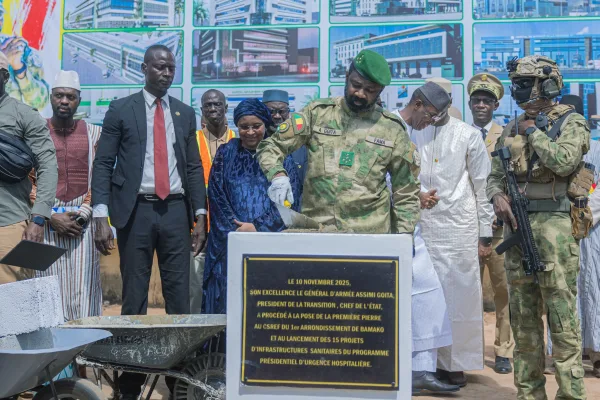
Bamako, November 2025 — General Assimi GOÏTA, Head of State during the Transition, has officially launched Mali’s most ambitious healthcare overhaul to date. The cornerstone ceremony took place at the Korofina Reference Health Centre in Bamako’s Commune I, marking the start of a nationwide initiative to transform the national health system.
The Minister of Health and Social Development, Colonel-Major Assa Badiallo TOURÉ, emphasised that this project builds directly on the outcomes of the December 2024 National Health Conference. That landmark event had highlighted critical gaps in healthcare accessibility and service quality, prompting urgent systemic improvements.
Rebuilding Mali’s hospital network from the ground up
According to the Minister, the initiative focuses on comprehensive modernisation and restructuring of Mali’s hospital infrastructure. The centrepiece involves constructing 15 new hospitals while elevating Bamako’s existing reference health centres to full district hospitals. Funded entirely from the national budget, construction timelines vary: Bamako’s facilities will be completed within 12 months, while regional projects will span 24 months.
The presidential emergency healthcare project unfolds across three strategic pillars:
- Upgrading Korofina’s seven reference health centres into full district hospitals
- Building brand-new district hospitals in Bla and Kangaba
- Establishing modern regional hospitals in San, Koutiala, Bougouni, Dioïla, Nioro, Bandiagara and Koulikoro
All new facilities will feature cutting-edge medical equipment, expanded inpatient capacities and specialised care units. Notably, the first and sixth arrondissement hospitals in Bamako will include dedicated haemodialysis units to treat kidney patients locally.
Commitment to delivery and accessibility
During the ceremony, President GOÏTA underscored healthcare as a fundamental pillar of national development. He tasked the Health Minister with ensuring uninterrupted public services throughout construction while strictly adhering to project timelines. The ultimate goal remains clear: bringing high-quality medical care closer to communities, reducing medical evacuations abroad and easing pressure on overcrowded existing facilities.