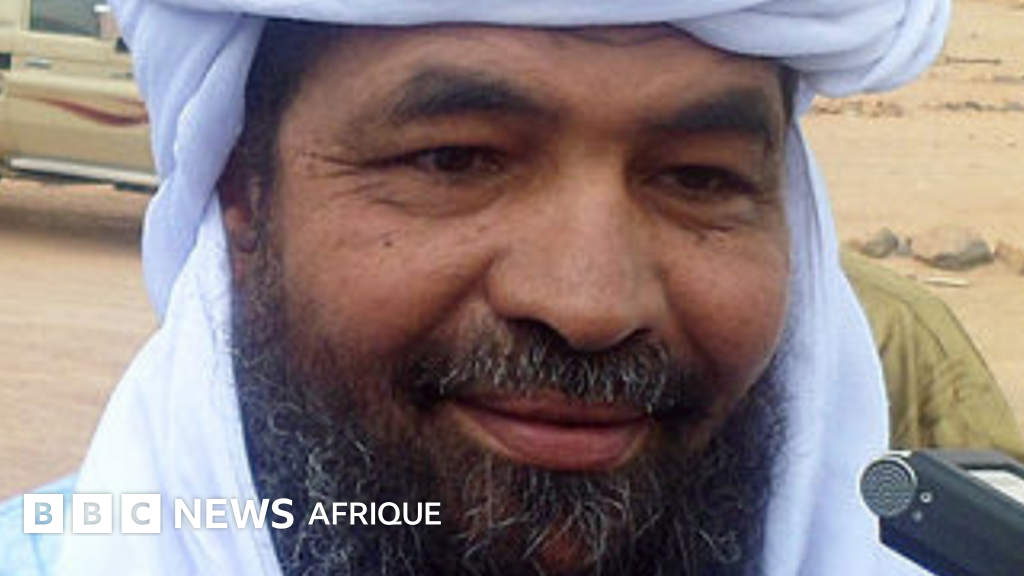
The Malian government has escalated its fight against terrorism by announcing a substantial reward for the capture of Iyad Ag Ghaly, the notorious leader of the Jama’at Nusrat al-Islam wal-Muslimin (JNIM), and several of his associates. This decisive move follows coordinated attacks in Kidal and Kati that left deep scars on the nation’s security landscape.
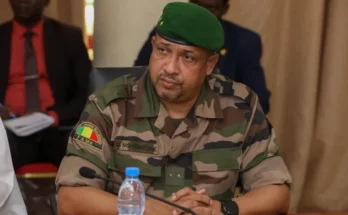
In an official statement broadcast on national television, the Ministry of Security and Civil Protection, headed by General Daoud Aly Mouhammedine, urged citizens to collaborate with defense and security forces. The government seeks to locate seven individuals it considers grave threats to national stability.
The announcement comes nearly two months after a violent assault on April 25, involving both jihadists from the JNIM and separatists from the Front de Libération de l’Azawad (FLA), which tragically claimed the life of Defense Minister Sadio Camara.
Government’s announcement: key details
Through a formal communiqué, the Malian authorities detailed their financial incentives for the capture or neutralization of high-profile suspects. The rewards target key figures within the jihadist and separatist movements operating in the country:
- Iyad Ag Ghaly (JNIM leader): 2 billion FCFA
- Amadou Koufa (Macina Katiba leader): 1.5 billion FCFA
- Habib Mohamed Abdoulaye (Macina Katiba): 1.5 billion FCFA
- Algabas Ag Intallah (FLA leader): 1 billion FCFA
- Ghita, Bilal Cherif, and Abderrahmane Al Banna (FLA officials): 500 million FCFA each
The government emphasized that these bounties are part of a broader strategy to dismantle terrorist networks and restore peace. The communique stressed the importance of reliable intelligence in neutralizing these threats before they escalate further.
Profile of Iyad Ag Ghaly: from rebellion to regional threat
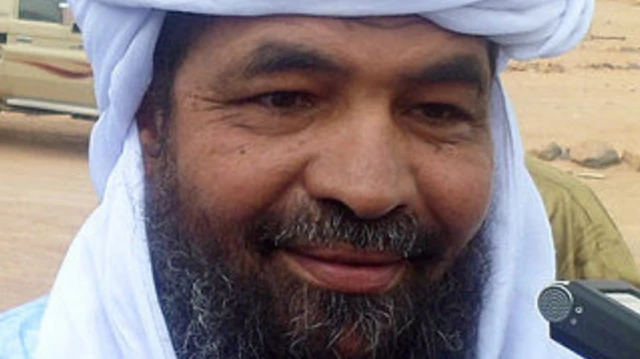 Born in 1958 in Boghassa, a town in the Kidal region, Iyad Ag Ghaly is a prominent Tuareg military leader whose influence has grown from local insurgency to a central role in Sahelian terrorism. His trajectory began in the 1970s when he joined Libyan forces under Muammar Gaddafi, fighting in Lebanon and Chad alongside other Tuareg fighters.
Upon returning to Mali in the early 1990s, Ghaly founded the Mouvement Populaire de Libération de l’Azawad (MPLA), launching a rebellion that challenged the Malian state. He later led the Mouvement Populaire de l’Azawad (MPA), continuing armed resistance until signing a peace agreement in 1992.
His shift toward jihadism began in the late 2000s, when he aligned with the Salafist Group for Preaching and Combat (GSPC), a faction tied to Al-Qaeda in the Islamic Maghreb (AQIM). In 2012, he established Ansar Dine, merging it with AQIM’s operations in northern Mali.
In 2017, Ghaly consolidated his power by creating the Group for the Support of Islam and Muslims (GSIM, or JNIM), uniting several Malian jihadist factions under a single banner. His organization, recognized as the most active in the Sahel, operates across Mali, Burkina Faso, and Niger as part of the Alliance of Sahel States (AES).
Analysts describe Ghaly as a calculated strategist who has shifted from direct military confrontation to economic warfare. By targeting supply routes, cutting off electricity, and disrupting trade, he seeks to destabilize the Malian government by undermining daily life in Bamako and other key areas. The Timbuktu Institute notes that his ultimate goal appears to be the collapse of the current regime rather than territorial control.
An international arrest warrant has been issued against Ghaly by the International Criminal Court (ICC), which accuses him of crimes against humanity and war crimes committed between 2012 and 2013. His continued evasion underscores the challenges faced by regional and international forces in curbing the spread of terrorism in the Sahel.