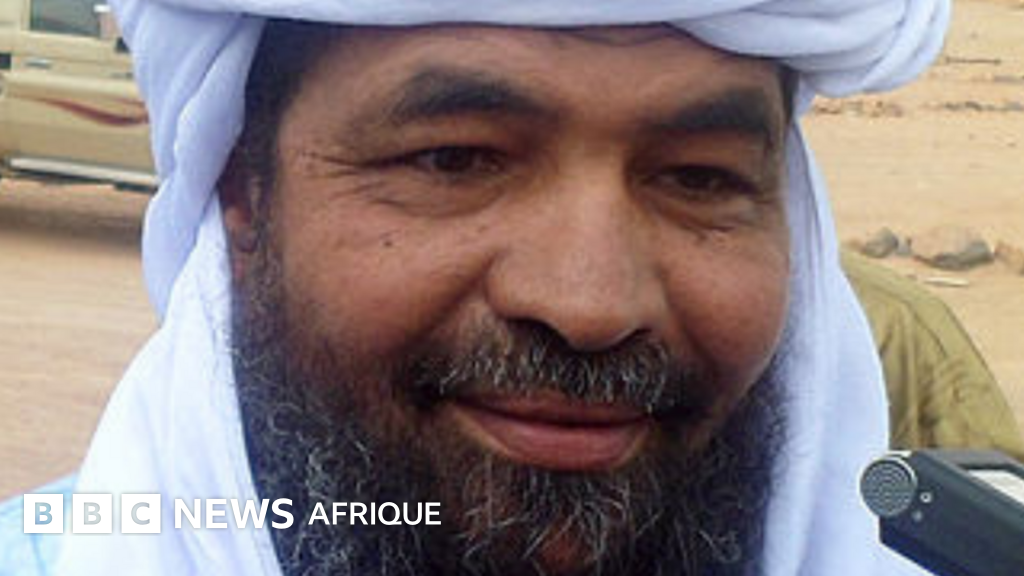
The Malian government has escalated its fight against insurgent forces by announcing substantial cash rewards for the capture of key jihadist commanders linked to recent deadly attacks. In a decisive move, authorities have placed a 2 billion FCFA bounty on Iyad Ag Ghaly, the notorious leader of the Jama’at Nusrat al-Islam wal-Muslimin (JNIM), alongside other high-profile figures suspected of orchestrating acts of terrorism.
Mali’s unprecedented bounty announcement
The announcement follows coordinated assaults on Kidal and Kati in late April, which resulted in significant casualties, including the loss of the Defence Minister, Sadio Camara. The government’s response underscores the growing urgency to dismantle militant networks operating across the Sahel region.
In an official statement broadcast on national television, the Ministry of Security and Civil Protection, led by General Daoud Aly Mouhammedine, called on citizens to assist security forces in locating seven individuals deemed threats to national stability. The communiqué emphasized the government’s commitment to restoring peace and security by any means necessary.
Key figures and their bounties
- Iyad Ag Ghaly (JNIM leader): 2 billion FCFA
- Amadou Koufa and Abdoulaye Mohamed (Habib) (Macina Katiba leaders): 1.5 billion FCFA each
- Algabas Ag Intallah (Azawad Liberation Front commander): 1 billion FCFA
- Ghita, Bilal Chérif, and Abderrahmane Al Banna (Azawad Liberation Front officials): 500 million FCFA each
The rise of Iyad Ag Ghaly and his militant legacy
Born in 1958 in Boghassa, near Kidal, Iyad Ag Ghaly’s journey from rebel leader to jihadist commander has left an indelible mark on Mali’s conflict landscape. His early involvement in the Tuareg rebellion of the 1990s evolved into a radicalized crusade under the banner of Ansar Dine, a group he founded in 2012. Over time, his alliances with Al-Qaeda-linked factions, including AQMI, solidified his role as a central figure in the Sahel’s insurgency.
In 2017, Ag Ghaly consolidated his influence by establishing the Group for the Support of Islam and Muslims (GSIM), uniting various Malian jihadist factions under a unified command. This move amplified his operational capacity, transforming him into the Sahel’s most wanted fugitive and a persistent thorn in the side of Malian authorities.
Strategic shifts in jihadist warfare
Analysts highlight a deliberate shift in Ag Ghaly’s tactics, moving beyond traditional battlefield confrontations to target economic and infrastructural vulnerabilities. By disrupting supply chains and sabotaging critical infrastructure, his forces aim to cripple urban centers, particularly Bamako, exacerbating public hardship and undermining government legitimacy.
According to regional security experts, his ultimate goal is political destabilization rather than territorial control. By exacerbating societal grievances, he seeks to erode confidence in the Malian state, forcing its collapse from within. This strategy has forced authorities to rethink their counterterrorism approach, prioritizing civilian protection alongside military operations.
International accountability
The International Criminal Court (ICC) has already issued an arrest warrant for Ag Ghaly, charging him with crimes against humanity and war crimes committed during the 2012–2013 conflict. His affiliation with Al-Qaeda further complicates regional stability, as the JNIM continues to expand its reach across Mali, Niger, and Burkina Faso.
As Mali grapples with this multifaceted security crisis, the government’s bounty initiative signals a new phase in its counterterrorism efforts, blending military pressure with economic incentives to break the back of militant networks.