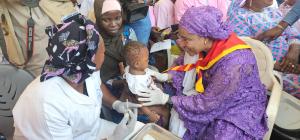
Mali leads Africa with breakthrough hybrid malaria vaccine approach
The Republic of Mali has made history by becoming the first country worldwide to implement a groundbreaking hybrid vaccination strategy against malaria. This innovative approach combines routine and seasonal dosing to maximize protection for children in high-transmission regions.
On World Malaria Day, the Malian Ministry of Health, in partnership with Gavi, UNICEF, and the World Health Organization (WHO), launched this pioneering initiative targeting children aged 5 to 36 months. The hybrid model delivers the first three doses regularly throughout the year based on age, followed by seasonal booster doses in May or June—just before the peak malaria transmission period.
This strategic timing ensures children receive maximum protection when they need it most. Evidence from Malian clinical trials confirms this approach significantly enhances vaccine effectiveness during high-risk months.
The R21/Matrix-M vaccine will initially roll out in 19 priority districts across five regions: Kayes, Koulikoro, Mopti, Ségou, and Sikasso. Mali has secured 927,800 doses for this critical introduction.
Mali’s heavy malaria burden
Mali faces one of the world’s most severe malaria challenges. According to WHO’s 2024 World Malaria Report:
- 3.1% of global malaria cases (8.15 million) occurred in Mali in 2023
- 2.4% of global malaria deaths (14,328) were recorded in the country
- Mali ranked among the 11 nations with the highest malaria burden globally
- Cases surged by 1.4 million between 2019 and 2023
The African Region bears 94% of global malaria cases and 95% of deaths, highlighting the urgent need for innovative solutions.
Key stakeholders praise the initiative
Colonel Assa Badiallo Touré, Mali’s Minister of Health and Social Development, expressed gratitude to all partners: “This vaccine introduction required monumental efforts from every stakeholder. Our researchers’ clinical trial contributions were vital to WHO’s recommendation of RTS,S and R21 vaccines. While this marks a significant milestone, we must scale up implementation to reduce malaria’s devastating impact on our people.”
Dr. Sania Nishtar, Gavi CEO, emphasized: “Mali’s commitment saves lives and reduces malaria’s devastating effects on families and communities. With 20 African countries now deploying malaria vaccines and over 24 million doses delivered, sustained funding remains crucial to ensure equitable access. We’re proud to support this historic advancement.”
Dr. Pierre Ngom, UNICEF Representative in Mali, noted: “After 35 years of dedicated research, this vaccine offers a powerful new tool to protect Malian children. Though not a standalone solution, it complements existing prevention measures. Our community mobilization efforts, including U-Report youth volunteers using digital chatbots, combat misinformation and promote vaccination.”
Dr. Patrick Kabore, WHO Representative in Mali, stated: “The malaria vaccine represents one of public health’s most important recent advances, providing critical protection for children and strengthening our malaria control efforts.”
Global malaria vaccine rollout gains momentum
Mali‘s initiative follows Uganda‘s recent large-scale deployment. Since 2023, over 24 million malaria vaccine doses have been distributed across Africa, with participating countries representing over 70% of global malaria cases.
Early results from countries like Cameroon demonstrate promising outcomes. By the end of 2025, an estimated 13 million additional African children will be protected through vaccination. Gavi’s 2026-2030 strategy aims to fully protect 50 million more children with four-dose regimens, pending sufficient funding.
Why hybrid vaccination in Mali?
Malaria transmission in Mali peaks between July and December. The hybrid approach delivers:
- First three doses year-round based on age
- Seasonal booster doses (4th and 5th) before high-transmission periods
Research shows seasonal administration increases vaccine impact by aligning peak protection with peak transmission risk.
Why target children?
Children under five face the highest malaria mortality risk, accounting for over 75% of global malaria deaths. Without years of exposure to build partial immunity, they’re particularly vulnerable.
Vaccine safety and efficacy
The RTS,S/AS01 and R21/Matrix-M vaccines, both WHO-prequalified and recommended, have demonstrated:
- Over 50% reduction in malaria cases during the first year
- Extended protection with a fourth dose in the second year
- Approximately 75% case reduction when administered seasonally in high-transmission areas
These vaccines target P. falciparum, the deadliest malaria parasite in Africa.
Adapted vaccination programs
Successful implementation requires tailored strategies to reach high-risk populations. Examples include:
- Nigeria: Progressive rollout in Kebbi and Bayelsa states, targeting over 800,000 children
- Chad: Integrated triple vaccine deployment against malaria, pneumonia, and diarrhea
- Sudan and DR Congo: Integration into broader health response plans
Comments are closed, but trackbacks and pingbacks are open.