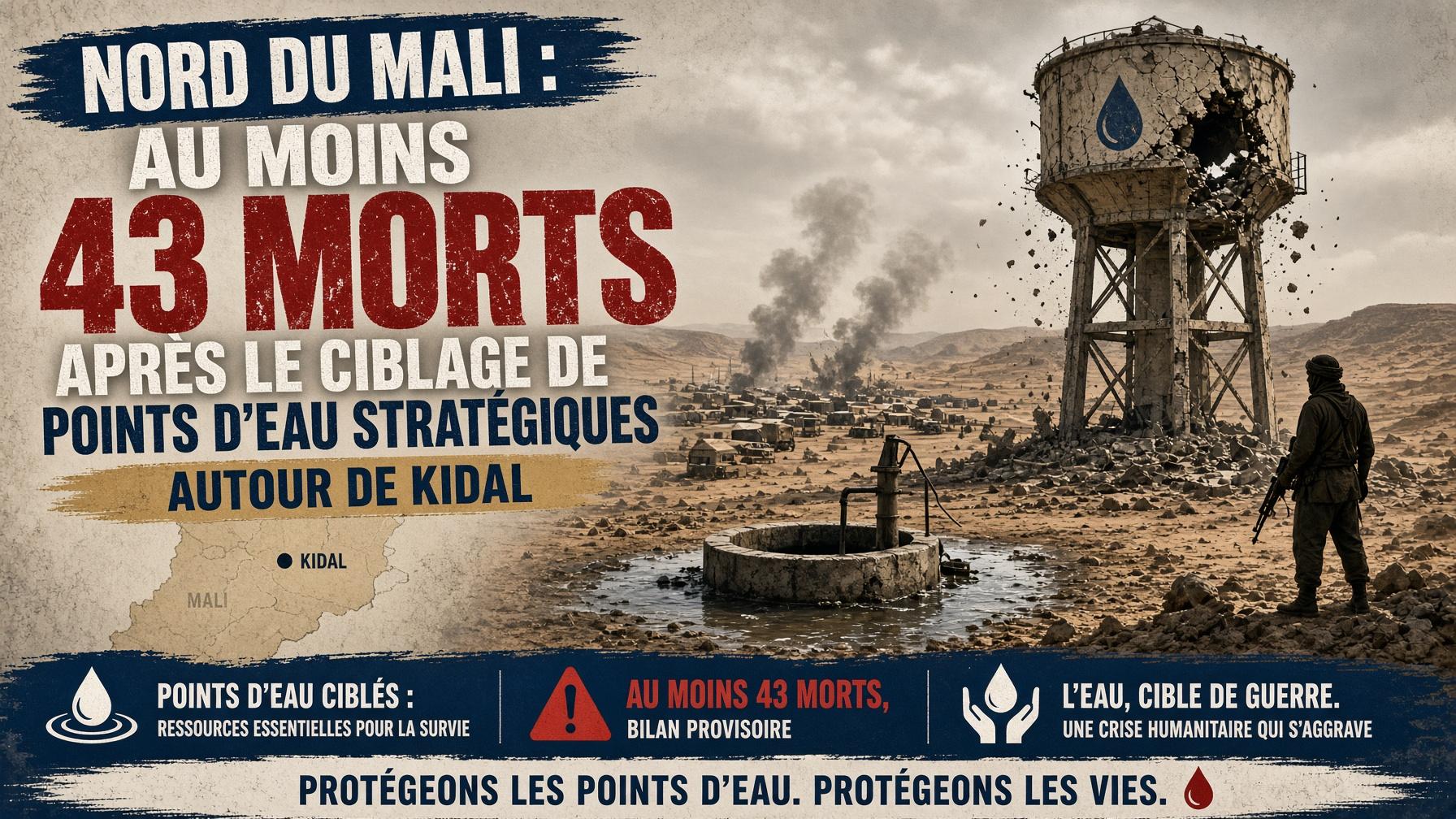
In the arid expanse of northern Mali, water is not simply a resource — it is the thin line between survival and collapse. Between September 15 and 16, 2026, a series of airstrikes and ground assaults carried out by the Malian Armed Forces and their Russian allies tore through vital water infrastructure around Kidal, killing at least 43 people and pushing an entire region to the brink of a humanitarian catastrophe. The human and economic toll is already being measured in lost lives, shattered livelihoods, and a pastoral way of life that may never recover.
An offensive aimed at the lifelines of the desert
In the vast desert reaches of northern Mali, access to water dictates where life can exist. On Tuesday, September 15, 2026, a Su-24 bomber launched airstrikes on the village of Amassine in the Kidal region. The target was the local well — the sole watering point for the herds of surrounding nomadic communities.
The following day, September 16, military pressure intensified at Tassik. Local sources reported that the Malian Armed Forces (FAMa), backed by Russian paramilitary elements, again targeted water infrastructure. The combined toll from these two days is grim: at least 43 dead and numerous civilians wounded, struck while they were near these supply points.
A strategy of suffocation for rural and urban areas
The attacks on Amassine and Tassik are not isolated incidents. They form part of a broader pattern observed over recent months. The destruction of these wells is designed to cut off nomadic populations from drinking water across the entire periphery of Kidal, making pastoral life nearly impossible.
This tactic echoes the degradation of infrastructure seen within the city of Kidal itself. In the urban center, public water and electricity networks have suffered repeated damage, while several places of worship, including mosques, have also been hit during military security operations.
The human and economic impact: pastoralism on the edge of the abyss
For the pastoral communities of Mali’s far north, water is far more than a daily necessity — it is the foundation of their survival and economic model. The deliberate destruction of wells severs access to grazing lands and condemns livestock, the primary wealth of families.
| Impact | Direct consequences for populations |
|---|---|
| Access to drinking water | Immediate shortage for thousands of people and heightened health risks |
| Pastoral economy | Irreversible loss of livestock through dehydration, collapse of local markets |
| Population movements | Forced displacement of nomadic families toward already overcrowded urban areas |
Without access to water points, livestock die within days under extreme temperatures, destroying generations of herders’ work. Stripped of financial resources and food, many households are forced to abandon their traditional way of life and seek precarious refuge in strained urban centers.
A humanitarian situation at a critical threshold
As military tensions remain high in northern Mali, access for international organizations and humanitarian relief on the ground is extremely restricted. The damage to basic civilian infrastructure raises questions about respect for international humanitarian law, which strictly protects goods essential to the survival of civilian populations.
If the destruction of wells and water networks continues, the Kidal region could face mass displacement and the risk of pastoral famine in the coming weeks.
Comments are closed, but trackbacks and pingbacks are open.