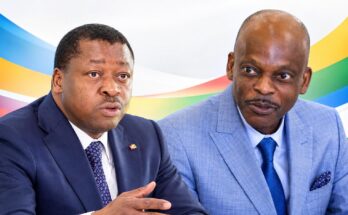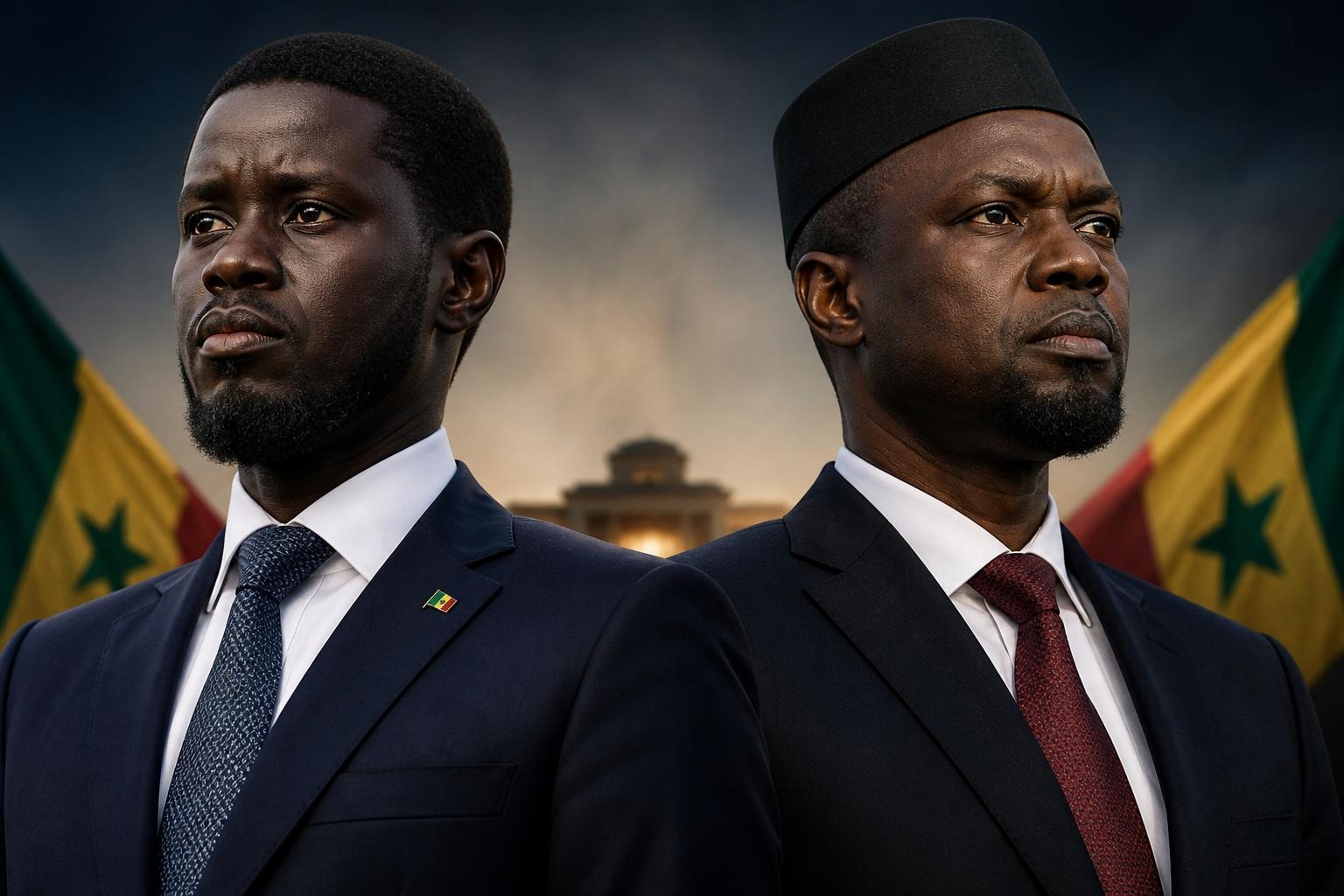
In the heart of West Africa, Senegal is witnessing a pivotal moment in its political landscape. The once-unbreakable alliance between President Bassirou Diomaye Faye and his Prime Minister, Ousmane Sonko, is showing visible fractures. After years of presenting a unified front, tensions have surfaced in a dramatic fashion, signaling a potential shift in the country’s governance.
a weekend that changed the narrative
During a national press interview, President Faye made a striking statement that sent shockwaves through the political sphere. In response to growing public disagreements between government policies and the fiery rhetoric of the Pastef party, he stressed that his allegiance belongs first and foremost to the nation. His words were clear: while his commitment to the reform agenda remains unwavering, his ultimate duty is to the Senegalese people.
Faye’s remarks were not just a rhetorical flourish. He went further, declaring that he would not hesitate to distance himself from any partisan logic that conflicts with his vision for the state. This strong stance has redefined the power dynamic, suggesting that the president is ready to carve out his own path—even if it means parting ways with his former ally.
the sonko factor: a prime minister overshadowing the presidency
The roots of this tension run deep. Elected on a platform that equated voting for Diomaye with choosing Sonko, the president has long navigated the challenges of sharing the spotlight with a charismatic opposition leader turned head of government. Sonko’s continued influence as party leader—through frequent public appearances and direct appeals to supporters—has at times overshadowed official government communication.
Divergences have intensified on critical issues. Sonko’s advocacy for a radical break from international financial institutions contrasts sharply with Faye’s more measured, diplomatic approach. Similarly, the appointment of technocrats versus party loyalists has fueled internal conflicts. The contrast between Sonko’s dynamic, confrontational style and Faye’s calm, institutional demeanor has become impossible to ignore.
is a political split inevitable?
While an immediate separation may not be imminent, the possibility is now openly discussed. President Faye’s statement signals a determination to govern independently, free from the constraints of partisan pressure. In response, Sonko’s team has downplayed the remarks, framing them as a natural division of responsibilities. Yet the president’s words reflect a deeper truth: the presidency will not be held hostage by any political faction.
This evolving situation places Senegal at a crossroads. Past executive duos have often led to institutional paralysis, and concerns are growing about the potential consequences of a rupture. If such a split occurs, Faye may need to govern without the full support of the Pastef’s grassroots network, forcing him to seek new alliances or rely on executive decrees.
the stakes of an independent presidency
For President Faye, the challenge is twofold: to reassure international partners of Senegal’s stability while demonstrating to citizens that he is firmly in control. Public opinion is divided. Some young voters, drawn to Sonko’s charisma, may view this shift as a betrayal. Others, valuing institutional integrity, applaud the emergence of a president willing to assert his constitutional authority.
Faye is playing a delicate game. He must consolidate his power without provoking a social crisis that opponents could exploit. The question is no longer about personal relations between the two leaders, but whether Senegal’s political system can sustain two competing centers of authority.
What we are witnessing is the end of a political myth. Governance is not about loyalty or friendship; it is about the responsible exercise of power. Faye has reminded the nation that the Constitution grants him the mandate to lead—and he is determined to do so. The duo that once symbolized change is now becoming an obstacle to governance. Senegal stands at the threshold of a new era, where the state must take precedence over the party, and the president has just drawn the line.