The bonds between Morocco and the United Arab Emirates stand as a shining example of a strategic partnership rooted in deep historical ties, cultivated by the late King Hassan II and Sheikh Zayed bin Sultan Al Nahyan. These relations are defined by a striking alignment of visions, mutual political backing, a diversified economic collaboration, and a shared commitment to addressing global challenges. This synergy is regularly reflected in high-level exchanges, where leaders from both nations convene at pivotal moments to reinforce their alliance.
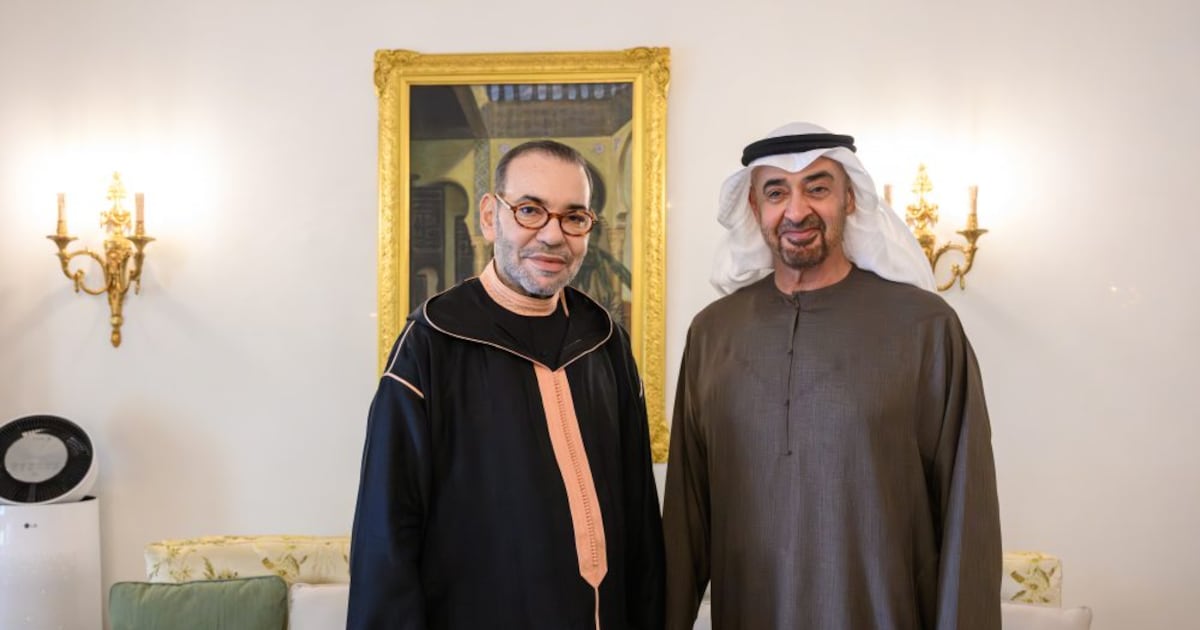
On June 2, Sheikh Mohammed bin Zayed Al Nahyan, President of the UAE, welcomed King Mohammed VI at his residence in Rabat for a private visit. According to an official statement from the Royal Cabinet, the meeting provided a valuable opportunity for the two leaders to exchange perspectives on pressing international issues, with a particular focus on developments in the Gulf and Middle East regions. The encounter underscored the enduring brotherly ties that connect their nations and families.
At the core of this relationship is an innovative and robust partnership agreement, formalized in December 2023 by King Mohammed VI and Sheikh Mohammed bin Zayed Al Nahyan. This framework is designed to leverage their complementary strengths into a dynamic, sustainable collaboration, elevating their economic, trade, industrial, and investment ties to match the depth of their political and social connections. Their mutual trust, continuously nurtured, fuels a pragmatic approach aimed at fostering development and shared prosperity through win-win cooperation.
The partnership is driving the creation of pioneering operational models tailored to their mutual goals. A key focus is supporting high-impact projects, backed by financial mechanisms such as pooled funds, public-private partnerships, and investment capital. Strategic cooperation is also being pursued in critical areas like food security, with initiatives underway to collaborate with Morocco’s OCP Group on fertilizer production. Additionally, joint ventures are in the pipeline for tourism and real estate, particularly along the Mediterranean coast and in Dakhla and Tarfaya. Recovery efforts in areas devastated by the Al Haouz earthquake are also a priority.
On the political front, Morocco has repeatedly underscored the vital importance of Gulf security and stability. During the recent tensions involving the United States, Israel, and Iran, Morocco took a firm stance, condemning Iran’s aggressive actions against Gulf nations. The King’s swift telephone call to Sheikh Mohammed bin Zayed Al Nahyan at the time reaffirmed Morocco’s unwavering solidarity with the UAE.