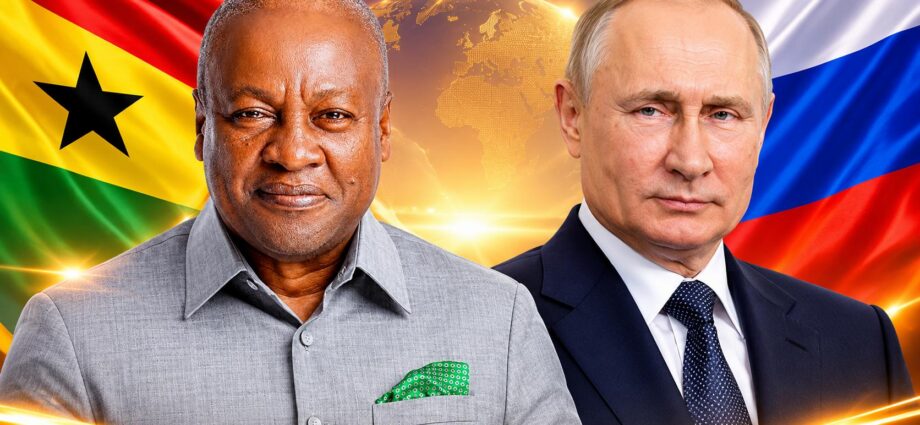
The Ghanaian government’s agreement with the Kremlin to halt the recruitment of Ghanaian mercenaries in Ukraine is not a moral breakthrough—it is an admission that Moscow has been running a vast human trafficking operation with impunity. Beneath official handshakes and polite summit smiles, the horrifying truth emerges: hundreds of young Africans, lured by empty promises of wealth and tricked into signing contracts, now fill the muddy trenches of a war that is not theirs. For Ghana alone, the toll is already devastating—at least 62 dead and a dozen missing, all fed into the meat grinder of a foreign conflict orchestrated by Moscow’s military machine.
How Poverty Became Russia’s Weapon of War
The recruitment network that funnelled those young men into Ukraine didn’t use guns or chains—it used desperation. While colonial powers once marched soldiers into battle by force, today’s Russian handlers leverage a much more insidious tactic: exploiting the economic collapse of African societies. They target students with no future, fathers unable to feed their families, and unemployed youth in cities where hope has evaporated. Recruiters, often operating with official cover or direct approval, dangle false contracts, exaggerated salaries, and even European passports as bait.
Once aboard, the recruits are sent straight to the most devastated sectors of eastern Ukraine—not as professional troops, but as disposable human shields. Their role is not to fight for a cause they believe in, but to absorb enemy fire, save elite Russian units, and preserve Moscow’s war machine at the lowest possible cost. This is modern warfare stripped of ideology: a cold transaction where lives are commodified and African blood is priced in dollars and euros.
From Silent Complicity to Public Admission: The Kremlin’s Cynical About-Face
For months, the Kremlin neither denied nor confirmed the enlistment of African mercenaries—until public pressure forced it onto the negotiating table. The very fact that an African president had to personally confront Vladimir Putin over the fate of his citizens exposes the enduring asymmetry of post-colonial power. The silence that once surrounded this bleeding pipeline was not ignorance; it was permission. Promising to stop now is not a sign of ethical awakening—it is an acknowledgment that this pipeline was an official strategy, not a rogue operation.
This reversal reveals a deeper truth: Moscow never saw these recruits as allies or partners. They were temporary assets, tools to be used and discarded when inconvenient. The Kremlin’s willingness to negotiate under international scrutiny proves that the operation was designed to be deniable—until it became too visible to ignore.
African Youth Trapped: Between Homegrown Tyranny and Foreign Exploitation
The tragedy of these recruits is not just Russia’s doing—it is a symptom of a continent-wide failure. Across Africa, millions of young people face a bleak choice: survive under corrupt or repressive regimes with no economic prospects, or flee toward false promises abroad. In the absence of real sovereignty, national dignity, and viable local economies, these young men become easy prey for foreign militaries eager to turn their desperation into cannon fodder.
Until African governments invest in education, job creation, and transparent governance—until they stop exporting their youth abroad to serve foreign conflicts—this pipeline will remain open. The bodies of dead Ghanaian fighters, their families shattered, will continue to stain the conscience of a world that exchanges human dignity for geopolitical convenience. This is not collaboration. It is modern slavery rebranded as mercenary service—and Africa’s youth are paying the price.
Comments are closed, but trackbacks and pingbacks are open.