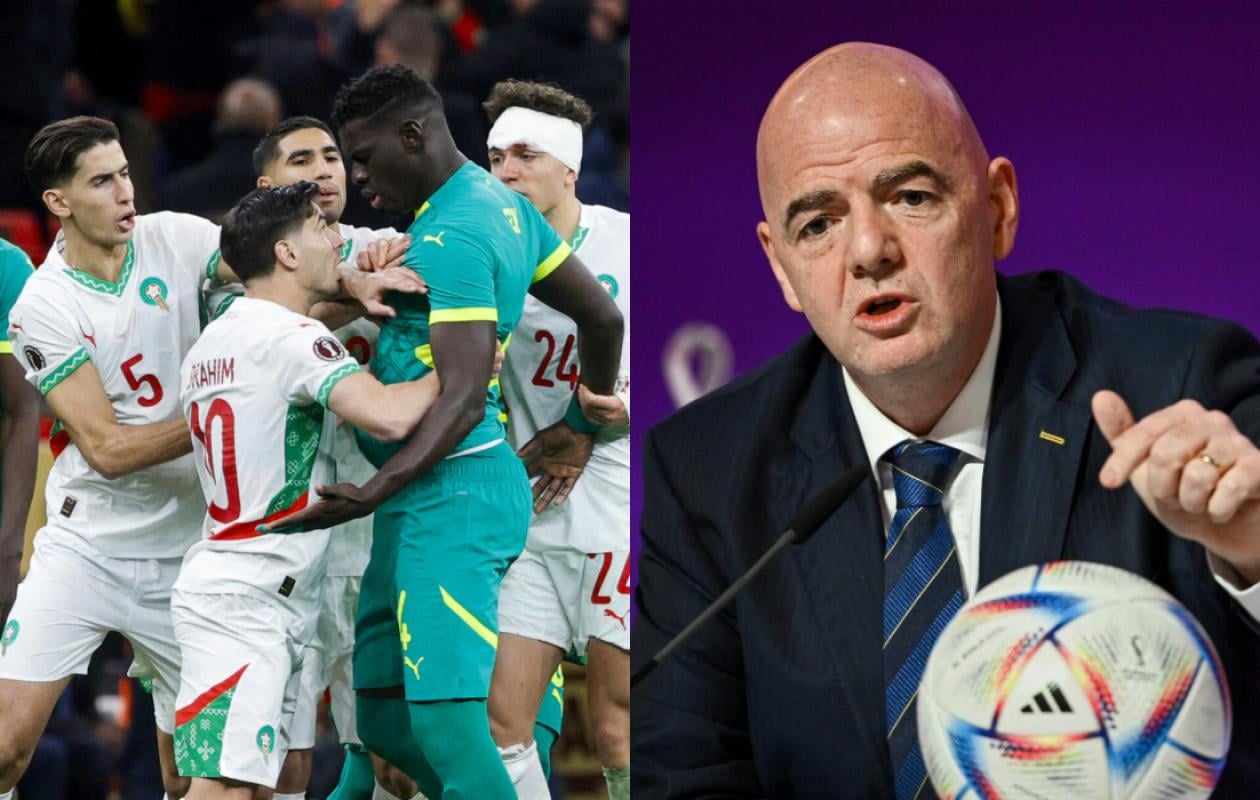
As the FIFA World Cup 2026 approaches, the global football governing body is tightening its regulatory framework to curb extreme on-field disputes. This move follows a series of high-profile incidents, most notably the chaotic 2025 Africa Cup of Nations final between Senegal and Morocco.
The FIFA World Cup 2026, co-hosted by the United States, Canada, and Mexico from June 11 to July 19, will implement stricter rules designed to prevent match interruptions and referee challenges. These amendments, approved by the International Football Association Board (IFAB), aim to preserve the integrity of international competitions.
Key changes in FIFA’s new regulations
One of the most significant updates is the immediate expulsion rule for players who voluntarily leave the pitch in protest of referee decisions. Coaches or staff members encouraging such actions will also face disciplinary action.
The revised guidelines state: « At the discretion of the match organiser, any player leaving the field to contest a decision may be sent off. This includes officials who instigate or support such behaviour. »
Forfeiture penalties for deliberate match abandonment
Another major shift involves sanctions for teams that cause the definitive abandonment of a match. Under the new rules, any side responsible for halting play will face a forfeiture loss, ensuring matches proceed without unwarranted interruptions.
The 2025 AFCON final between Senegal and Morocco serves as a backdrop for these changes. Following a disputed penalty awarded to Morocco and a disallowed goal for Senegal, the Senegalese players briefly walked off the pitch under the orders of their coach, Pape Thiaw. The match resumed after negotiations, but the incident highlighted the need for stricter enforcement.
Why FIFA is enforcing zero-tolerance policies
The global football community has increasingly criticised disruptions that undermine the sport’s credibility. By introducing these measures, FIFA seeks to:
- Maintain competitive fairness by preventing tactical delays or protests.
- Protect referee authority from public challenges that could influence outcomes.
- Ensure smooth tournament progression by eliminating avoidable match stoppages.
With these reforms, FIFA signals a firm stance against actions that jeopardise the sport’s professionalism and global appeal ahead of the 2026 World Cup.