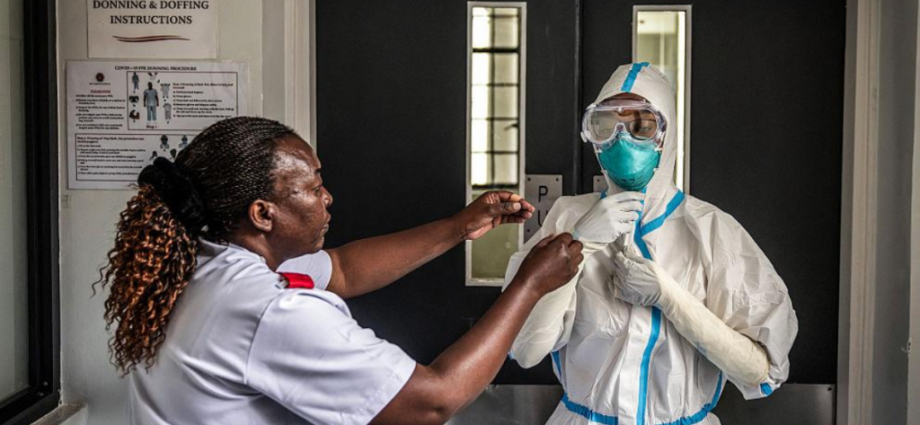
First Nigeria Ebola case confirmed in Abuja after regional outbreak
Health authorities in Nigeria have confirmed the country’s first case of Ebola in years, marking a critical moment in the continent’s fight against the deadly virus. A woman who recently traveled through East Africa was diagnosed in Abuja after developing symptoms earlier this month.
The patient, who sought medical care on October 11 following the onset of fever and severe fatigue on October 7, tested positive for the Bundibugyo strain of Ebola on October 20. She has since been isolated and is receiving medical treatment. Health officials have identified 44 high-risk contacts and are actively monitoring them to prevent further transmission.
Nigerian health minister Muhammad Ali Pate confirmed the case, stating: “The patient is in isolation and receiving proper medical care, while contact tracing operations are underway.” This development raises concerns as the virus, previously limited to Central and East Africa, appears to be spreading toward West Africa.
Ebola’s regional spread tests Africa’s preparedness
The detection in Nigeria comes as Ebola continues to challenge health systems across Africa. The current outbreak, linked to the Bundibugyo strain, originated in the Democratic Republic of Congo (DRC) in May 2026. Since then, cases have been reported in multiple African nations, including Kenya, which confirmed nine infections by October 20.
The Nigerian patient’s travel history suggests possible exposure during a stopover in Uganda after visiting Eastern DRC, though authorities have not yet pinpointed the exact source. Investigators are working to reconstruct her itinerary, a task complicated by cross-border mobility and complex regional travel patterns.
This uncertainty underscores the challenges of containing a virus that thrives on human movement. Dense air travel networks, commercial activity, and regional migration make rapid detection and response essential to preventing further spread.
Lessons from West Africa’s 2014-2016 Ebola crisis
For Nigeria and its neighbors, the reemergence of Ebola evokes bitter memories of the 2014-2016 epidemic, which devastated Guinea, Liberia, and Sierra Leone, claiming over 11,000 lives. Nigeria, though affected, successfully contained its outbreak through aggressive contact tracing and public health interventions.
That experience provides a blueprint, but success is not guaranteed. Health officials must act swiftly to:
- Detect new cases quickly
- Protect healthcare workers from infection
- Ensure rigorous monitoring of exposed individuals
The response involves multiple agencies, including the Nigerian Centre for Disease Control (NCDC), Africa CDC, and the World Health Organization (WHO). Key priorities include strengthening border surveillance, improving laboratory diagnostics, and reinforcing prevention measures.
Understanding Ebola transmission and symptoms
Ebola is a severe viral illness characterized by:
- High fever
- Severe fatigue
- Muscle pain
- Vomiting and diarrhea
- In advanced cases, uncontrolled bleeding
The virus spreads through direct contact with bodily fluids from an infected person or contaminated objects. It does not transmit through casual contact, such as being in the same room.
Public communication will be vital in preventing panic while ensuring community cooperation. Health officials urge anyone with symptoms and a potential exposure history—such as recent travel to affected regions—to seek medical care immediately, rather than self-medicating or avoiding treatment.
What comes next for Nigeria and the region
While a single confirmed case does not signal an outbreak in Nigeria, the situation remains fluid. The outcome will depend on the effectiveness of contact tracing, the identification of any additional infections, and the speed of the health response.
But the stakes are high. With Africa’s most populous nation now on alert, the window for containment is narrow. Delayed action risks allowing a single imported case to spiral into a broader crisis. For Nigeria’s health system and its neighbors, the priority is clear: coordinate swiftly, communicate transparently, and act decisively to halt Ebola’s march across the continent.
Comments are closed, but trackbacks and pingbacks are open.