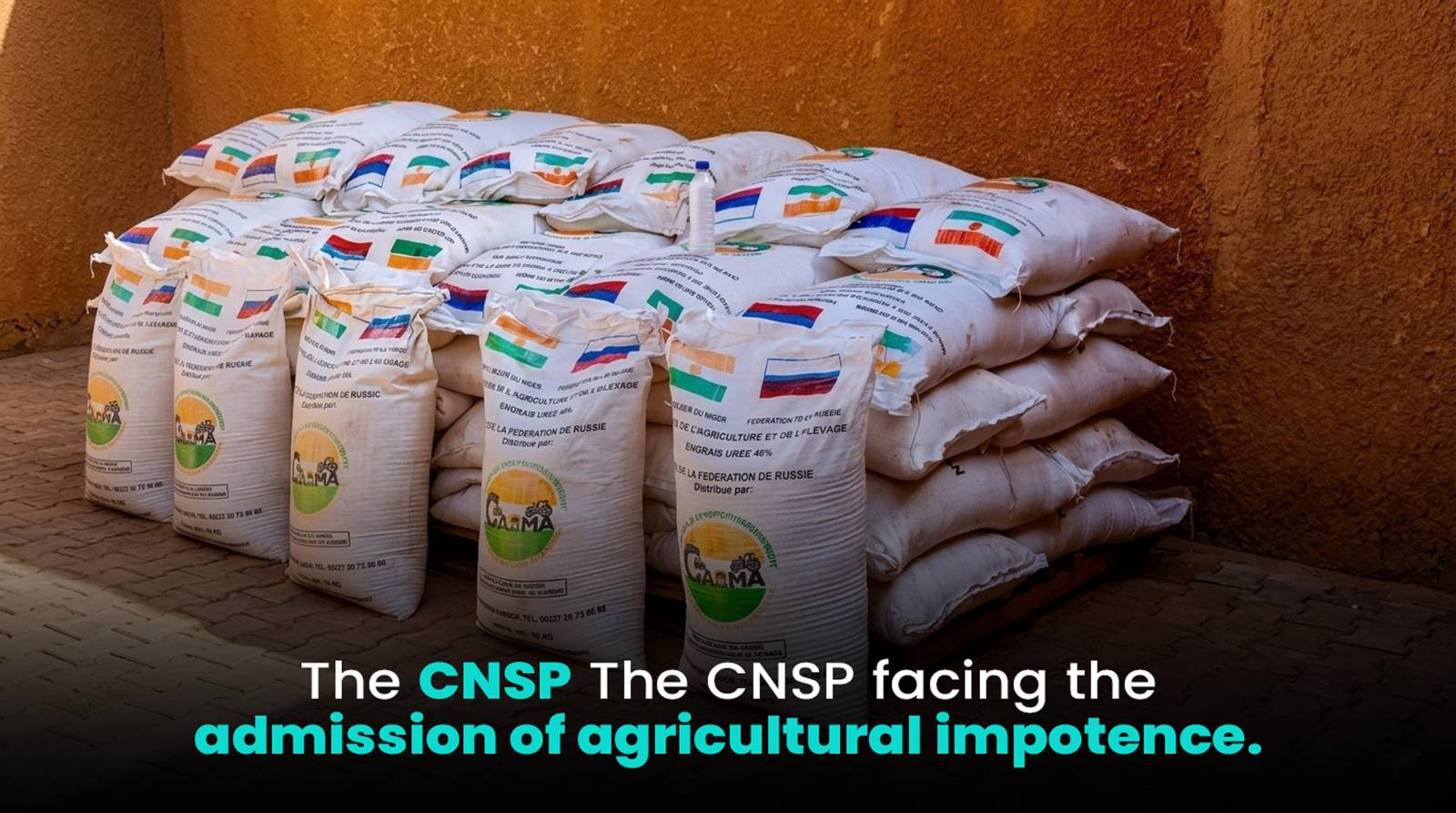
As the nation undergoes a thorough reconfiguration of its external partnerships, Niger has formally accepted a contribution of 20,000 tonnes of fertilizer provided by the Russie. This significant shipment, which arrived through the port of Lomé before being transported by land, reflects the transitional government’s stated ambition to stimulate domestic agricultural yields and eventually secure national food self-sufficiency.
Strategic reinforcement for the farming sector
This delivery of agricultural inputs arrives at a pivotal moment for farmers in Niger. In an environment marked by fluctuating global market prices and environmental instability, obtaining fertilizer remains a primary hurdle to improving crop production. The government of Niger has indicated that these supplies will be allocated to support small-scale producers, who represent the backbone of the domestic economy.
According to the Conseil National pour la Sauvegarde de la Patrie (CNSP), this gesture from Moscou represents the practical application of a “mutually beneficial” partnership. It is viewed as a form of tangible solidarity that diverges from traditional aid frameworks, which Niamey often regards as being burdened by restrictive political prerequisites.
The intersection of external assistance and national sovereignty
The acceptance of such aid by a government that emphasizes strict national sovereignty has sparked analytical discourse. Observers are questioning the consistency of relying on foreign donations while simultaneously advocating for total independence.
The pragmatism of the transition: For the current leadership, sovereignty is not synonymous with isolationism. Instead, it is defined by the autonomy to select strategic partners. By opting for assistance from the Russie rather than traditional Western sources, Niamey is signaling a departure from historical spheres of influence and a desire to diversify its international support network.
Food security as a priority: The authorities maintain that political autonomy remains superficial without a robust foundation of food security. From this perspective, the Russian fertilizer is treated as a “production instrument” designed to diminish future reliance on grain imports.
The challenge of new dependencies: Some critics caution that substituting one source of reliance for another—shifting from West to East—could leave the country vulnerable. They argue that for sovereignty to be fully realized, this temporary support must be accompanied by long-term investments in domestic infrastructure for the production of agricultural inputs.
A shift toward diplomatic realism
This donation highlights the deepening of the Niamey-Moscou relationship, which is now expanding beyond military cooperation to include essential sectors such as rural development.
“Genuine sovereignty begins with a nation’s capacity to sustain its population through its own resources. If this contribution revitalizes our agricultural lands, it represents a step toward true liberation,” notes a regional analyst.
In summary, while accepting donations might seem at odds with the rhetoric of self-reliance, Niger appears to be adopting a realist approach: leveraging the resources of new allies to incrementally establish the foundations of its economic independence.
Does the path to true sovereignty for Niger require the immediate development of domestic fertilizer factories, or is the strategic diversification of international partners sufficient to safeguard its independence?