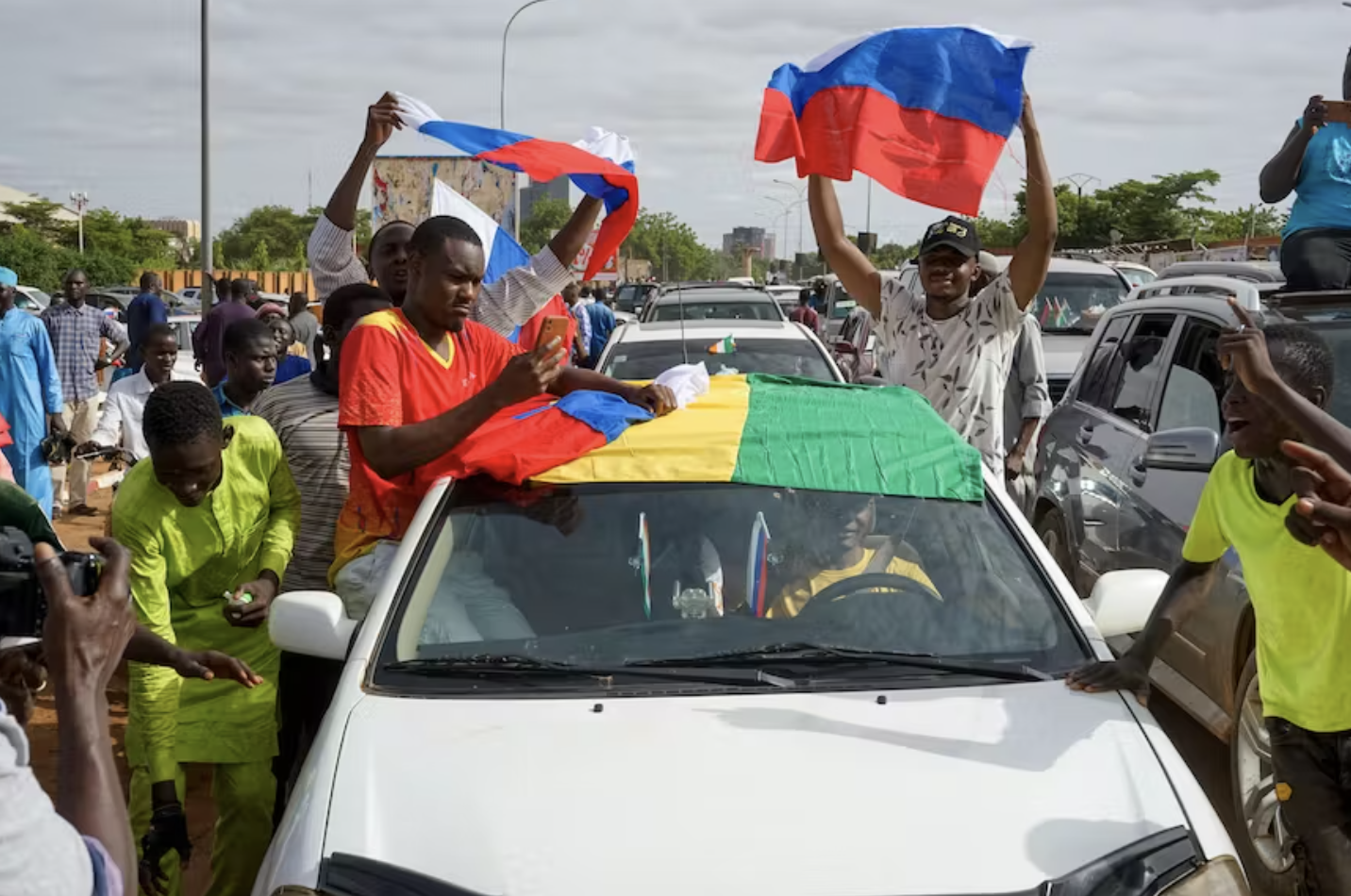
The military takeover in Niger, orchestrated by General Tiani, which deposed President Bazoum on July 26, marks the latest in a series of destabilizing events across the Sahel. Since 2020, the region has witnessed six coups; Niger’s adds a seventh to this concerning tally. However, the reactions from both regional and international bodies have been unprecedented – more forceful, yet simultaneously more fragmented and uncertain, than in any prior instance. This particular coup carries profound global implications and potentially greater perils than its predecessors. It could very well signify a critical juncture for security, governance, multilateral cooperation, and broader international relations within Africa. Below, we delve into three key reasons why this coup diverges significantly from earlier Sahelian power shifts and holds such crucial importance.
1. A complex tapestry of causes, not a simple narrative
The precise motivations behind the coup against President Bazoum in Niamey on July 26 remain a subject of intense debate among observers, analysts, and even those within Nigerien power circles.
While coup dynamics are inherently intricate, the factors driving recent coups in neighboring Mali and Burkina Faso since 2020 were relatively clear. In August 2020, Malian colonels capitalized on widespread public dissatisfaction and unrest against President Ibrahim Boubacar Keita’s perceived corrupt administration. They presented themselves as saviors, restoring public order and embodying the popular will. When civilian transitional authorities attempted to reconfigure the government at the military’s expense, the armed forces reasserted their dominance in what was termed the “coup within the coup” in May 2021. In Burkina Faso, the coups of January and September 2022 stemmed from strained relationships between the military and civilian leadership, as well as internal rifts within the security forces, all set against a backdrop of severe challenges posed by jihadist insurgents. Lieutenant Colonel Damiba ousted President Christian Kabore, only to be deposed himself months later by Captain Ibrahim Traore following significant military defeats against jihadist militants in Inata (November 2021) and Djibo (September 2022).
In stark contrast, the coup against President Bazoum was not preceded by widespread street protests in Niamey, nor did it follow major battlefield setbacks against jihadist groups. While President Bazoum’s legitimacy from the 2021 general elections wasn’t flawless, with initial fraud allegations, these never coalesced into a political force strong enough to threaten his tenure. Furthermore, unlike the term of his predecessor, Mamahadou Issoufou (from the same political party), which was plagued by corruption scandals, Bazoum’s presidency was largely untainted. On the security front, the situation had been objectively improving since his election.
To date, no single, comprehensive explanation for the Nigerien coup has emerged. It appears to be the culmination of uncontrolled, cascading events. Initiated by General Tiani, the commander of the Presidential Guard responsible for Bazoum’s protection, Tiani was widely regarded as Mamahadou Issoufou’s “man” within the presidential palace. Both Tiani and Issoufou may have harbored personal or business-related grievances over some of Bazoum’s recent decisions. What is now unequivocally a coup likely began as an elite-level dispute over arrangements inherited from the Issoufou era. This initial friction then created an opening for other officers, historically opposed to Issoufou and Bazoum’s political party, to join forces and subvert the sitting president. This move by dissenting officers sparked discussions within the military, leading to the formation of the National Council for the Safeguard of the Homeland (CNSP) within hours, with Tiani at its helm. This foundational, yet fragile, agreement among military factions was swiftly followed by calls for popular support and a series of administrative appointments, designed to solidify the fait accompli. As of now, President Bazoum, his wife, and son remain detained under the watchful eye of Tiani’s forces. Power dynamics within the military leadership still appear fluid, as numerous interest groups now jockey for position around the new military leader, whose poorly articulated plans for the nation remain ambiguous.
2. The specter of regional conflict looms large
In an unprecedented move, the West African regional bloc ECOWAS issued a one-week ultimatum demanding a return to constitutional order, explicitly backed by the threat of military force against the putschists. This assertive approach sharply contrasts with the organization’s handling of previous coups in Mali and Burkina Faso, which typically involved a more ‘classic’ script of sanctions and ECOWAS-led negotiated transitions.
ECOWAS’s divergent course of action seems to be driven by several factors. Firstly, Nigerian President Tinubu, newly installed as ECOWAS chair, campaigned on the pledge of ‘stopping the coups’. The seemingly contagious spread of authoritarian governance in the Sahel challenges and undermines ECOWAS’s core principles of civilian rule. Tinubu’s own credibility, alongside that of ECOWAS, in swiftly restoring constitutional order was therefore on the line.
Secondly, given the tentative beginnings of the coup, which suggested both poor planning and internal divisions within Nigerien security forces, ECOWAS likely sought to quash the crisis early and decisively, hoping to avoid another protracted transition scenario akin to neighboring states.
However, the threat backfired. The Nigerien junta refused to dispatch a high-level delegation to meet ECOWAS envoys during the ultimatum week. Instead, they galvanized both domestic support against ‘external aggression’ and regional backing from coup leaders in Mali, Burkina Faso, and Guinea, escalating the stakes to a potential regional conflict. While ECOWAS’s ultimatum undeniably drew attention to the situation and signaled an end to tolerating coups, it also inadvertently strengthened the junta’s position, fueled by a potent nationalist sovereignty discourse. In the week leading up to the ultimatum’s expiration, the junta and its influential social media channels created an electric atmosphere, propagating the narrative of an imminent ECOWAS aggression, allegedly orchestrated by France.
The prospect of war has deepened divisions among ECOWAS member states, placing the regional bloc in a difficult predicament. Military intervention faces opposition not only from Nigeriens but also from significant segments of public opinion in potential troop-contributing countries, particularly in Nigeria. A war would almost certainly exacerbate the humanitarian, security, and political crises in the region, potentially benefiting jihadist insurgents who have already launched multiple deadly attacks since the coup. Yet, ECOWAS is now bound by its own declarations and risks losing face if it fails to act as negotiations repeatedly falter. Time clearly favors the putschists: a ‘transition’ is not a concession they would make to the international community; it is, in fact, their primary strategy, successfully tested and approved by their Malian and Burkinabè counterparts, who gained power through such a regime with minimal obligations.
3. Global ramifications and heightened international stakes
Regionally, ECOWAS’s threat of force has met resistance from its suspended members, not only raising the specter of a regional war but also threatening the very cohesion of the organization. The potential for conflict has not only shaken ECOWAS member states but has also triggered strong and polarized international responses. The previous diplomatic alignment, with ECOWAS at the forefront of conflict resolution efforts and France as the primary external actor, no longer holds. On a continental level, a divided African Union took over a week to issue a joint statement, merely supporting ECOWAS efforts and “taking note” of the standby force deployment.
Beyond Africa, France and the US, two critical players in the region, have adopted markedly different approaches to the crisis. France took an uncompromising stance from the outset. It condemned the coup, evacuated its citizens, and openly supported an ECOWAS military intervention while advocating for President Bazoum’s liberation and reinstatement. This firm position was swiftly penalized by the junta, which suspended all military cooperation.
In contrast, the US has undertaken unprecedented diplomatic efforts to resolve the crisis, dispatching a high-ranking US official for negotiations with the junta and rejecting the use of force as a viable solution. While the US calls for President Bazoum’s release, it deliberately avoids labeling the event a “coup” to circumvent legally mandated cessation of military collaboration. The US has been vocal about its desire to maintain military ties, particularly given its investment in one of the continent’s largest drone bases in Agadez. The previously unimaginable scenario of US troops remaining in Niger (potentially alongside other European forces already present), while French troops are forced to withdraw, is now a distinct possibility. Such a situation could severely strain bilateral relations between France and the US. For France, increasingly seen as a problematic ally by some Western partners, this could signify a humiliating end to a decade-long military engagement in the Sahel and a significant blow to its aspirations for international influence, as Niger was intended to be the testing ground for a revitalized security partnership in the Sahel, built on lessons learned from its abrupt and controversial exit from Mali.
Conclusion
“In Niger, a coup is not a surprise, but a statistical probability,” observed Rahmane Idrissa, highlighting that this is the country’s fifth coup and thus, in some ways, a continuation of a persistent structural civil-military imbalance. Nevertheless, this particular coup distinguishes itself from previous ones in Niger – some of which were even seen as ‘corrective’ and pro-democratic – and from other Sahelian coups of recent years. Its uniqueness lies precisely in the absence of a clear, plausible justification. With the coup seemingly driven by divergent and confused rationales, the international responses have unfortunately mirrored this fragmentation and uncertainty. Each actor has pursued its own approach, heavily influenced by national interests, rather than adhering to established norms or agreements among partners. This divided strategy, combined with lessons learned from neighboring countries, has empowered the junta to disregard negotiation attempts and solidify its position, capitalizing on internal, regional, and international divisions. It therefore appears highly probable that this coup – one too many – has profoundly undermined hopes for a return to constitutional order and democracy in the region, while simultaneously dismantling what little regional and continental cohesion remained.
Yvan Guichaoua (@YGuichaoua) is a Senior Lecturer in International Conflict Analysis at the Brussels School of International Studies. He’s been studying security and politics in the Sahel since 2007.
Nina Wilén (@WilenNina) is Director of the Africa Program at the Egmont Institute & Associate Professor of Political Science at Lund University and does research on military interventions in Africa with a focus on the Sahel and the Great Lakes.
Comments are closed, but trackbacks and pingbacks are open.