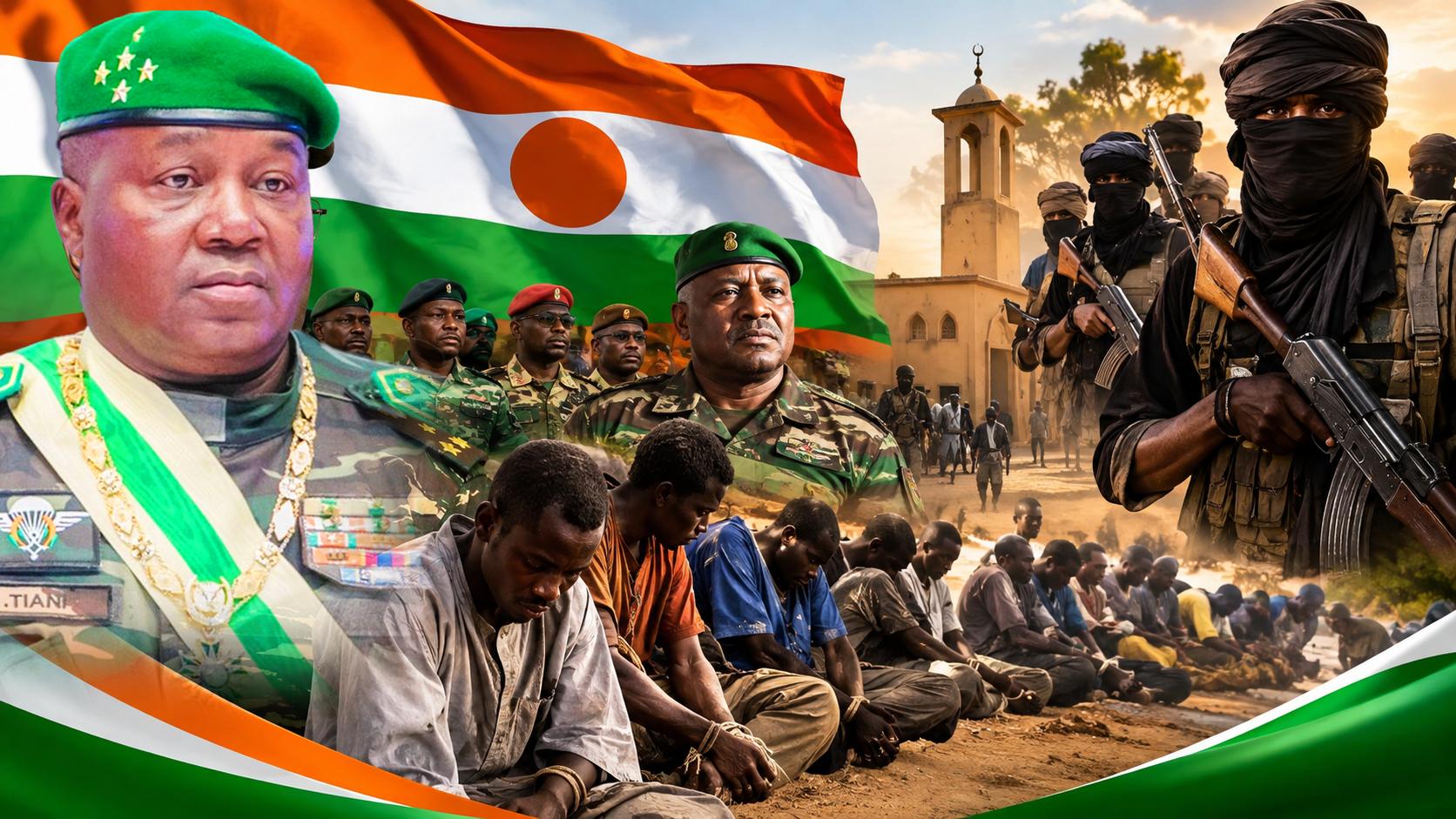
On August 21, 2026, Niger witnessed a security failure so profound it shattered public trust in the military regime. Moments after Friday prayers ended, heavily armed militants surrounded multiple mosques, sealed all exits, and forcibly marched nearly 500 worshippers—men, elders, and boys—into dense forest cover. Days later, their fate remains unknown. This mass abduction isn’t just a security lapse; it’s a devastating indictment of how ordinary citizens, businesses, and communities now bear the brunt of a state that can no longer guarantee basic safety.
The friday prayer that turned into a national trauma
Just after 1 p.m. on that fateful Friday, peaceful devotion gave way to orchestrated terror. Dozens of well-armed assailants executed a coordinated siege, trapping hundreds inside places of worship before marching them at gunpoint into the wilderness. The operation’s scale revealed meticulous planning—yet no group claimed responsibility, and no ransom demands surfaced. Families, left in agonizing uncertainty, now scan forest edges for any sign of life, their grief compounded by official silence.
Broken promises: sovereignty without security
When the National Council for the Safeguard of the Homeland (CNSP), led by General Abdourahamane Tiani, seized power from democratically elected President Mohamed Bazoum, it justified the coup with one central pledge: end the terrorist threat and restore state authority. Three years on, that promise lies in ruins. Anti-Western rhetoric and the expulsion of international partners have not translated into safer streets or protected villages. Instead, under-equipped and overstretched Nigerien forces struggle to contain expanding armed factions, exposing a chasm between televised nationalist proclamations and rural reality.
Economic and social fallout in abandoned regions
This mass kidnapping is not an isolated event—it’s the culmination of systemic state retreat from peripheral areas. By removing allied forces without establishing a viable domestic alternative, the junta created a strategic vacuum swiftly filled by jihadists and criminal networks. Across vast swathes of the country, government presence has vanished. Security forces hunker down in isolated garrisons, unable to patrol or respond. Local economies stall as markets empty, farmers abandon fields, and families flee. Businesses face collapse not from competition, but from the impossibility of operating in zones where lawlessness reigns.
Leadership silence deepens public despair
In the wake of this unprecedented crisis, the CNSP’s response has been telling: near-total silence. While quick to denounce foreign interference or trumpet phantom victories, the regime has offered no concrete rescue plan, no negotiation framework, and no reassurance to grieving families. This absence of leadership erodes what little credibility remains. When citizens can’t worship safely in their own mosques, the state’s legitimacy crumbles—not in theory, but in lived experience.
A nation at a breaking point
The August 21 abduction marks a dangerous escalation. Armed groups now demonstrate they can strike en masse during sacred gatherings with impunity. Beyond the immediate search for the missing, Niger faces a deeper reckoning: how long can a population endure the gap between a junta’s political ambitions and its failure to deliver fundamental protection? For citizens, traders, and communities across the country, the cost is no longer abstract—it’s measured in vanished neighbors, shuttered shops, and a future held hostage by insecurity.
Comments are closed, but trackbacks and pingbacks are open.