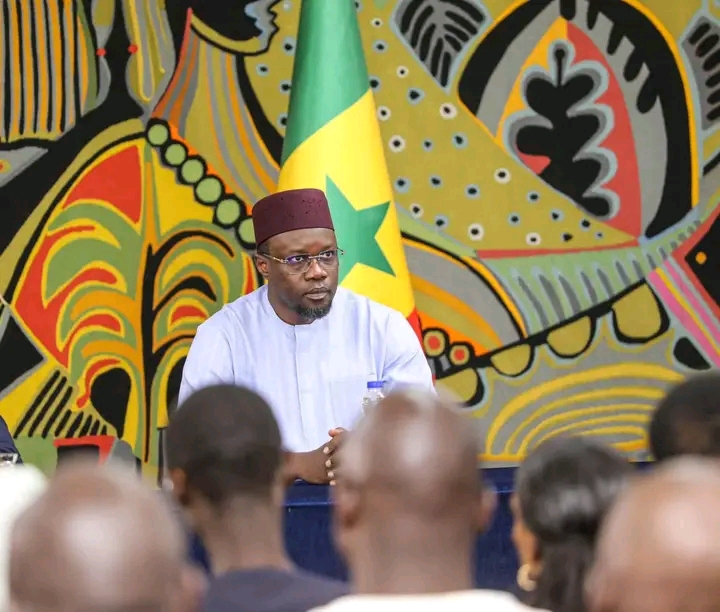
During a high-stakes interministerial council meeting held in Dakar on May 21, Senegal’s Prime Minister Ousmane Sonko delivered a blunt assessment of the country’s governance challenges, particularly the lingering effects of financial mismanagement under the previous administration.
The session, which followed the presentation of a sweeping audit on public assets and infrastructure, revealed staggering losses attributed to inefficiency and alleged corruption. According to the report, 245 public infrastructure projects and strategic assets—worth over 5,000 billion FCFA (roughly equivalent to Senegal’s annual national budget)—are either stalled, abandoned, or severely underutilized.
«These figures defy reason,» Sonko declared, his frustration palpable. He highlighted the absurdity of projects like the Sandiara high school, initiated in 2014 and still incomplete after a decade. «Twelve years to build a single school? That’s sheer negligence,» he remarked, underscoring what he described as a systemic failure in project execution.
Of the 94 active construction sites across the nation, 62 have ground to a halt, consuming an additional 5.227 billion FCFA in wasted resources. Sonko condemned these figures as evidence of «sheer waste,» suggesting they rival the country’s public debt in scale.
Accountability under scrutiny
The Prime Minister didn’t stop at infrastructure. He directed sharp criticism at the judiciary, accusing it of shielding powerful figures from the former regime who are alleged to have embezzled public funds. «At times, I question whether this fight is worth it,» Sonko admitted, his voice tinged with exasperation. «In this country, you can plunder with impunity and face no consequences. The system remains unbroken.»
He went further, alleging «judicial sabotage» involving certain magistrates who, he claimed, deliberately obstruct investigations. «These cases belong to the people, not the courts,» he asserted, signaling a potential escalation in his rhetoric in the coming weeks.