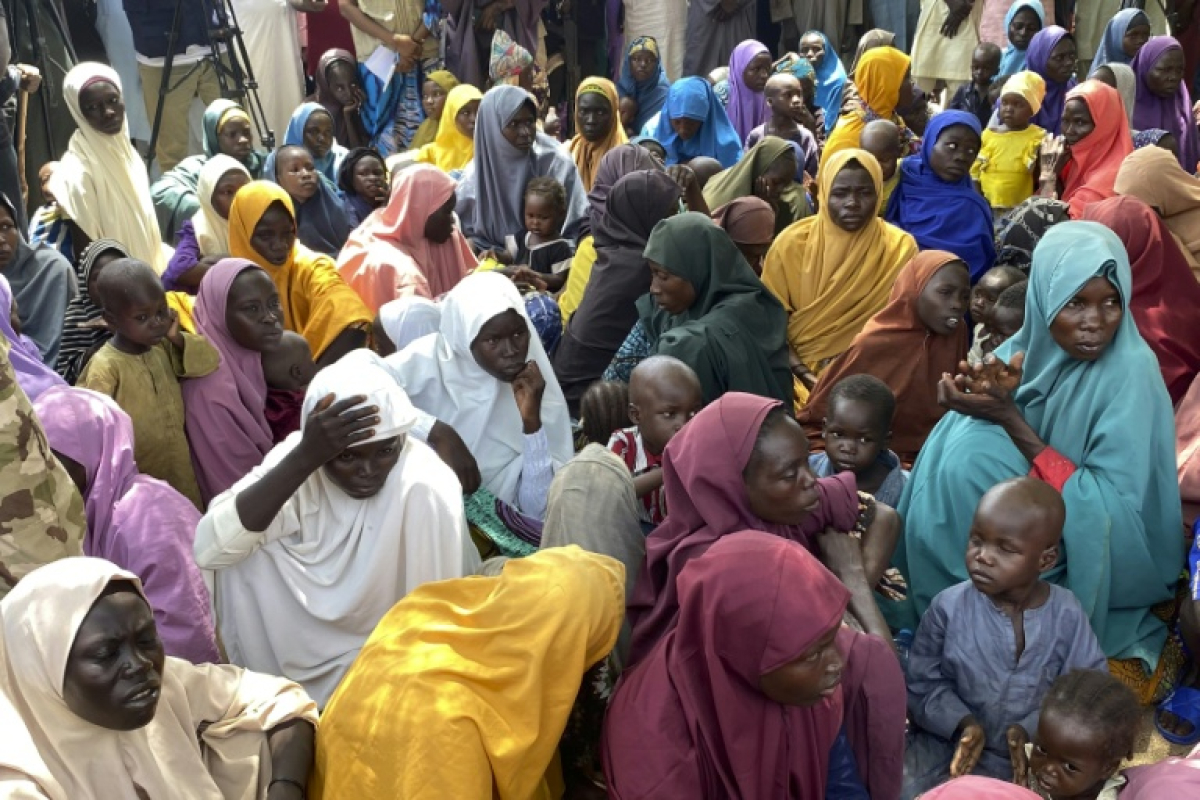
On Monday, the Nigerian army transferred more than 400 women and children to local officials after they were rescued earlier this year from Boko Haram captivity in the northeastern state of Borno.
Since 2009, a jihadist insurgency led by Boko Haram and later by its rival, the Islamic State in West Africa (Iswap), has killed tens of thousands and displaced millions in Africa’s most populous country.
Mass kidnappings, often followed by ransom-driven releases, are a regular tactic used by the Islamist militants.
The military announced on Sunday that around 360 people had been freed over the weekend, not through a Boko Haram release but during an army operation conducted “thanks to intelligence.”
Another 82 captives were freed “two to three weeks ago,” Borno state governor Babagana Umara Zulum said on Monday, bringing the total number of rescued former captives to “approximately 434.”
The victims were abducted from the village of Ngoshe, less than 10 kilometers from the Cameroon border in the Gwoza hills, a Boko Haram stronghold. The village has repeatedly suffered attacks from Islamist fighters.
“We thank Allah the almighty for this rescue,” said one of the freed women, Hassana Buba, 43, at the Pulka displacement camp where the former captives were handed over to local officials. “We are very grateful and we are also celebrating this,” she added.
Authorities deny paying ransoms, though analysts say it is a common practice by both the government and victims’ families.
Approximately $1.66 million was paid in ransoms from July 2024 to June 2025 to various armed groups in Nigeria, including jihadists, bandits, and separatists, according to a report by SBM Intelligence, a Lagos-based consulting firm.