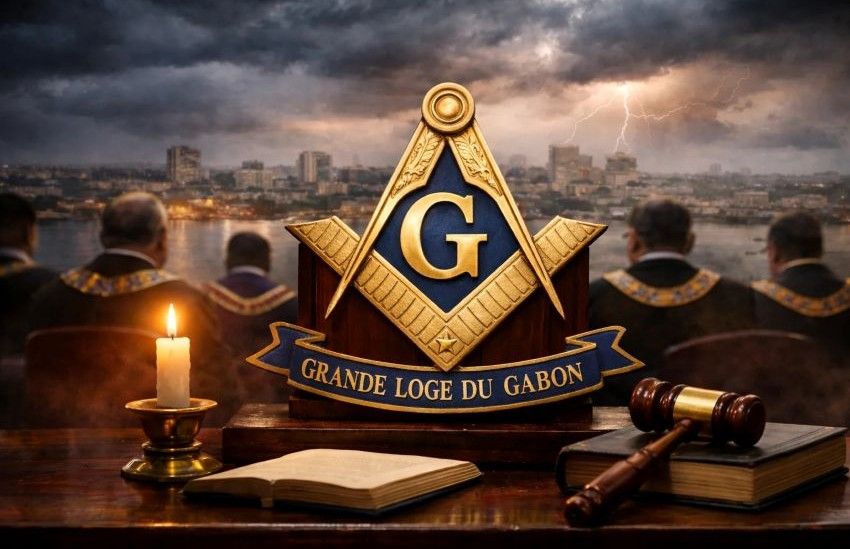
power struggle shakes Gabon’s freemasonry roots
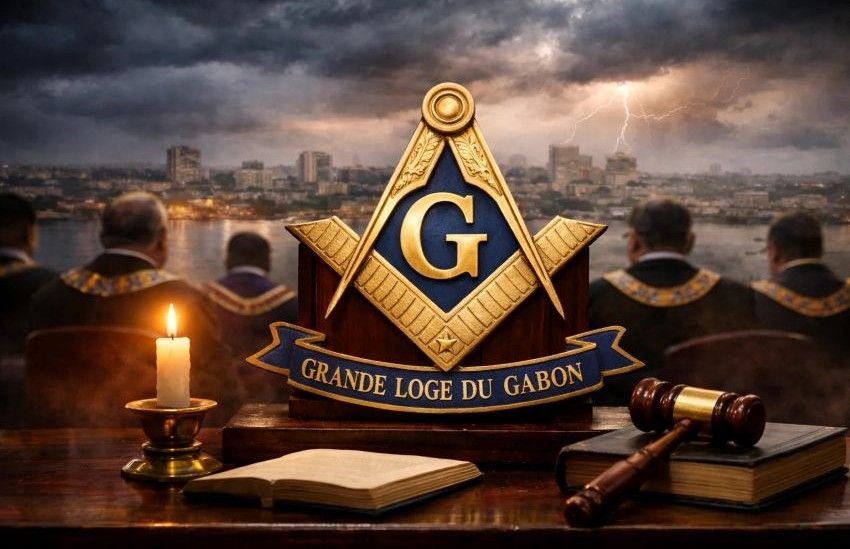
Libreville, June 19, 2026 — For generations, the Grand Lodge of Gabon (GLG) has operated behind closed doors, wielding influence while maintaining an image of stability amid political turbulence. Today, that carefully constructed facade is crumbling.
The influential Masonic institution now faces an unprecedented internal crisis marked by leadership disputes, financial irregularities, and deepening divisions. What began as behind-the-scenes disagreements has evolved into a full-blown confrontation that threatens the very foundations of the organization.
While the GLG has long promoted values of brotherhood and moral elevation, its current turmoil extends far beyond its symbolic temples. Insiders describe an atmosphere of growing tension, with members divided over the direction of the institution.
A leadership vacuum reshapes power dynamics
To grasp the scale of the crisis, one must examine Gabon’s shifting political landscape. For years, the country’s highest political and Masonic authorities were intertwined, often held by the same individual. This alignment provided stability, as dissenting voices were subdued under an unchallenged hierarchy.
That balance shattered after August 30, 2023. When the new president, Brice Clotaire Oligui Nguema, declined to assume the role of Grand Master, the traditional order was broken. In February 2024, Jacques-Denis Tsanga was appointed to lead the GLG—a move seen by some as a step toward depoliticizing the institution, but by others as a trigger for internal power struggles.
Succession battles expose deep fractures
Three years into his tenure, Jacques-Denis Tsanga faces mounting criticism. Supporters credit him with modernizing provincial structures, streamlining asset management, and expanding the GLG’s international reach. Critics, however, accuse him of centralizing power, operating opaquely, and mishandling sensitive matters.
The growing discontent is evident in the numbers. With roughly 600 members on record, only 200 remain active, while expulsions and resignations have fueled mistrust. The upcoming general assembly looms large, as multiple factions vie for control—not merely for prestige, but for the future of the organization itself.
The search for a new equilibrium
Beyond Gabon’s Masonic circles, this crisis reflects broader shifts in the country’s power structures. Once shielded by its ties to the state, the GLG now grapples with the challenges of autonomy. The irony is stark: those who once criticized the fusion of political and Masonic authority now see how that alliance once contained internal divisions. Without it, long-suppressed rivalries have resurfaced, creating a more competitive and fragmented environment.
This is no longer just a question of electing a new leader. It is about whether the GLG can foster unity in an era where authority is no longer absolute. For an institution that thrived on secrecy, the current upheaval serves as a stark reminder: even the most entrenched systems must adapt when their foundations weaken.
Comments are closed, but trackbacks and pingbacks are open.