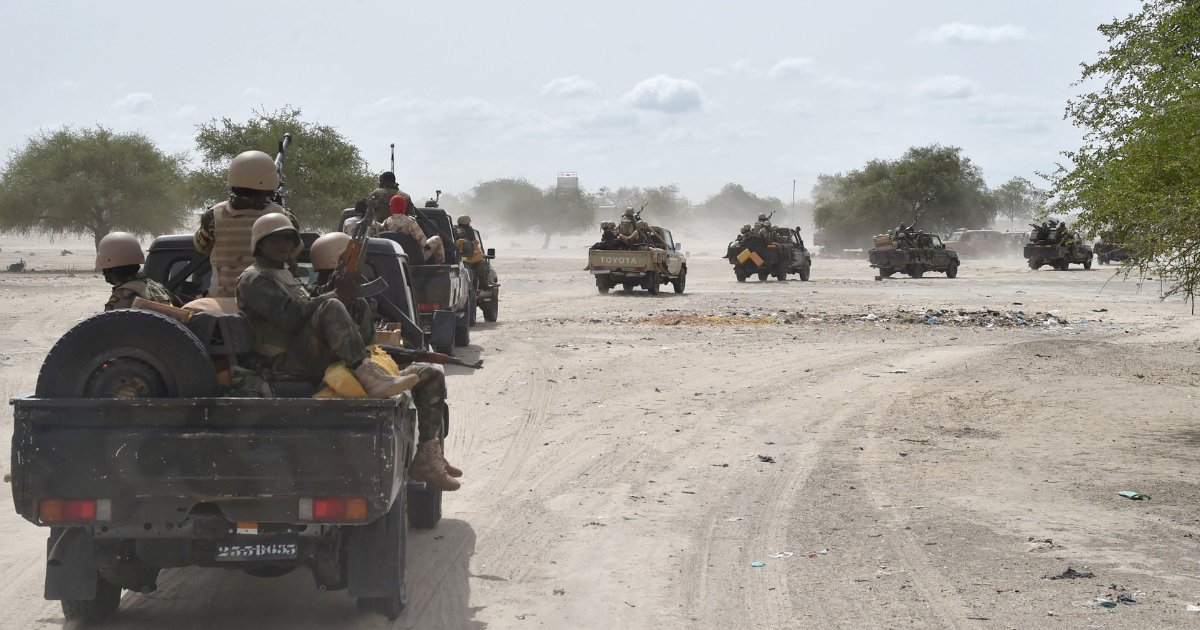
A coordinated offensive by Nigerian, Nigerien, and Chadian forces has forced Boko Haram jihadists to abandon their hideouts along the Lake Chad basin, marking a significant shift in the region’s security landscape. According to intelligence sources and local witnesses, the campaign—launched late last week—combined precision airstrikes by Chadian fighter jets with ground operations targeting remote islands shared by Nigeria, Cameroon, Niger, and Chad.
targeted strikes and civilian casualties
The aerial bombardment, concentrated on islands like Dogon Chukwu, Kangarwa, Gashakar, Yawan Mango, and Kwatar Mota, has not only disrupted militant supply routes but also resulted in tragic collateral damage. Reports confirm dozens of Nigerian fishermen were killed while working in areas under Boko Haram control, where the group enforces extortion payments. Graphic footage from Bosso Hospital in Niger shows severely burned victims receiving emergency care.
jihadists flee as rival factions loom
Suleiman Hassan, a fisherman who escaped the conflict zone, described the exodus: “Boko Haram fighters are abandoning their camps on the Shuwa border islands, fleeing in small canoes with their families.” The retreat follows recent clashes where Chadian troops engaged militants on Kaukeri Island, a long-standing stronghold of the group. Analysts attribute the offensive to heightened tensions after Boko Haram launched brazen attacks on Chadian military outposts last month, including an ambush that killed two generals and an attack on a lakeside base, leaving at least 24 soldiers dead.
Intelligence reports indicate the operation is a tri-national effort, with Nigeria and Niger contributing fighter jets to the aerial campaign. “All strikes are synchronized under a regional command structure,” disclosed a Nigerian intelligence officer under anonymity. The offensive has left militants and their supporters stranded, with many unwilling to venture into ISWAP-controlled territories—a rival faction that split from Boko Haram in 2016.
regional response to decade-long insurgency
Since 2009, the Boko Haram insurgency has claimed thousands of lives and displaced millions across Nigeria’s northeast, with spillover violence affecting Niger, Chad, and Cameroon. In response, the four nations reactivated their Multinational Joint Task Force—established in 1994—to counter the shared threat. While the current operation signals a tactical victory, security experts caution that Boko Haram’s resilience and splinter factions like ISWAP continue to pose persistent challenges to regional stability.
Comments are closed, but trackbacks and pingbacks are open.