Rising instability at the Sudan-Chad border: N’Djamena’s diplomatic tightrope

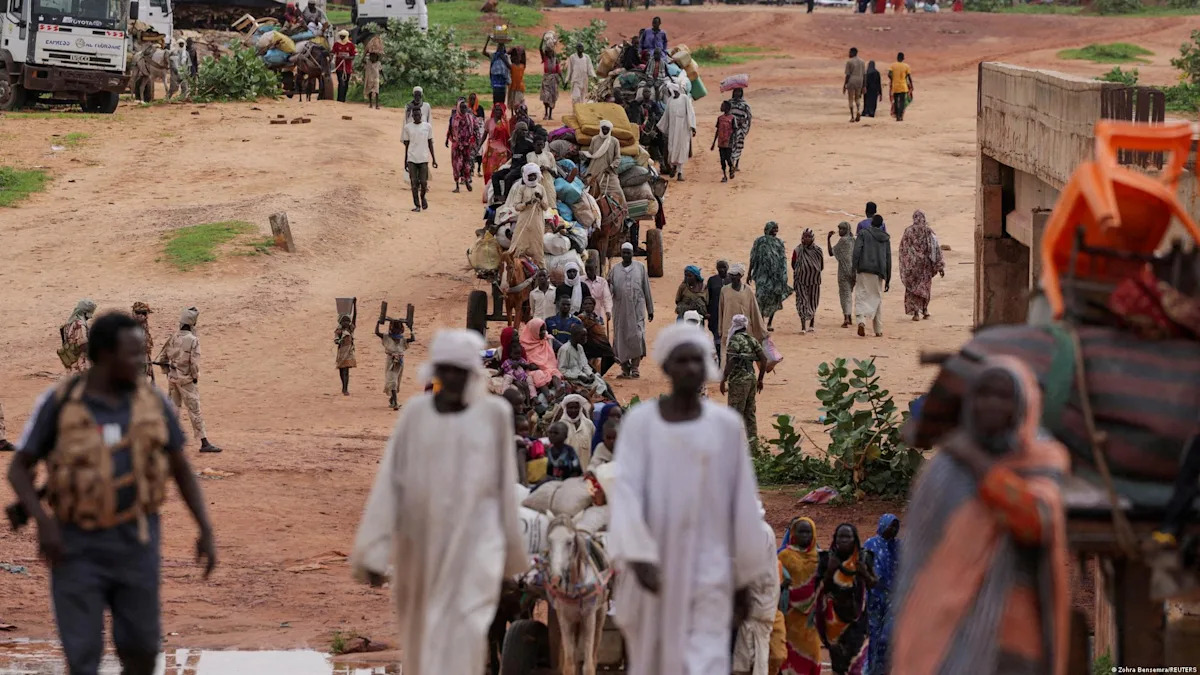
The ongoing violence in Sudan has triggered a massive humanitarian disaster, pushing nearly a million refugees into Chad. This influx has intensified following the recent fall of El-Fasher in North Darfur. In just a fortnight, approximately 100,000 people fled the city, with 6,000 crossing into Chad, further straining a nation already dealing with regional volatility. For those following African society news, this represents one of the most significant displacement crises on the continent.

A porous frontier under military threat

Spanning 1,300 kilometers, the SudanChad border consists of vast desert stretches that are notoriously difficult to patrol. These routes, once used by various insurgencies, are now under the shadow of the Rapid Support Forces (RSF), which have seized control of most of Darfur. This shift is a major focal point in African news today.

Since late 2024, military provocations have escalated. A drone attack claimed the lives of two Chadian soldiers, followed by a deadly incursion in January 2025 near Tiné that left seven people dead. In response to these direct threats, N’Djamena has officially sealed the border to prevent the Sudan conflict from destabilizing its own territory.

Les Soudanais ont afflué par milliers au Tchad voisin pour fuir les combats<span class="copyright">Zohra Bensemra/REUTERS</span>” decoding=”async” data-nimg=”fill” class=”object-cover object-center” style=”position:absolute;height:100%;width:100%;left:0;top:0;right:0;bottom:0;color:transparent” src=”https://s.yimg.com/ny/api/res/1.2/KY5bq7E4fOQP9xpciUMxXg–/YXBwaWQ9aGlnaGxhbmRlcjt3PTEyNDI7aD02OTk7Y2Y9d2VicA–/https://media.zenfs.com/fr/deutsche_welle_fr_953/39964f0366a55c4c146dd405bf9711d8″></div></figure>

<h3><strong>Allegations of bias vs. official neutrality</strong></h3>
<p>While <strong>Chad</strong> maintains a stance of official neutrality, international investigations and satellite data have raised questions. Reports suggest that military hardware from the <strong>United Arab Emirates</strong> may have moved through Chadian soil to reach the <strong>RSF</strong>. <strong>N’Djamena</strong> continues to deny these claims, highlighting that it is a victim of the war’s spillover, not a participant.</p>

<p>These external pressures are causing internal friction within <strong>Africa politics English</strong> circles. In April 2025, several high-ranking officers were dismissed from the military. Many belonged to the <strong>Zaghawa</strong> ethnic group, a community with deep roots in the security apparatus that remains staunchly opposed to the <strong>RSF</strong>.</p>

<h3><strong>Restoring ties with France</strong></h3>
<p>Amid these growing risks, the Chadian government is seeking to repair its relationship with <strong>Paris</strong>. This diplomatic pivot is a key element of <em>pan-African current affairs</em> as <strong>N’Djamena</strong> seeks regional stability.</p>

<p>The security situation in <strong>Sudan</strong> is now a priority in talks between <strong>Mahamat Idriss Déby</strong> and <strong>Emmanuel Macron</strong>. <strong>France</strong> previously provided vital intelligence support for border monitoring. As <strong>Chad</strong> faces increasing threats, rekindling this partnership has become a strategic necessity for <strong>N’Djamena</strong>’s survival.</p>

<p>Stay updated with <strong>The Panafrican Press</strong> for more insights into the evolving landscape of the <strong>Sahel</strong>.</p>
	</div><!-- .entry-content -->

	
	<footer class=