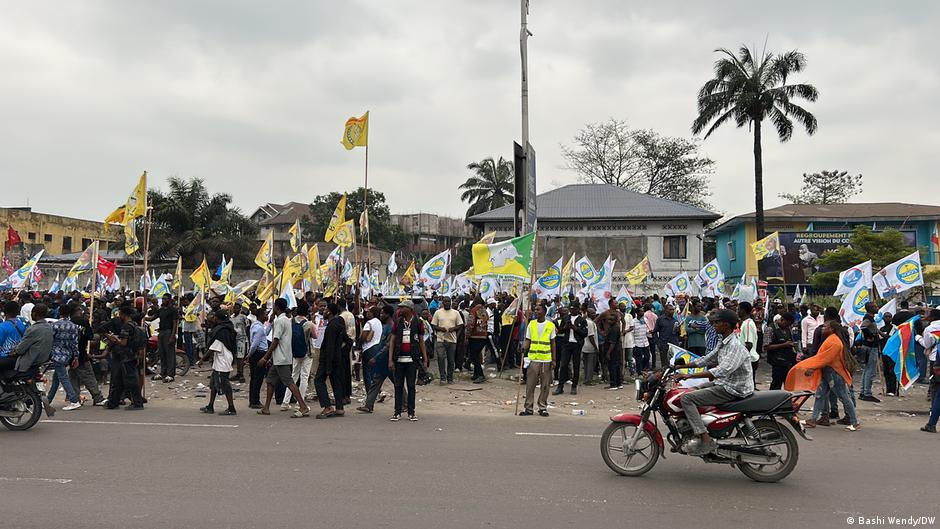
In the Democratic Republic of the Congo, the recent endorsement of the referendum framework law by the Constitutional Court has reignited fierce political debate, sparking concerns over an impending constitutional amendment. While government officials view the decision as a procedural milestone, opposition groups warn of a dangerous constitutional drift and vow to intensify their protest movement.
The coalition Article 64, a leading opposition force, has strongly condemned the ruling, framing it as a direct threat to democratic stability. Spokesperson Prince Epenge has called on citizens to remain united in resistance, declaring, “We will not yield. We will channel all our strength and energy to ensure this law never takes effect in our nation.” He further emphasized the public’s resolve, stating, “The people are outraged and must stand firm, resolute in rejecting a third term and any attempt at national fragmentation.”
Growing unease in Kinshasa
As opposition leaders convened in Kinshasa to strategize their next moves, residents voiced deep apprehension about the escalating political climate. Many fear that renewed protests could disrupt daily life and escalate into violent confrontations.
“Can their demands be pursued peacefully?” questioned one resident of Kinshasa, stressing the need to “prevent any loss of life.” Another local echoed these concerns, expressing worry that “the political atmosphere in the DRC could spiral out of control following this decision.”
A third resident went further, accusing the ruling establishment of “orchestrating instability by deploying agents to disrupt opposition marches.” Others highlighted the potential human cost, noting that “it is the ordinary citizens who will bear the brunt of any violent unrest.”
Looming threat to political dialogue
Timo Roujean, a political analyst with the Konrad Adenauer Foundation, warned that swift presidential approval of the law could derail ongoing efforts toward constructive dialogue. He cautioned that if President Félix Tshisekedi signs the legislation before August 15, it may irreparably damage trust and embolden factions advocating for armed resistance.
“A rapid promulgation would render all dialogue attempts futile,” he stated, adding that in an already strained environment—where accusations of “constitutional coup” are circulating—the Court’s decision risks fueling radical narratives. “It provides ammunition to those who believe the only way to oppose the government is through force.”
The Constitutional Court’s ruling has thus set the stage for a high-stakes confrontation. With the presidential camp now armed with legal justification and the opposition unyielding in its opposition to constitutional reform, the coming weeks will be critical in determining whether the DRC can avert further political crisis.