The Constitutional Court’s approval of the referendum organization law has reignited fierce debates across the Democratic Republic of the Congo, with opposition leaders warning of escalating political turmoil. While government officials frame the decision as a legal milestone, critics argue it paves the way for unconstitutional amendments, particularly those enabling a third presidential term.
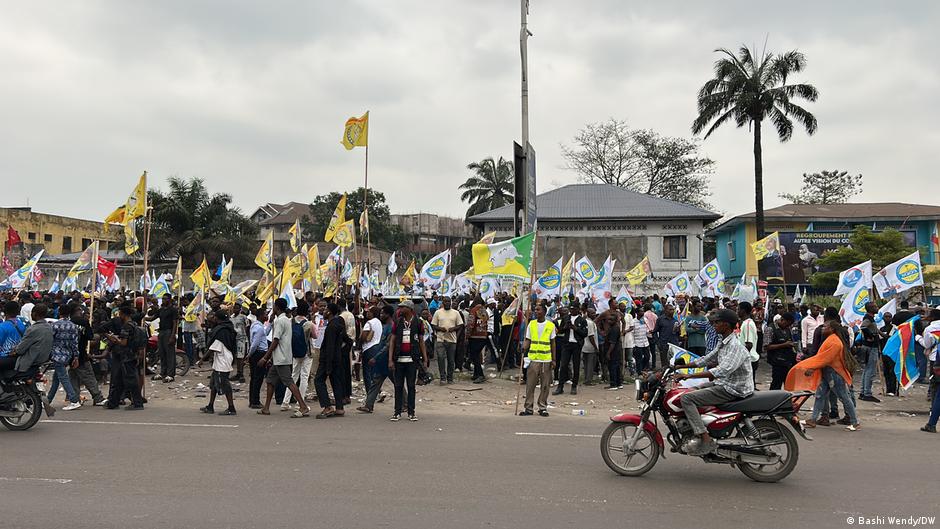
The coalition Article 64, a leading opposition bloc, has vowed to maintain pressure. Prince Epenge, its spokesperson, declared that the movement would not relent until the law is rendered ineffective in the DRC. “The people are outraged and must stand firm to reject any attempt at constitutional manipulation or national fragmentation,” he stated, emphasizing that mobilization remains the only path forward.
Kinshasa residents voice growing concerns
As opposition figures convened to strategize, residents in the capital expressed deep apprehension over the potential for renewed unrest. Many fear that protests could spiral into violence, disrupting daily life and risking civilian casualties. “Will their protests remain peaceful? We must avoid a repeat of past tragedies,” questioned one resident, underscoring the urgency of de-escalation.
Another local resident highlighted the broader dangers, noting, “The political climate here is already tense, and this ruling could push it beyond recovery.” Others placed responsibility squarely on the government, alleging that authorities were deliberately provoking instability to undermine opposition movements.
“Those stoking disorder are not the demonstrators—they are the ones in power,” claimed one observer. They routinely deploy supporters to disrupt peaceful gatherings.”
Dialogue at risk as tensions rise
Political analysts warn that swift presidential approval of the law could derail fragile dialogue efforts. Timo Roujean, a researcher at the Konrad Adenauer Foundation, cautioned that signing the text before mid-August would nullify any progress toward reconciliation. “In an already volatile climate, where accusations of a constitutional coup circulate, this decision risks legitimizing the narrative that armed resistance is the only viable opposition,” he explained.
The court’s ruling has further polarized the nation, with the ruling camp now armed with a legal framework while the opposition digs in its heels. The coming weeks will be pivotal in determining whether the DRC can avert deeper crisis—or if confrontation will dominate the political landscape.