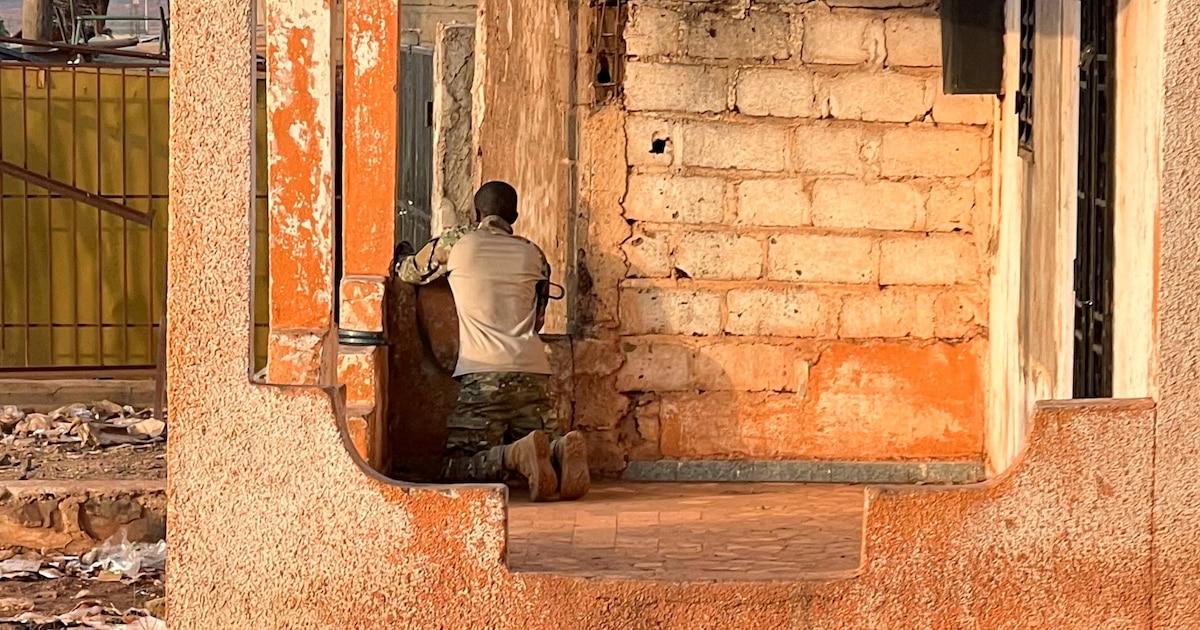
The security landscape in northern Mali shifted dramatically this Sunday, April 26. Russian mercenaries from the Africa Corps—the organization that succeeded the Wagner Group in 2025—fled their positions in Kidal, marking a symbolic and strategic defeat for the Bamako junta’s allies. Visual evidence circulating online depicts a chaotic withdrawal; under the advance of the GSIM (Groupe de soutien à l’islam et aux musulmans) and their Tuareg rebel partners from the Front de libération de l’Azawad (FLA), the Russian operatives abandoned the area in haste. The retreat was so sudden that dozens of armored units and helicopters were left for the rebels to seize, while several Malian soldiers were captured following brief skirmishes.
This setback is part of a broader, synchronized offensive launched by Al-Qaeda-affiliated GSIM militants and FLA independence fighters. Their coordinated strikes have hit critical government positions across the country, extending even to the peripheral districts of Bamako.
Loss of a strategic stronghold
On Monday, the Africa Corps, which functions under the oversight of the Russian Ministry of Defense, confirmed its forces had pulled out of the northern city of Kidal. For the FLA rebels, this represents a major revenge mission. In November 2023, Wagner mercenaries had famously seized the city, hoisting their skull-and-crossbones flag over the historic Tuareg bastion. Security experts point out that Kidal was the primary strategic win for Russian forces since their deployment in Mali in 2021, making its current loss a significant embarrassment for Vladimir Putin’s military outreach in Africa.
The weekend’s violence was not contained to the north. At least six major urban centers were targeted, including the capital, Bamako, and the strategic military base in Kati. Gao, formerly a hub for international peacekeeping forces, also faced renewed assaults.
Mali has been governed by a military junta since a 2021 coup, during which time the nation has become a global epicenter for extremist violence. By 2025, reports from international think tanks highlighted the region’s staggering casualty rates. Since last summer, jihadist groups have successfully besieged several areas, implementing blockades around Bamako in an attempt to cripple the capital’s economy.
Questions over Russian intervention
The Malian leadership turned to Russian paramilitaries—first Wagner and later the Africa Corps—to stem the tide of insurgency, yet the humanitarian situation has only worsened. International observers and human rights organizations have documented a rise in atrocities against civilians, often attributed to Malian security forces and their Russian counterparts. Analysts suggest that the recent collapse in Kidal confirms that these mercenary groups are ineffective partners in long-term counter-terrorism efforts.
Recent footage from across the country illustrates the gravity of the crisis. In Kidal, militants successfully took over the governor’s headquarters. Meanwhile, in Bamako, GSIM fighters were seen moving through the streets with minimal resistance. A particularly high-profile attack in Kati involved a bombing that destroyed the home of Defense Minister Sadio Camara, who was killed in the strike.
Leadership reactions and rumors of betrayal
In the wake of the violence, Prime Minister Abdoulaye Maïga addressed the nation to honor the late Sadio Camara and provide reassurances to the public. President Assimi Goïta, the head of the junta, later claimed that the military had regained control and would persist in its mission to eliminate all insurgent groups.
Despite official narratives, reports of internal friction are emerging. Some Malian military officers have expressed feelings of betrayal, alleging that the Africa Corps negotiated their exit from Kidal three days prior to the attack, leaving local forces exposed. There are growing concerns that the Russian contingent may be preparing to withdraw from other northern settlements, potentially leaving the Malian army in a precarious state.
In Moscow, Kremlin spokesperson Dmitri Peskov declined to comment on whether the Africa Corps could stabilize the situation. However, he maintained that Russian involvement had successfully prevented a coup attempt by the combined forces of the FLA and GSIM.