Mali’s stability hangs by a thread as coordinated attacks on April 25th, including a deadly strike in Kati that claimed the life of Defense Minister Sadio Camara, underscore the fragility of regional security efforts. While the Alliance of Sahel States (AES) and ECOWAS remain theoretically positioned to respond, their actions—marked by silence, symbolic condemnations, and political calculations—reveal a troubling void in West African strategy. Bakary Sambe, Director of the Timbuktu Institute and researcher at Gaston-Berger University in Saint-Louis, analyzes how these events are reshaping the security landscape of the Sahel.
Mali’s resilience amidst chaos: a regime at stake?
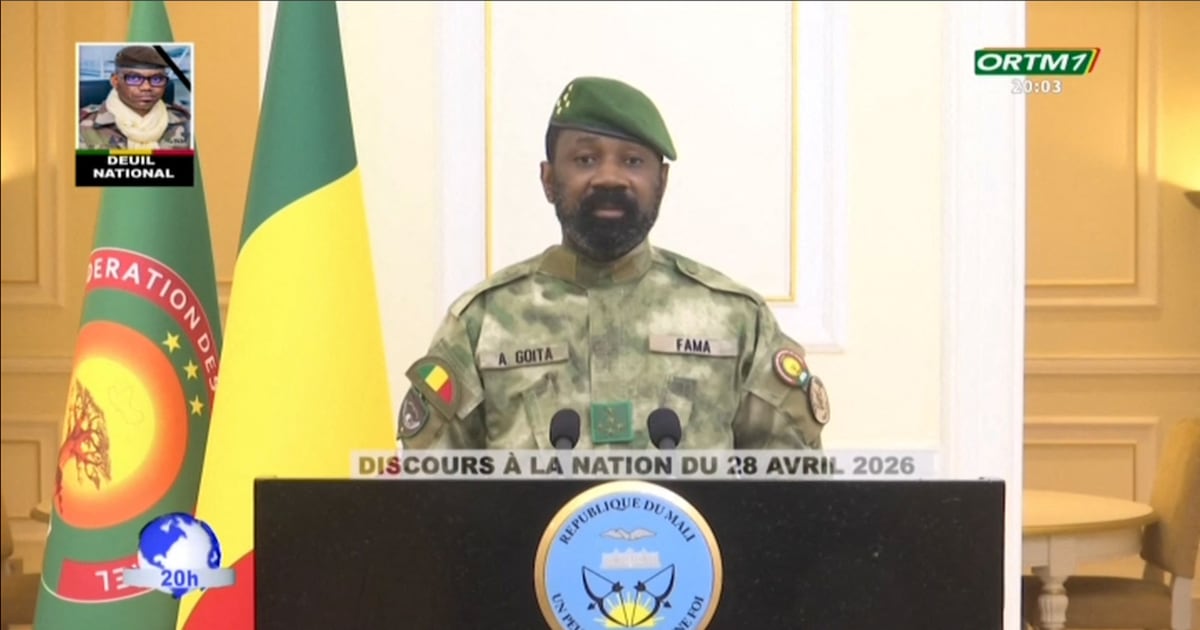
Though the attacks were severe—especially in Kati—and the subsequent military reshuffle elevated General Assimi Goïta to replace the fallen minister, speculating about a potential regime change in Bamako may be premature. Life in Mali trudges on, as citizens, long accustomed to crises, draw once again on their resilience. Even amid conflicting statements from military authorities, the Azawad Liberation Front (FLA), and the Group for the Support of Islam and Muslims (JNIM), the Malian government maintains control, albeit precariously.
allied responses: between solidarity and self-preservation
Mali’s neighbors in the AES—Burkina Faso and Niger—face their own existential threats, limiting their capacity to act decisively. Burkina Faso’s Captain Ibrahim Traoré condemned the attacks as a “monstrous conspiracy,” yet Ouagadougou’s response remains cautious, prioritizing domestic security. The country’s recent losses—including multiple soldiers killed in attacks—highlight its constrained position. Similarly, Niger’s recent declaration of a national day of fasting and prayer against terrorism reflects the strain on its resources and strategic focus.
Legally, the articles 5 and 6 of the Liptako-Gourma Charter, which underpin the AES alliance, resemble NATO’s mutual defense principle. However, internal security threats in both Burkina Faso and Niger have hindered the alliance’s operationalization. The AES, still in its strategic infancy, struggles to achieve its goal of force pooling. As Sambe notes, the alliance exists more in principle than in practice, with mutual support mechanisms remaining underdeveloped.
The Malian crisis exposes the impotence of regional alliances.
ECOWAS’s shifting strategy: from confrontation to engagement
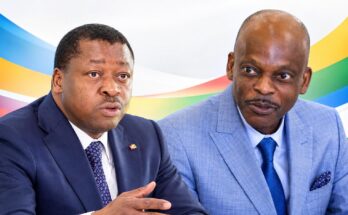
ECOWAS’s recent call for a “regional mobilization” follows Bamako’s withdrawal from the bloc in January 2025. Yet, the organization’s approach appears to be evolving. A landmark meeting in Lomé, Togo, brought together ministers from the AES, ECOWAS, the African Union, France, the European Union, and Russia—a rare convergence aimed at addressing the Sahel’s escalating insecurity. Mali’s Foreign Minister, Abdoulaye Diop, emphasized the bloc’s openness to dialogue, provided it respects the sovereignty of Sahelian states, signaling ECOWAS’s gradual reentry into the region’s security dynamics.
This shift reflects ECOWAS’s desire to distance itself from its past military intervention posture, as seen in Niger. The meeting in Lomé represents an attempt to rebuild trust and foster collaboration, even as the AES’s creation has disrupted the region’s security architecture. The African Union, too, advocates for continental mechanisms to prevent further destabilization, though its ability to intervene remains limited by years of diminished regional engagement in security matters.
the african union’s continental mechanisms: a fading dream?
The African Union’s emphasis on continental mechanisms stems from the realization that isolating the Central Sahel from West Africa is a flawed strategy. While ECOWAS plans to deploy a 1,650-strong counterterrorism brigade by late 2026, broader armed or peacekeeping missions remain uncertain. The AU’s focus on intelligence-sharing and resource pooling underscores the need for collaborative security efforts, a necessity underscored by the April 25th attacks.
Russia’s strategic failure in the Sahel is as symbolic as it is military.
the united states’ quiet return to the Sahel
Washington’s renewed focus on the Sahel, including high-level diplomatic visits to Bamako and Niamey—even after the expulsion of U.S. troops from Niger—signals a shift in priorities. The changing geostrategic landscape, coupled with the collapse of Russia’s influence, has prompted this resurgence. The death of Mali’s pro-Russian Defense Minister, Sadio Camara, and the withdrawal of Russia’s Africa Corps from Kidal mark a stark turning point. Moscow’s failure to secure its allies in the Sahel has shattered the myth of its protective capabilities, leaving a void that other actors, including the U.S., may seek to fill.
The U.S. views the Sahel not only through a security lens but also through the prism of resources, positioning itself to challenge Russian influence. As Sambe suggests, Washington’s approach will likely blend diplomatic pressure with strategic engagement, particularly in Mali, where geopolitical stakes are highest.
regional spillover: the looming threat to coastal states
The crisis in Burkina Faso poses the greatest concern for coastal nations like Togo, Benin, Ghana, and Ivory Coast. While a direct spillover from Mali remains unlikely, the fear of a domino effect—driven by the AES’s instability—is palpable. Senegal and Mauritania are closely monitoring the situation, aware that any deterioration in Burkina Faso could have cascading consequences. Meanwhile, Togo is attempting to forge new bridges with the Sahel, though the substance of this initiative remains unclear.
For now, the populations of the Sahel and West Africa await tangible solutions rather than rhetoric. The viability of the AES is increasingly questioned, and the absence of effective regional cooperation leaves a dangerous gap in addressing the jihadist threat.
is a domino effect possible in Burkina Faso?
While Mali’s situation is unique, with the FLA operating exclusively within its borders, the broader Sahel remains vulnerable. Burkina Faso’s central government controls only fragmented territory, yet no protest movement or jihadist faction has gained sufficient traction to replicate Mali’s crisis. Paradoxically, the gravity of the Malian attacks may consolidate national unity in Mali, rallying citizens around their armed forces and territorial integrity. Dissenting voices risk being sidelined as patriotic fervor takes precedence.
The Sahel cannot be extracted from West Africa.