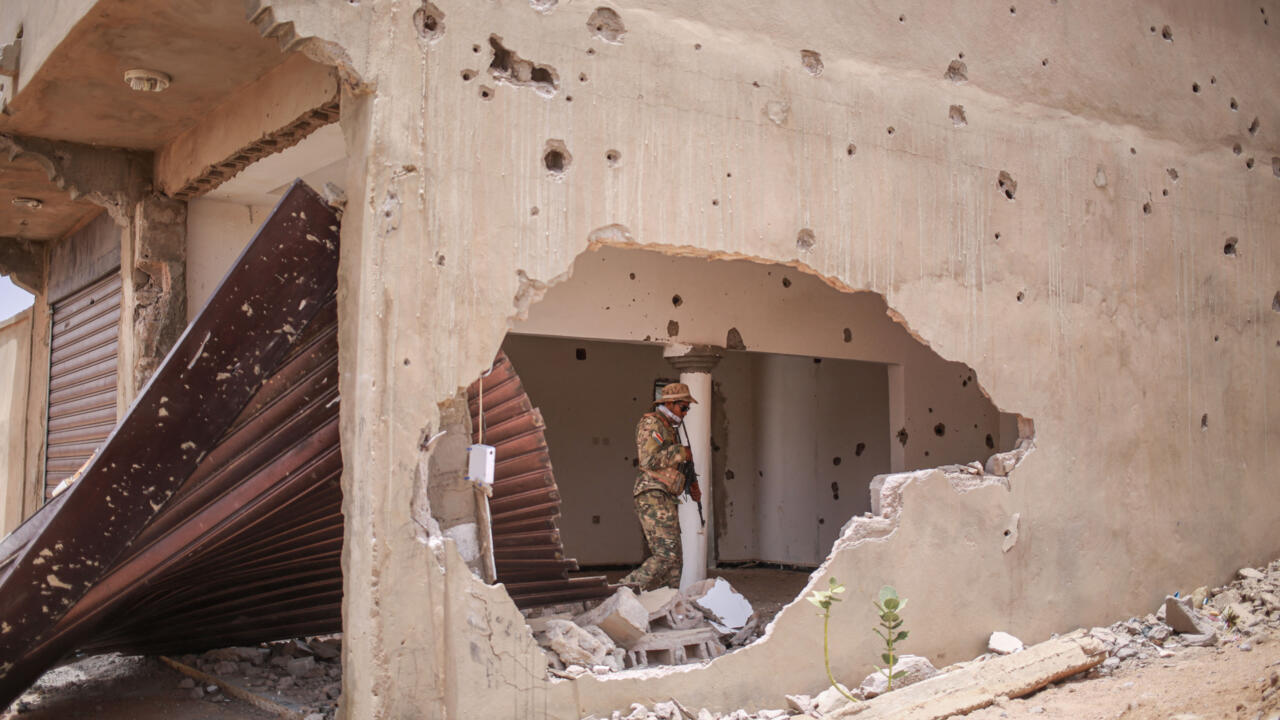
Mali’s security crisis deepens as external partnerships crumble
Recent coordinated attacks by jihadist groups and separatists in Mali have exposed critical weaknesses in the country’s security strategy, raising serious questions about the effectiveness of external partnerships with foreign forces. Bakary Sambe, a leading security analyst from the Timbuktu Institute in Dakar, shares his expert insights on the evolving security landscape in the West African nation.
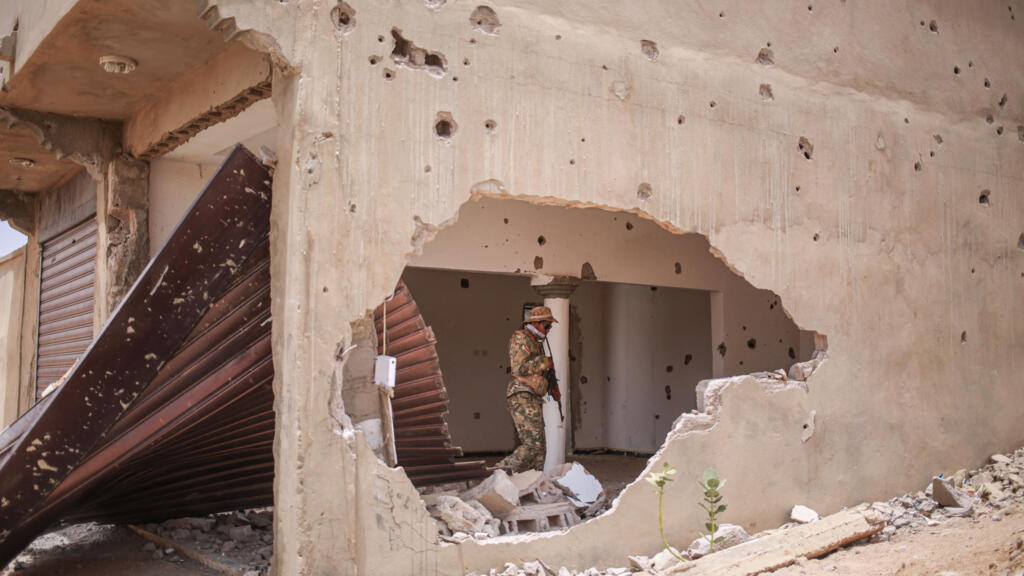
Collapse of Mali’s security outsourcing model
Bakary Sambe, director of the Timbuktu Institute in Dakar, argues that the coordinated attacks on April 25 represent a failure of the outsourced security model that Mali has relied upon. The death of Defense Minister General Sadio Camara and the chaotic withdrawal of Russian-backed forces from Kidal are seen as symbols of this failed strategy. “The myth of security outsourcing to Moscow has collapsed,” Sambe states. “After the Barkhane operation, which at least had civil-military aspects, the complete delegation of security to Russia has proven unsustainable against a locally entrenched guerrilla movement.”
Despite the presence of Russian Africa Corps forces alongside Malian troops, the rapid fall of Kidal and Tessalit demonstrates the limitations of this approach. “The chaos in Kidal and the retreat from Tessalit clearly show that outsourcing and subcontracting security have not worked in Mali,” he emphasizes.
Sahel Alliance struggles to deliver on defense commitments
The Alliance of Sahel States (AES), designed as a defense pact similar to NATO’s Article 5, has also failed to respond militarily to the crisis. While leaders like Burkina Faso‘s President Traoré condemned the attacks as a “monstrous plot,” no concrete military support materialized from member states. “The AES countries are preoccupied with their own internal security challenges,” explains Sambe. “The Burkina Faso itself had recently faced attacks before the Bamako incident, leaving little capacity for regional intervention.”
Paradoxical public reaction strengthens transitional government
The transitional government in Bamako faces a complex public response. While security promises remain unfulfilled, the attacks have paradoxically strengthened national unity. “The legitimacy of the transitional government now rests almost entirely on its security promises,” notes Sambe. “The April 25 attacks have created a temporary rally-around-the-flag effect, reminiscent of 2012 when armed groups rapidly conquered northern Mali.”
This paradox challenges external analysts who struggle to understand the “Malian effect” of strengthening the regime of General Assimi Goïta despite ongoing security failures.
Unstable jihadist-separatist alliance raises long-term concerns
The recent alliance between the Group for Support of Islam and Muslims (JNIM), linked to al-Qaeda, and the Liberation Front of Azawad (FLA) represents a new strategic constraint for Bamako. Sambe warns, however, that this partnership may not be sustainable. “This tactical alliance is more a convergence of circumstances than a lasting marriage,” he explains. “The common enemy in Bamako and shared pragmatic interests like trafficking provide temporary unity, but fundamental differences remain.”
The JNIM seeks the imposition of Sharia law, while the FLA advocates for Azawad autonomy. “There are strong limits to a long-term coalition when objectives diverge so fundamentally,” says Sambe. Additionally, uncertainty remains about whether JNIM elements, particularly from the Macina Katiba in central Mali, would fully commit to Azawad’s independence.
Potential political evolution of jihadist groups
Sambe identifies a possible transformation in the JNIM’s strategy. “The JNIM has been working to shed its image as an external movement attacking Mali,” he notes. “Emerging figures like Bina Diarra demonstrate the group’s attempt to position itself as a national political actor capable of mobilization.”
This transformation could enable the JNIM to potentially transition into a national political group, seeking a place at future negotiation tables. “This alliance creates an opportunity for the JNIM to transition toward becoming a national political movement,” Sambe suggests, “one that could eventually earn its place in Mali’s political future.”
National dialogue emerges as the only viable solution
Against this backdrop, the need for inclusive national dialogue in Mali has gained widespread support. “The phenomenon of endogenous jihadism means that terrorists are no longer seen as foreign invaders but as fellow citizens,” explains Sambe. “Malians increasingly believe it’s time for the country to talk to all its children, even those considered lost.”
The analyst concludes that dialogue has become an unavoidable necessity to address both the suffering of populations and the changing nature of security threats in the country.
As Mali grapples with these complex security and political challenges, the path forward remains uncertain. The failure of outsourced security models, the limitations of regional alliances, and the evolving nature of armed groups all point to a critical need for a new approach that addresses the root causes of instability in the West African nation.
Comments are closed, but trackbacks and pingbacks are open.