DAKAR, SENEGAL — The Senegalese government has issued a firm directive to all ministries to prioritize the completion and operationalization of ongoing infrastructure projects across the country. This decisive move, announced during a high-level interministerial council, underscores the administration’s commitment to accelerating development through tangible public investments.
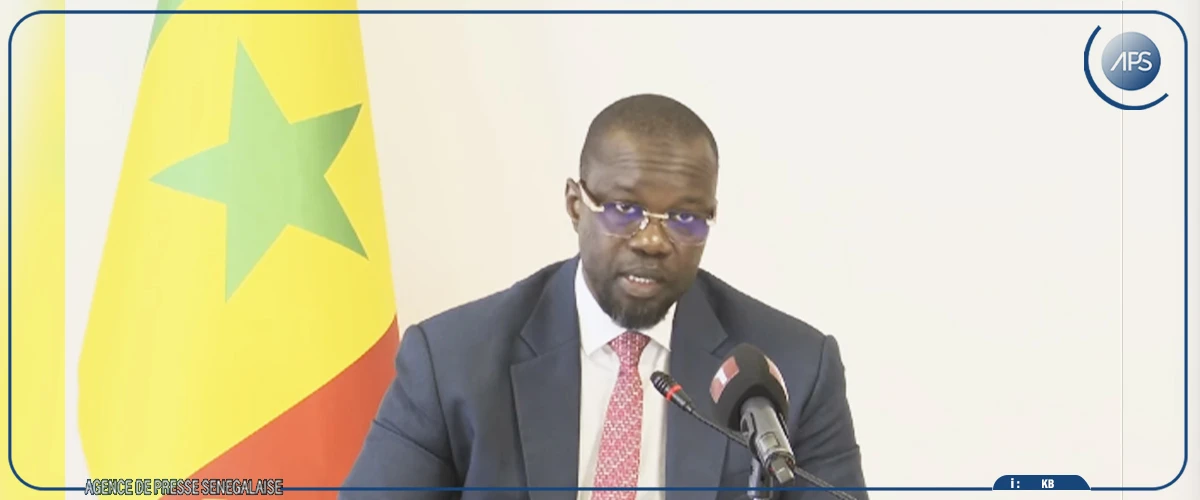
In a sweeping address to ministers, Prime Minister Ousmane Sonko outlined a comprehensive strategy to resolve bottlenecks plaguing 62 major infrastructure projects, ensuring they meet the highest standards of quality and cost-efficiency. The directive covers a wide spectrum of sectors, from maritime and port facilities to educational and healthcare institutions, as well as agro-industrial and youth empowerment centers.
Maritime and port infrastructure take center stage
The Prime Minister emphasized the urgent need to expedite critical maritime and port projects, including the Foundiougne-Ndakhonga port, the Ndangane Sambou fishing quay in the central region, the upgraded Soumbédioune landing site, and the Rufisque processing sites in western Senegal. Additionally, the government is pushing for the swift deployment of maritime dredging equipment operated by the National Maritime Affairs Agency in the regions of Kaolack and Fatick, essential for maintaining navigational channels and supporting local economies.
To ensure these projects are fully operational, Sonko called on the Minister of Fisheries and Maritime Economy to establish robust public-private partnerships, enabling efficient exploitation and long-term sustainability. ‘We cannot afford further delays in projects that promise to boost our maritime economy and improve food security,’ he stated.
Unblocking stalled national projects
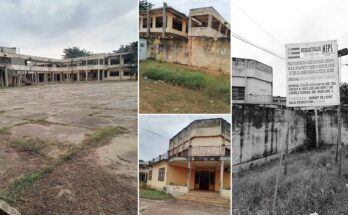
Among the 62 stalled projects identified are the El Hâdj Ibrahima Niass University of Sine-Saloum, regional airports in Saint-Louis, Matam, and Kolda, the Nadayane container terminal in the west, and critical facilities such as cold storage units and the Le Joola memorial. The reconstruction of the Aristide Le Dantec Hospital in Dakar has also been flagged for immediate action, with a dedicated committee tasked with addressing financial, administrative, and legal hurdles to ensure timely completion.
The newly formed committee will oversee the resumption and finalization of these projects, guaranteeing adherence to stringent quality and cost benchmarks. ‘Every infrastructure must serve the public interest while remaining economically viable,’ Sonko stressed, highlighting the government’s zero-tolerance policy toward substandard work.
Prioritizing technical infrastructure and youth facilities
Beyond physical structures, the Prime Minister raised concerns about the technical readiness of essential utilities for these projects. He urged ministers to integrate robust water, electricity, and telecommunication networks into their infrastructure plans, ensuring proper equipment, sustainable operational models, and long-term maintenance. ‘No project should be left half-finished due to neglected technical foundations,’ he warned.
Another key focus is the completion of youth and citizenship centers under construction in Tivaouane, Mbour, Linguère, Ranérou, Bambey, Diourbel, Kaolack, and Tambacounda. These facilities are slated for full operationalization by November 30, 2026, with Sonko directing the Ministries of Youth, Finance, and Local Governance to finalize equipment and logistics without delay.
Agro-industrial and sports infrastructure in the spotlight
The interministerial council also addressed the progress of 11 Naatangué village farms in regions including Fatick, Kaolack, Louga, Thiès, and Tambacounda, alongside major agropoles in Mpal, Adéane, Dioulacolon, and Mbellacadiao. Sonko called for sustainable partnership models with private investors to fast-track their exploitation, emphasizing community-centric approaches that align with local needs.
For national sports stadiums and other recreational infrastructure, the government is exploring public-private partnerships to ensure they are put to optimal use. ‘These facilities should not only serve as venues for events but also as engines for local economic growth,’ the Prime Minister noted.
Transforming underutilized public assets
In a broader effort to maximize the value of public assets, Sonko directed ministries to explore innovative models for repurposing idle infrastructure. This includes diplomatic missions’ real estate abroad, railway and airport assets, highways, postal properties, universities, hospitals, and military holdings. Options range from long-term leases and concessions to administrative reassignments and rehabilitation projects, all aimed at mobilizing fresh investment while respecting national and host country regulations.
For Senegalese diplomatic missions, Sonko mandated the Minister of African Integration, Foreign Affairs, and Senegalese Abroad to propose a national framework for asset valorization, ensuring alignment with international legal standards. ‘Our diplomatic properties abroad represent untapped potential; we must leverage them strategically,’ he asserted.
Similarly, the government will review the management models of national parks such as Niokolo-Koba, Hann, the Saloum Delta, and Djoudj, as well as urban reserves like the Technopole and Lac Rose. The goal is to introduce sustainable exploitation mechanisms that balance conservation with economic benefits.
Sonko concluded by reiterating the administration’s resolve to break the cycle of stalled projects, stating, ‘Infrastructure is the backbone of our development. Every delay is a missed opportunity for our people. We are committed to turning every plan into reality—on time, on budget, and to the highest standards.’