Sénégal: why the PASTEF-backed constitutional reform will go to a referendum
Photo credit, ASSEMBLEE NATIONALE SENEGAL
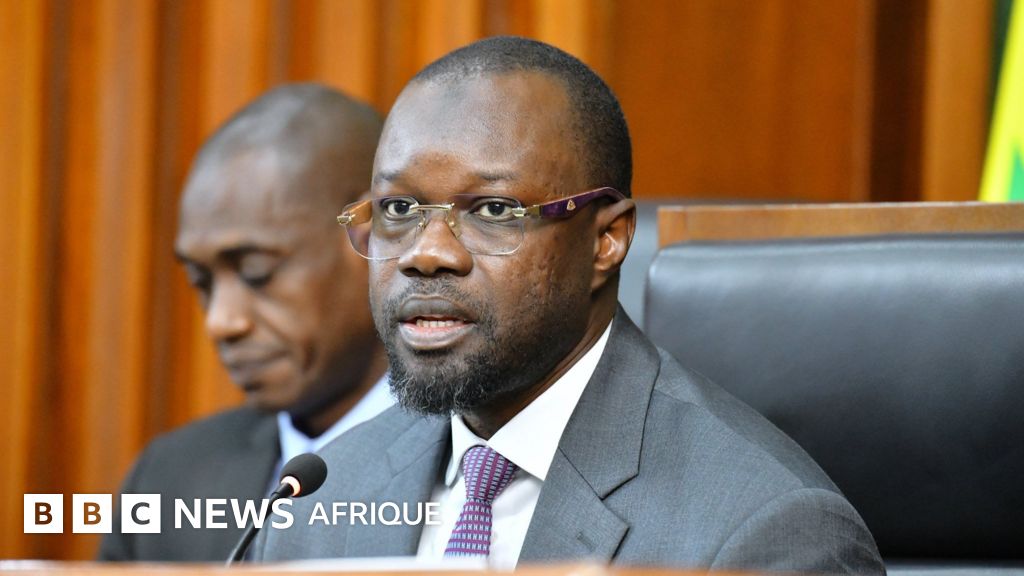
The constitutional reform bill adopted by the Sénégal National Assembly on June 29 will proceed to a referendum, as announced by Justice Minister Moussa Sarr. President Bassirou Diomaye Faye has opted for this direct consultation method under Article 103 of the Constitution, emphasizing citizen involvement in major institutional decisions.
This reform, championed by the PASTEF-led majority, seeks to overhaul the country’s institutional framework. Key objectives include strengthening Parliament’s role, redefining the balance of power between the presidency and the Prime Minister, and establishing a Constitutional Court to replace the existing Constitutional Council. The move comes amid intense political debate, with supporters hailing it as a milestone toward modern governance, while critics warn of potential power imbalances.
Why push for constitutional reform now?

Photo credit, AFP via Getty Images
The reform was a cornerstone of PASTEF’s 2024 presidential campaign, promising a break from the previous system, which critics argued had overly centralized power in the presidency. While President Faye’s election raised hopes for swift change, recent political shifts—including a cooling of relations with PASTEF’s leadership—have added complexity to the debate. Supporters view the reform as essential for correcting decades of institutional imbalance, while opponents fear it could disrupt the delicate equilibrium of powers.
Key changes proposed in the reform
The bill introduces sweeping changes, starting with the replacement of the Constitutional Council with a new Constitutional Court. This court would expand the judiciary’s oversight, absorbing responsibilities in constitutional, electoral, and referendum-related matters. With nine members—seven judges and two non-judicial appointees—the court would wield greater authority, including the power to review election-related administrative acts and enforce decisions binding on all public and private entities.
A notable innovation allows the Prime Minister to directly refer constitutional questions to the court, a privilege previously reserved for the President and a tenth of lawmakers. Proponents argue this strengthens judicial independence, though concerns linger over the court’s composition and safeguards for its autonomy.
Redefining the presidency and prime ministership
The reform redefines the executive branch without diminishing the President’s authority. While the President retains core responsibilities, the revised text introduces a requirement for concertation with the Prime Minister on national policy. This shift aims to formalize a more collaborative approach to governance, with the Prime Minister assuming a more prominent role in day-to-day administration.
Under the new provisions, the Prime Minister could preside over Council of Ministers meetings—but only on explicit delegation from the President and with a predefined agenda. The reform also formally recognizes junior ministers, signaling a move toward a more structured executive hierarchy.
Strengthening separation between presidency and political parties
A major innovation is the ban on the President holding leadership roles in political parties or coalitions. The President may only hold honorary positions and engage in campaign activities when running for re-election. Additionally, the reform expands incompatibility rules, prohibiting the President from holding any other public or private functions, paid or unpaid.
Advocates argue this ensures presidential neutrality, while critics warn it could weaken the President’s political ties to their electoral base.
Empowering Parliament with stronger oversight
The reform bolsters Parliament’s oversight powers, granting lawmakers broader investigative authority through inquiry commissions and resolution rights to adopt policy guidance. The government will also face stricter accountability on natural resource management, with mandatory reporting to lawmakers on investment agreements in strategic sectors.
Another key provision prohibits ministers from simultaneously holding local elected offices, such as mayor or departmental council president, to reduce conflicts of interest.
Tightening transitions between presidencies

Photo credit, Getty Images
The reform introduces a legal framework for the transition period between presidential elections and the swearing-in of a new leader. During this phase, outgoing Presidents would face restrictions on finalizing long-term commitments, such as major international agreements or significant financial operations, unless deemed essential for state continuity. The goal is to prevent departing administrations from making irreversible decisions just before leaving office.
What remains unchanged in the reform
Despite these sweeping changes, the reform preserves core elements of Sénégal’s political system. The President will continue to be elected by universal suffrage for two consecutive five-year terms, and the Republic’s fundamental principles remain intact. The reform does not mark the advent of a new Republic but instead aims to reorganize institutions and rebalance power without altering the regime’s fundamental nature.
Comments are closed, but trackbacks and pingbacks are open.