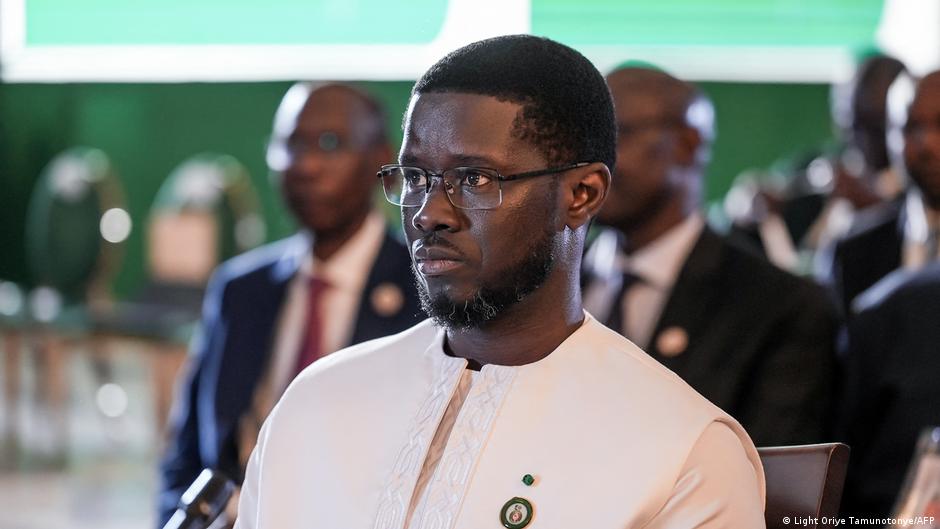
In a significant political shift in Sénégal, the Parti démocratique sénégalais (PDS) has officially called on its supporters to reject the upcoming constitutional referendum. This move signals a strategic realignment within the country’s political landscape, as the party founded by Abdoulaye Wade finds common ground with President Bassirou Diomaye Faye against his own former ally, Ousmane Sonko.
President Diomaye Faye recently announced a national consultation to allow citizens to decide on a controversial new law. This legislative text, pushed forward by Ousmane Sonko’s Pastef party, aims to significantly increase the powers of the National Assembly while placing strict limits on the authority of the Head of State.
By siding with the presidency and urging a “No” vote, the PDS is positioning itself as a bulwark against the proposed reforms. While the move might seem sudden, the history between these political entities reveals a complex web of shifting interests.
The evolution of the PDS-Diomaye relationship
The roots of this cooperation stretch back to the 2022 legislative elections, when the PDS joined forces with Ousmane Sonko’s Pastef to challenge the dominance of Macky Sall. This alliance deepened during the March 2024 presidential race. Following the disqualification of their own candidate, Karim Wade, the PDS leadership instructed their base to vote for the Diomaye-Sonko ticket.
This critical support helped Bassirou Diomaye Faye secure a broader electoral mandate. At the time, the PDS viewed this as a necessary step to protect democratic principles and penalize the outgoing administration for excluding Karim Wade. The hope for the Wade camp was to maintain a level of influence within the new government from their position in exile.
A tactical distance despite shared interests
However, this electoral cooperation did not transition into a formal governing coalition. After the inauguration of Bassirou Diomaye Faye, the PDS chose to remain independent, staying out of both the Pastef structure and the official presidential cabinet. This autonomy suggests that the relationship was built on political necessity rather than a shared ideological vision.
Political analysts in Dakar observe that the PDS is currently in a phase of survival and repositioning. Having lost power years ago, the party is looking for ways to remain relevant. By leaning toward the presidency now, they are attempting to re-enter the inner circles of influence. This strategy became even clearer during the late 2024 legislative elections, when the PDS briefly allied with Macky Sall’s APR, demonstrating a pragmatic, if fluid, approach to politics.
Standing against Ousmane Sonko
The current friction between Bassirou Diomaye Faye and Ousmane Sonko has provided the PDS with a new opening. The party has thrown its weight behind the President’s decision to hold a referendum, while simultaneously campaigning for the rejection of the actual reforms proposed by the Sonko camp.
The PDS has issued a firm call to action, urging all members and the broader Senegalese public to block these institutional changes. They argue that the proposed revisions are designed solely to serve Ousmane Sonko’s personal ambitions and represent a threat to the republican institutions that underpin the nation’s democracy.
This sentiment is echoed across much of the opposition. While they may not be official allies of President Diomaye Faye, many political actors are united in their desire to curb Sonko’s influence. The former Prime Minister is increasingly viewed by his peers as a polarizing figure whose radical rhetoric hinders national reconciliation.
A circumstantial bond for the future of Sénégal
This alignment is widely seen as temporary and issue-specific. Those opposing the constitutional changes are not necessarily endorsing the President’s entire agenda; rather, they are reacting against what they perceive as a power grab by the legislative branch. The goal for many in the opposition and civil society is to return the country to a path of consensus and dialogue.
For Bassirou Diomaye Faye, this shift could be an opportunity to diversify his support. As tensions with the more radical elements of Pastef grow, the President is focusing on strengthening his own “Diomaye Président” coalition. This strategy suggests he is preparing for a future where his political survival no longer depends on Ousmane Sonko’s movement, which some within the party already view as a finalized break.
Comments are closed, but trackbacks and pingbacks are open.