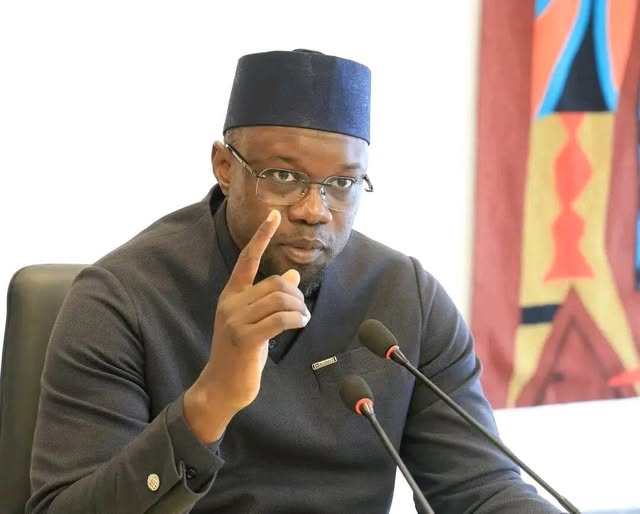
The Prime Minister of Senegal, Ousmane Sonko, convened a high-level interministerial meeting in Dakar this week, issuing a firm directive to government officials to expedite the completion and operationalization of stalled public infrastructure projects nationwide.
During the session, Mr. Sonko emphasized the critical need to dismantle administrative, financial, and technical bottlenecks that continue to hinder progress on several key initiatives. He underscored that delays in such projects not only impact economic development but also undermine public trust in government commitments.
Maritime and port projects take center stage
Among the most pressing concerns are delays in maritime and port infrastructure. The Prime Minister called on the Minister of Fisheries and Maritime Economy to accelerate efforts, particularly through public-private partnerships, to ensure the swift and efficient operation of critical sites. Key projects include the Foundiougne-Ndakhonga port, the Ndangane Sambou fishing quay, the Soumbédioune landing site, and the processing facilities in Rufisque. Additionally, the maritime agency’s dredging operations in Kaolack and Fatick regions were highlighted as priorities requiring immediate attention.
Over 60 stalled projects identified
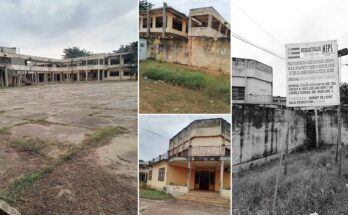
A comprehensive review revealed that 62 public infrastructure projects remain at a standstill across Senegal. These include the Sine-Saloum El Hadj Ibrahima Niass University, digital open spaces, regional airports in Saint-Louis, Matam, and Kolda, the Ndayane container terminal, cold storage facilities, and the memorial for the Le Joola ferry disaster. The reconstruction of the Aristide Le Dantec Hospital in Dakar was also flagged as a major concern.
To tackle these challenges, a dedicated committee will be established to monitor progress, enforce decisions, and mobilize the necessary financial, administrative, and legal measures. Prime Minister Sonko stressed that all projects must meet stringent quality and cost-efficiency standards while integrating essential utilities such as water, electricity, and telecommunications into their design and operation.
Youth and citizenship centers face a November 2026 deadline
In a bid to accelerate youth engagement, Sonko set a firm deadline of November 30, 2026, for the full equipment and activation of youth and citizenship centers under construction in Tivaouane, Mbour, Linguère, Ranérou, Bambey, Diourbel, Kaolack, and Tambacounda. These facilities are envisioned as hubs for education, civic participation, and community development.
Agro-industrial and rural development initiatives prioritized
The meeting also addressed the Naatangué village farms and a series of agropoles in Mpal, Adéane, Dioulacolon, and Mbellacadiao. Sonko urged ministries to collaborate with private partners to establish sustainable operational models that ensure both financial viability and social impact for these agro-industrial ventures.
Highlighting the potential of public assets, the Prime Minister explored strategies such as long-term leases, concessions, emphyteutic leases, and other public-private partnerships to attract investment and enhance revenue generation. Discussions extended to national stadiums, sports infrastructure, national parks, nature reserves, and diplomatic real estate holdings abroad, all viewed as opportunities for revitalization and optimization.
Finally, Sonko directed public agencies to develop mechanisms for recycling and enhancing the value of state-owned property and land assets, including those managed by the armed forces. The goal is to maximize their utility for national development while ensuring transparency and accountability in their management.