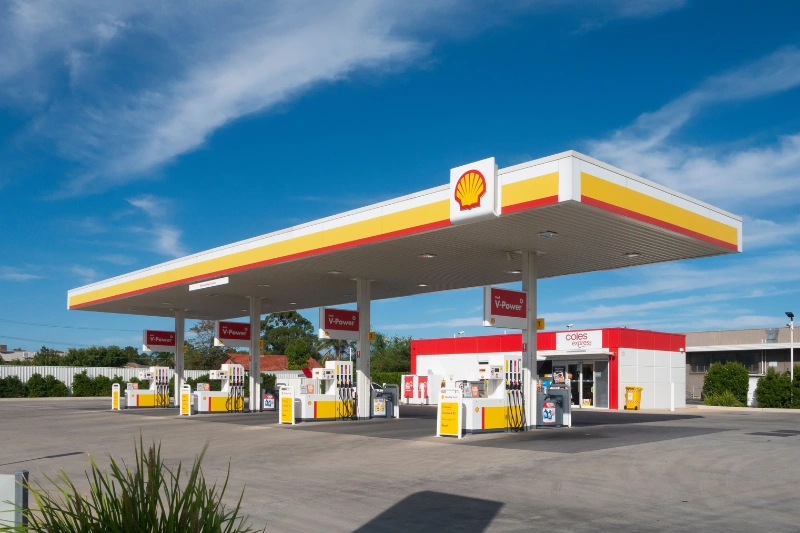
Last Tuesday, Shell and Gabon’s Ministry of Petroleum signed a memorandum of understanding. Many analysts view this signature as a strong signal of the country’s renewed attractiveness, particularly for its offshore oil reserves. The British company follows two other industry giants—ExxonMobil and BP had already shown interest in deepwater oil zones less than a year earlier. This suggests that Gabon is once again drawing the attention of major oil firms. However, a closer look tempers the widespread excitement.
This document is merely a statement of intent, not a binding commitment. A very long road still lies ahead before any oil can actually be extracted and sold. Shell could easily change its mind later: if exploration results disappoint, if the oil price drops, or if a more profitable country emerges, it can walk away without facing any penalty. This is not the first time Gabon and the British company have crossed paths. Shell was already present in the country before, exiting in 2017 and fully withdrawing by 2019. Its current return is driven primarily by its own corporate strategy, not by a desire to do Gabon a favour.
And yet, it is precisely on this point that the government holds some leverage. It will need to negotiate skilfully. What share of revenue will go to the state? How many jobs and training opportunities for Gabonese citizens? Beyond that, the critical issue will be the country’s own management. Once the money starts flowing, how will it be safeguarded and used to build a lasting future rather than being spent immediately? For context, it takes between seven and fifteen years before commercial production can begin. Budgetary and employment benefits would not be visible until at least 2033 to 2036. There is much to be done in the meantime: seismic surveys, appraisal drilling, reactivating the subcontracting chains, and creating youth employment.
—
—
Gabon is not the only African country facing such a situation. Angola and Nigeria have negotiated deals to maximise benefits from these types of transactions. Cost recovery thresholds, state shares based on profitability, transparency and monitoring—nothing was left to chance. The real challenge is not attracting Shell; it is determining the conditions under which the company operates.
While neighbouring countries are tightening their rules to turn oil profits, especially from offshore fields, into genuine development, Gabon appears to be negotiating with the same tools that led to the failures of the past three decades. Shell knows this well: it signs identical memoranda of understanding everywhere. What makes the difference is what the host country subsequently demands.
Comments are closed, but trackbacks and pingbacks are open.