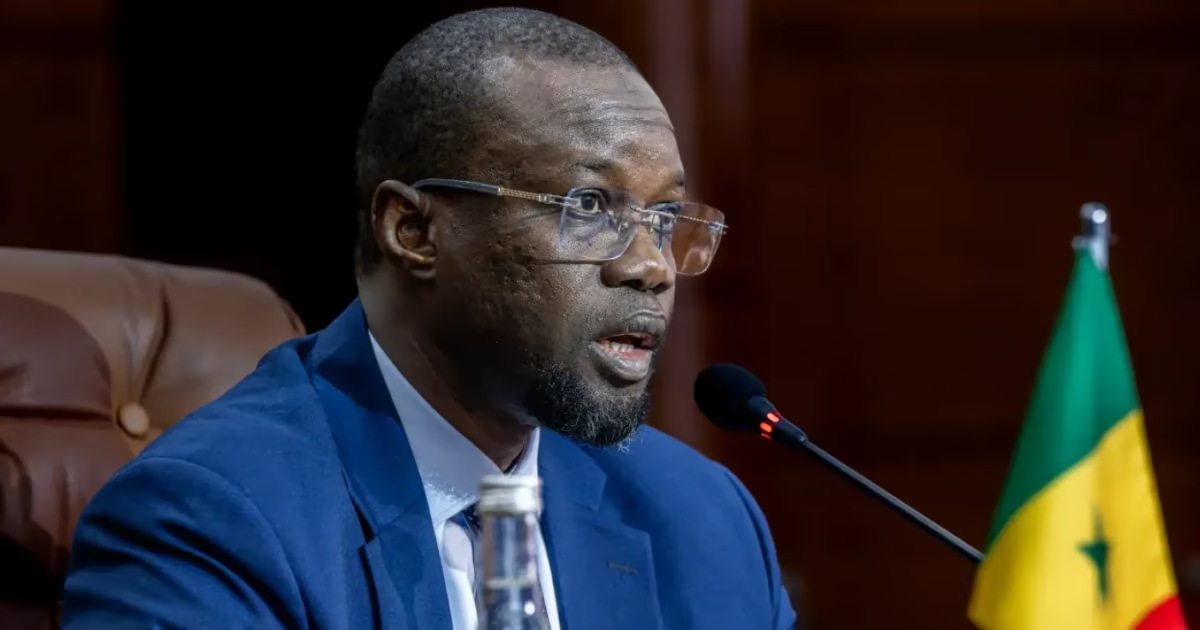
Ousmane Sonko, President of the National Assembly, has delivered a candid assessment of Africa’s football performance in the 2026 World Cup, highlighting critical structural weaknesses that hindered the continent’s progress.
The political leader and founder of Pastef/Les Patriotes pointed out that while the expansion of the tournament allowed more African teams to participate, it was not a favor but a direct result of FIFA’s decision to broaden the competition. This change, though significant, did not translate into improved outcomes for African squads, many of which were eliminated early despite possessing the talent to advance further.
Structural flaws overshadow talent on the global stage
Speaking about the lessons drawn from the tournament, Sonko emphasized that Africa’s football struggles are not due to a lack of skill but rather deep-seated issues in management, team administration, and discipline. These shortcomings, he argued, were the primary reasons behind the disappointing performances of several African teams, including those with strong rosters like Senegal, which failed to advance as far as expected.
« What this World Cup has shown us is our persistent weaknesses, » Sonko remarked, calling for urgent reforms to address these systemic challenges. He acknowledged that while some of the remaining teams in the competition may not have been superior in outright quality, they often displayed better organizational discipline, a factor he believes African teams must prioritize moving forward.
Beyond talent: the need for professionalism
Sonko also commended the sportsmanship demonstrated by the winning teams, conceding that their victories were well-earned. However, he stressed that African football must go beyond talent development and focus on professionalism in every aspect of the game—from coaching strategies to player conditioning and administrative transparency. Without these changes, he warned, the continent risks repeating the same mistakes in future tournaments.
Comments are closed, but trackbacks and pingbacks are open.