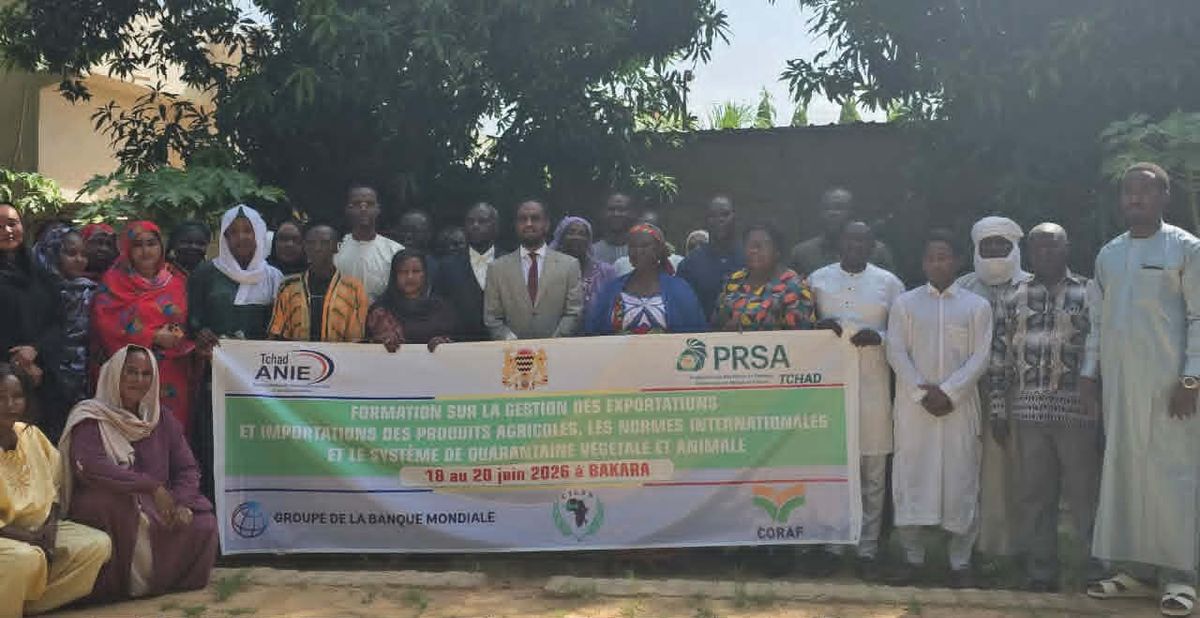
The World Bank and Chad’s National Investment and Export Agency (ANIE) have joined forces to equip local professionals with critical skills in agricultural export management. A recent training session in Bakara, held on June 18, 2026, focused on navigating international trade regulations, quality standards, and sanitary and phytosanitary measures to enhance the country’s agricultural competitiveness.
Breaking down trade barriers for Chadian farmers
Chadian producers have long struggled to access foreign markets due to complex export procedures, stringent quality requirements, and strict sanitary controls. The Programme de Résilience du Secteur Agricole (PRSA)—backed by the World Bank—has identified these hurdles as major obstacles to economic growth. The training aimed to address these challenges by sharpening participants’ expertise in export certifications, logistics, and customs risk prevention.
Aligning with national and continental ambitions
Gotoraye Arnaud, coordinator of the PRSA’s agricultural trade dashboard, emphasized that expanding export markets is essential for economic diversification and job creation. The initiative aligns with Chad’s Chad Connexion 2030 development plan, which prioritizes private sector growth, local value addition, and regional economic integration.
The timing of this training couldn’t be more strategic. With the African Continental Free Trade Area (AfCFTA) creating a market of over 1.4 billion consumers, Chad must strengthen its export capabilities to compete. Only countries that invest in quality standards, certification, and workforce training will fully benefit from this historic trade agreement.
ANIE’s role in fostering a thriving export ecosystem
Dadi Adoum Arsin, ANIE’s deputy director-general, highlighted the agency’s mission to empower businesses through technical support, market intelligence, and strategic partnerships. By bridging gaps between producers, regulators, and international buyers, ANIE aims to position Chad as a competitive player in global agricultural trade. This training session brought together public and private stakeholders—exporters, sanitary inspectors, producers, and logistics experts—to build a unified approach to agricultural trade challenges.
The ultimate goal? A more resilient, export-oriented agricultural sector that drives economic sovereignty and regional integration.
Comments are closed, but trackbacks and pingbacks are open.