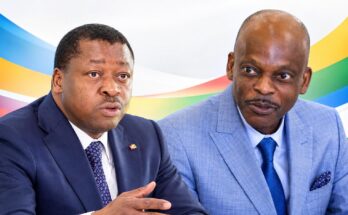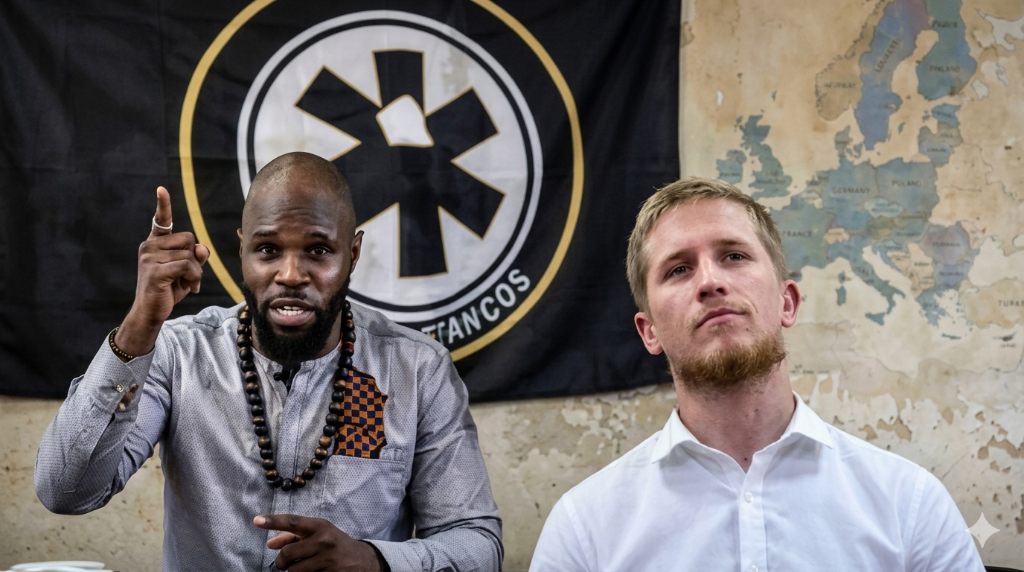
He markets himself as the “general” of the Black cause and a champion for African independence against “neocolonialism.” However, beneath the aggressive social media presence and fiery speeches, Kemi Seba is entangled in a web of contradictions that threatens to invalidate his entire movement. His recent detention in South Africa, coupled with his links to radical Afrikaner right-wing figures, exposes a deeply problematic partnership.
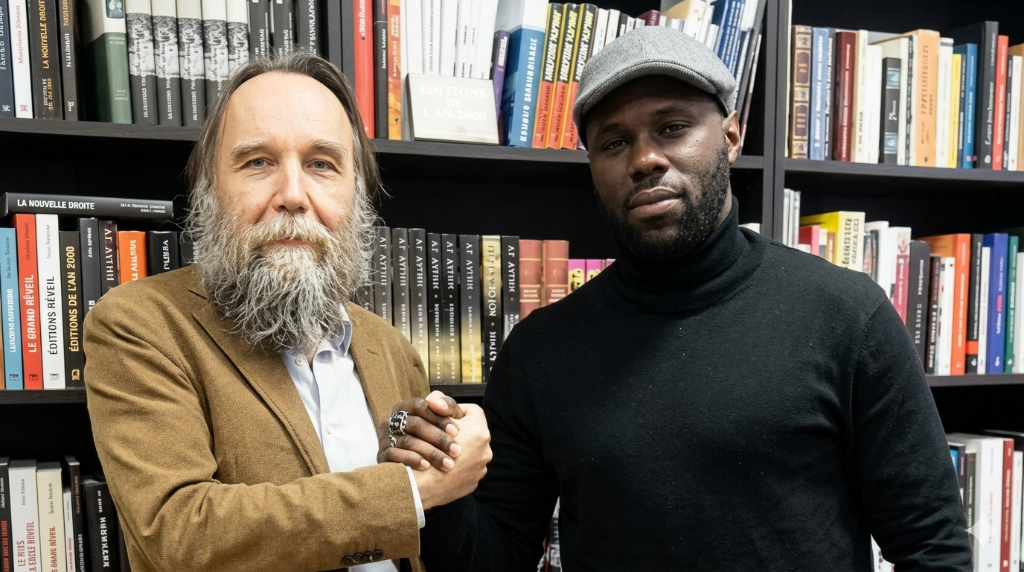
The paradox of modern pan-Africanism
For years, Stellio Capo Chichi—better known as Kemi Seba—has attacked foreign intervention and advocated for an Africa completely severed from its colonial past. Yet, there is a glaring disconnect between this pursuit of autonomy and his public ties to individuals like Dries van der Merwe, a prominent figure in white separatist movements who remains nostalgic for the Apartheid era.
This tactical partnership is often defended using the “enemy of my enemy” logic, but it borders on an insult to the history of anti-colonial resistance. By aligning with those who historically promoted the inferiority of Black people, Seba isn’t practicing “Realpolitik”; he is undermining the very dignity he claims to uphold.
Financial investigations and international funding
Money laundering charges filed in Benin have cast a harsh light on the murky financing behind the activist’s operations. There is a sharp contrast between his sovereignist rhetoric and the existence of questionable financial channels. The central question is how a movement advocating for African self-sufficiency can be linked to such opaque international money trails.
It is particularly ironic that a man who labels the CFA franc as a currency of slavery is now the subject of financial crimes investigations. If these allegations of money laundering are proven true, they would suggest that this “revolutionary” is merely another cog in the global system he claims to despise, utilizing international networks for personal gain.
A shift toward political opportunism
The events in South Africa highlight a bitter truth: Seba appears willing to collaborate with any group capable of disrupting the current order, regardless of their historical or moral standing. His cooperation with fringe groups that still dream of Afrikaner supremacy suggests that his ideology is less about justice and more about generating media controversy.
“Pan-Africanism cannot serve as a front for unnatural alliances. A people cannot be liberated by shaking the hands of their former oppressors for the sake of political expediency.”
The crumbling of a public persona
Currently facing arrest warrants and potential extradition, the image of the “principled” activist is falling apart. By courting those who miss the days of racial segregation to bolster his own power, Kemi Seba has crossed a line, turning a noble struggle into a commercialized ideology. Many observers now see him not as a voice for Africa, but as a political figure seeking refuge, trapped by his own ideological betrayals.
Ultimately, history may show that Seba’s greatest adversary was neither the French government nor the CFA franc, but the fundamental inconsistency of his own choices.