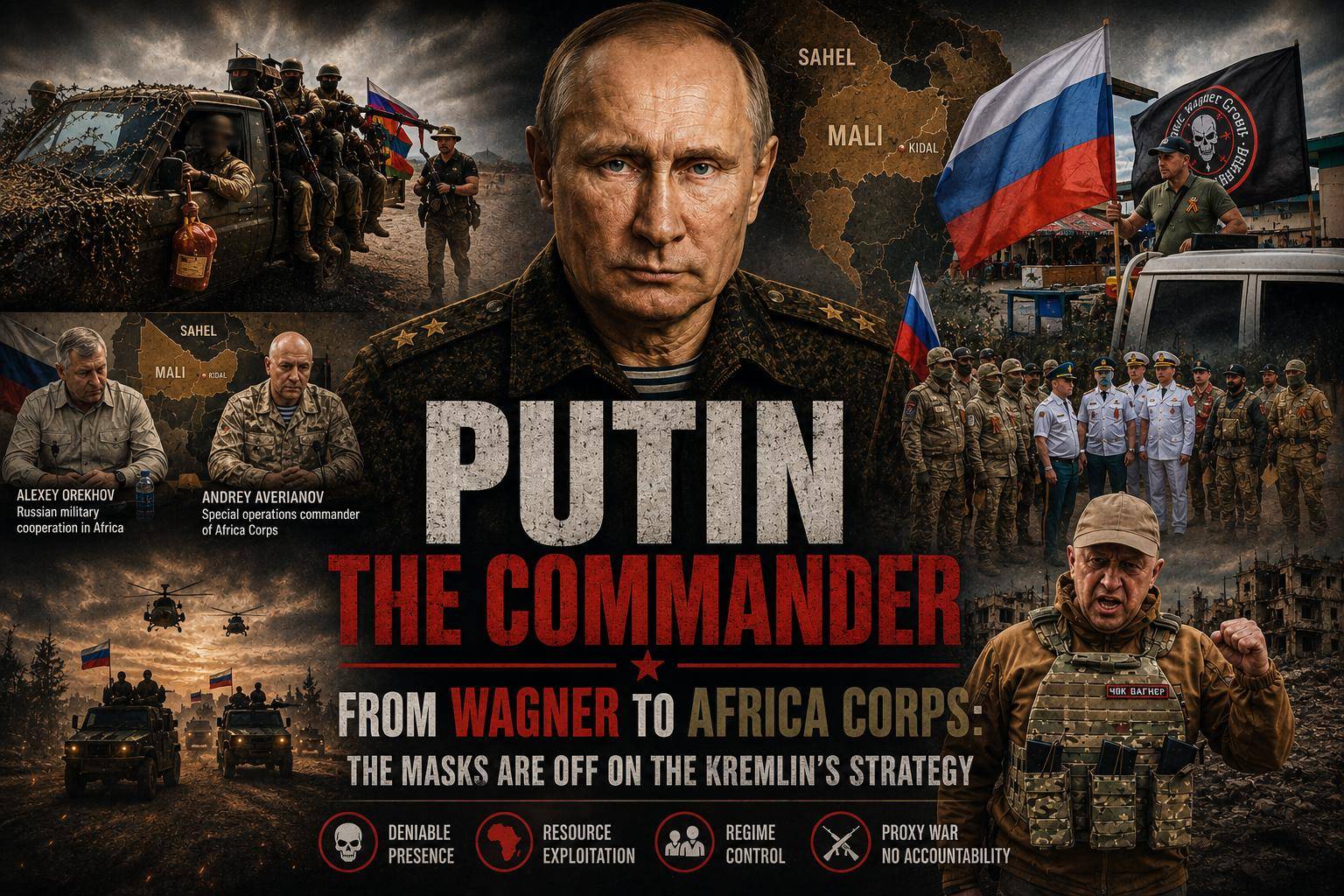
The once-unstoppable expansion of Russian influence across Africa, driven by mercenary operations, disinformation campaigns, and anti-Western rhetoric, now faces an undeniable reckoning. Promises of enhanced security have gone unfulfilled, military entanglements have deepened, and local populations are increasingly rejecting Moscow’s overtures. What once appeared as a geopolitical triumph now resembles a strategic retreat.
The hollow promise of security partnerships
During the mid-2010s, Russia exploited the perceived withdrawal of traditional Western powers—particularly France—from parts of Africa. From Bamako to Bangui, via Ouagadougou and Niamey, the Kremlin marketed a seemingly effortless solution: rapid security arrangements, free from human rights constraints, delivered through the Wagner Group (now rebranded as Africa Corps).
Yet, the results have been catastrophic. Far from stabilizing the Sahel, Russian interventions have worsened insecurity, culminating in the devastating Battle of Tinzawatane near the Algerian border. This clash, which claimed the lives of dozens of Russian mercenaries and Malian soldiers, shattered the myth of Russian military invincibility.
The reality is stark: Moscow’s primary objective was never to restore peace but to prop up regimes in exchange for unchecked access to mineral wealth—gold, diamonds, and uranium. As African publics observe this extractive model in action, the illusion of liberation has given way to a sobering realization: the face of colonialism may have changed, but its essence remains unchanged.
The three structural weaknesses undermining Russian power
Three fundamental flaws now threaten the durability of Russia’s African ambitions:
1. The Ukrainian quagmire
The prolonged conflict in Ukraine has drained Russia’s military and financial resources. Elite troops have been redeployed to the European front, while heavy weaponry once exported to Africa is now redirected to sustain the war effort. Moscow’s capacity to sustain parallel military commitments across continents has evaporated.
2. The absence of an economic model
Russia’s global influence rests on military prowess and narrative manipulation, not economic strength. With a GDP comparable to that of Spain, it cannot compete with the European Union’s development aid or China’s infrastructure investments. Once the initial political honeymoon fades, African governments discover that Russian support—whether in the form of emergency grain shipments or social media disinformation campaigns—cannot sustain long-term prosperity.
3. The rise of African self-determination
Moscow’s strategy relied heavily on the rhetoric of a “second decolonization,” positioning itself as a counterweight to Western dominance. Yet, the new generation of African leaders, empowered by digital connectivity and heightened awareness, rejects all forms of external tutelage—whether from Paris or Moscow. The transition from the French tricolor to the Russian flag is no longer seen as liberation but as a calculated betrayal.
Toward a multipolar but balanced future
The decline of Russian influence does not imply a return to Western hegemony. Instead, Africa is witnessing a recalibration of alliances, favoring partners who prioritize pragmatic cooperation over ideological impositions.
China continues to expand its economic footprint, favoring stable trade agreements over the instability of mercenary-backed security deals. Meanwhile, Turkey and the United Arab Emirates emerge as alternative power brokers, offering advanced drone technology and financial investments without the geopolitical baggage that has tarnished Russia’s reputation.
The end of the geopolitical shortcut
Russia’s imperial adventure in Africa, though intense, has proven fleeting. It underscores a critical lesson: sustainable influence cannot be built on military force and information warfare alone. For African policymakers, the path forward is clear—security and development cannot be outsourced to foreign mercenaries, regardless of their origin. The fading of Russian dominance may signal the beginning of a new era: one where Africa seeks not masters, but true partners.
Comments are closed, but trackbacks and pingbacks are open.