The Journée de l’enfant africain: a celebration overshadowed by unfulfilled promises
On June 16, Africa commemorated the Day of the African Child, a date traditionally marked by solemn pledges and high-level summits. This year’s theme centered on universal access to water, sanitation, and hygiene. Yet in Togo, where the government of Lomé has long relied on repression to maintain its grip on power, the occasion served merely as a backdrop for hollow rhetoric. Behind the carefully crafted speeches lies a grim reality: innocent children have paid the ultimate price for daring to demand a better future.
From Soweto to Lomé, the shield of infanticide
The Day of the African Child was established to honor the memory of students in Soweto, who in 1976 rose up to demand quality education and reject the imposition of Afrikaans. While many nations have since strived to uphold these rights, Togo’s authorities have weaponized the repression of its youngest citizens as a tool of political survival. Protecting a child is not merely a matter of declarations—it requires ensuring they can be born and grow with dignity. In Togo, where hospitals are stretched beyond capacity and maternities overflow, mothers still give birth on bare floors. The lack of infrastructure and resources has turned these facilities into precarious nurseries where life hangs by a thread.
While regional and international bodies reiterate their commitments to children’s welfare, Lomé’s response remains perfunctory. Any challenge to the status quo—whether a protest or a child simply searching for food—is met with live ammunition. The casualties extend beyond those who take to the streets, ensnaring the most vulnerable in a cycle of violence.
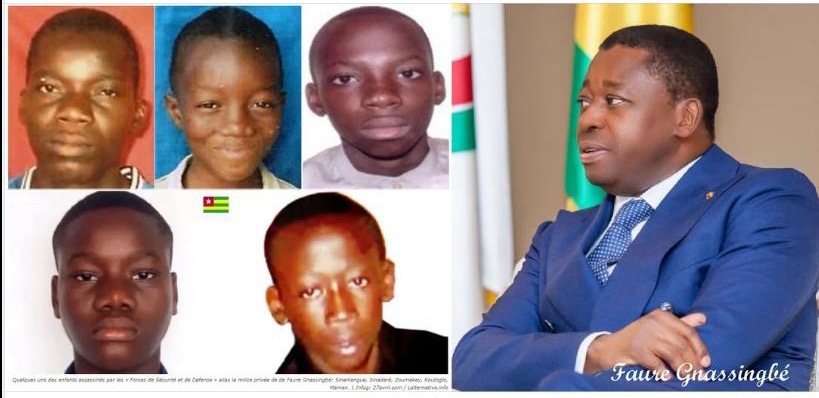
The case of Jacques Koutoglo: a family’s quest for truth
For nearly a year, the family of Jacques Koutoglo has mourned in silence, denied justice for the 15-year-old beaten to death and dumped in the Bè lagoon during the June 2025 demonstrations. Jacques was not a protester; he was searching for food when he became a victim of state-sanctioned brutality. The former Minister of Human Rights, Pacôme Adjourouvi, initially dismissed the killing as a “natural drowning” amid the unrest, only to later acknowledge the need for an investigation. To this day, no findings have been released, and the minister has since departed office without closure. The government’s refusal to permit a memorial service for Jacques has only deepened the family’s despair.
Joseph Zoumekey and Rachad Maman: bullets for silence
The tragic fate of 13-year-old Joseph Zoumekey in 2017 exposed the regime’s disregard for young lives. Sent by his mother to purchase groceries in the Bè-Kpota district, he was struck by a bullet intended to silence dissent. It took an independent autopsy by Amnesty International in 2018 to confirm the official narrative was false—yet no action has been taken against those responsible. Despite global outrage and repeated calls for accountability, the government has remained steadfast in its silence.
In Bafilo, 14-year-old Rachad Maman met a similar fate in 2017 while walking beside his father during a protest for democratic reforms. International condemnation followed, including a petition signed by thousands, yet the demand for justice has yielded no results. The perpetrators remain unpunished, and the questions unanswered.
Anselme Sinandaré and Douti Sinalengue: a shared tragedy across regions
In the northern city of Dapaong, the memories of 12-year-old Anselme Sinandaré and 21-year-old Douti Sinalengue remain etched in the community. In 2012, both were shot dead during a peaceful student protest demanding the return of absent teachers. Over a decade later, no investigation has identified the shooters among the security forces. From the northern savannas to the coastal capital, the pattern is unmistakable: the lives of children are expendable when political survival is at stake. Families are left shattered, their hopes for tomorrow extinguished without recourse.
Togo’s ratification of the African Charter on the Rights and Welfare of the Child in 1998 stands in stark contrast to its actions. By failing to prosecute these crimes or complete investigations, the authorities in Lomé signal a dangerous precedent: international obligations end where political expediency begins.
Comments are closed, but trackbacks and pingbacks are open.