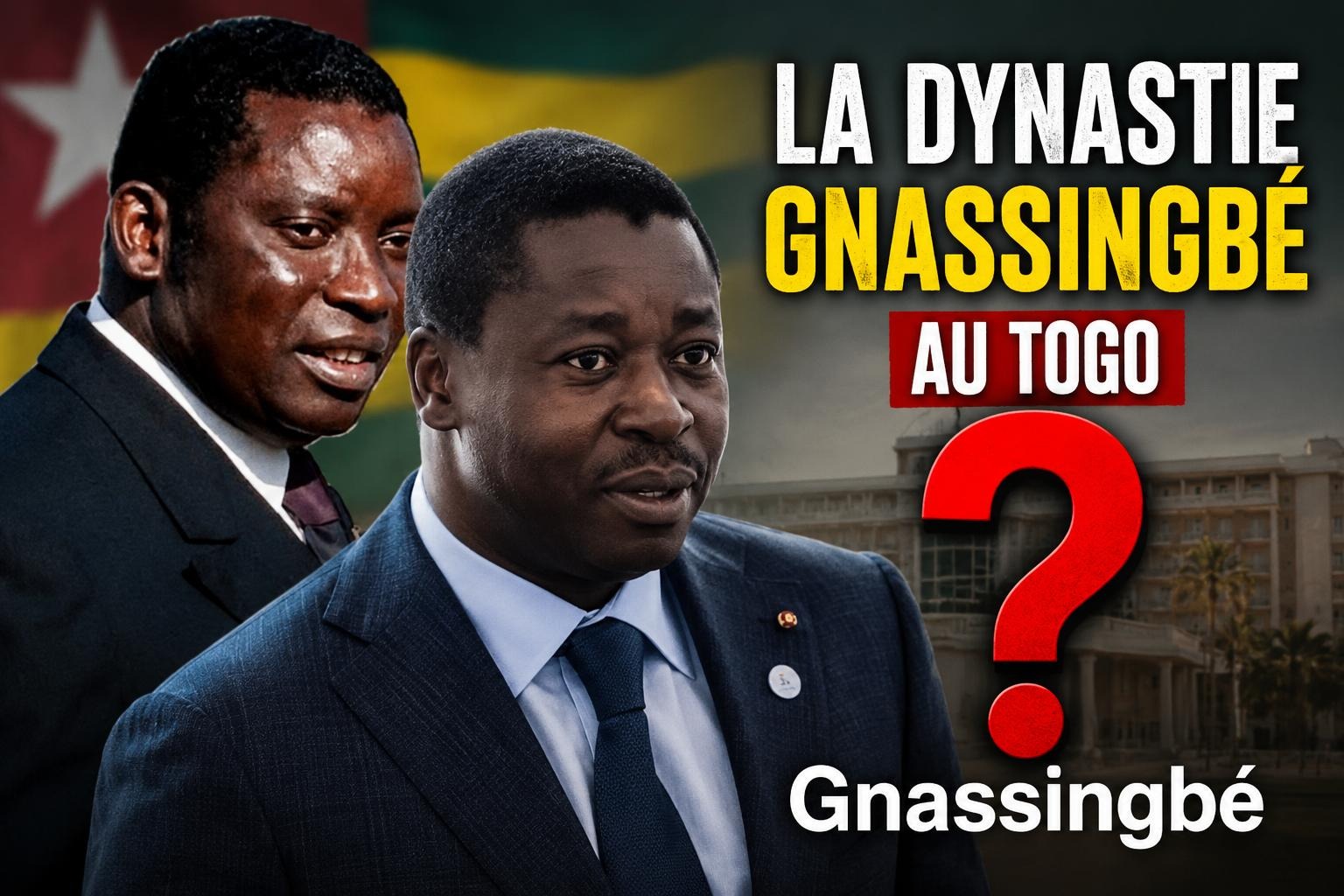
The Togo holds a dubious distinction: it is home to Africa’s longest-running political dynasty. For 38 years, Gnassingbé Eyadéma ruled with an iron fist. Today, his son, Faure Gnassingbé, is entering his third decade as head of state. By entrenching control over state institutions and ensuring unwavering loyalty from the military, the current president appears determined to follow in his father’s footsteps. Evidence suggests that Faure Gnassingbé has made a calculated decision: to rule for life, just as his father did before him.
The trap of heredity: clan survival over national interest
The impossibility of a peaceful transition in Togo stems from the very nature of its regime. This is not merely a political party in power; it is a dynastic structure, a clan-based system that has treated the presidency as a family inheritance since 1967. The Gnassingbé family and their inner circle have long viewed the state not as a public trust, but as private property. For Faure Gnassingbé, stepping down would not be a political setback—it would be an existential threat to himself and his entire network.
Leaving office would expose the clan to inevitable scrutiny: financial mismanagement, systemic corruption, and the dark stain of past bloodshed, including the hundreds of lives lost during the violent transition of 2005. For the dynasty, clinging to power is no longer a political strategy; it is a matter of survival—both physical and legal. This is the paradox that binds the president to his post, compelling him to remain in power until his final days.
Constitutional engineering: a one-way ticket to lifelong rule
Recent constitutional changes have extinguished what little hope remained for democratic change. By transitioning to a parliamentary system, Togo now operates under a structure where Faure Gnassingbé serves as both head of government and head of state—without term limits or direct public accountability.
This legal overhaul represents a definitive break from democratic norms:
- No more direct elections: Citizens no longer choose their president, removing the possibility of a protest vote.
- Unlimited mandate through proxy: As long as his party, UNIR, wins elections—orchestrated by the regime—he remains in power indefinitely.
This legal maneuver mirrors the tactics of Gnassingbé Eyadéma, who in 2002 amended the Constitution to ensure he could die in office in 2005. Faure has simply refined the approach: where his father relied on brute force to defy democratic norms, the son has weaponized the law itself to legalize perpetual rule.
The military’s unbreakable loyalty: a shield for the dynasty
The final pillar of Togo’s dynastic trap is the Forces Armées Togolaises (FAT). Created under Gnassingbé Eyadéma with deep regional and clan-based loyalties, the FAT remains the regime’s backbone. Senior military officers share not only the president’s political vision but also his economic and security interests.
The FAT does not defend the nation; it defends a family dynasty against the very people it is sworn to serve.
For these generals, Faure Gnassingbé’s departure would mean the loss of their privileges and the collapse of their influence networks. The president, in turn, is a hostage of this system. He knows his safety—even his life—depends on maintaining his grip on power. The military would never accept a successor outside the family or the established order. This unholy alliance cements his fate to the presidential palace in Lomé.
Faure Gnassingbé has inherited not just his father’s throne, but his prison. Trapped by a clan that refuses to relinquish control, shielded by an army that fears change, and shielded by laws he has written himself, he has sentenced himself to a lifetime in power. History in Togo repeats itself: like Eyadéma before him, Faure will govern until nature—or revolution—decides otherwise. But by refusing to offer his nation a peaceful exit, he risks leaving behind a legacy far more volatile than his dynasty: a nation on the brink.