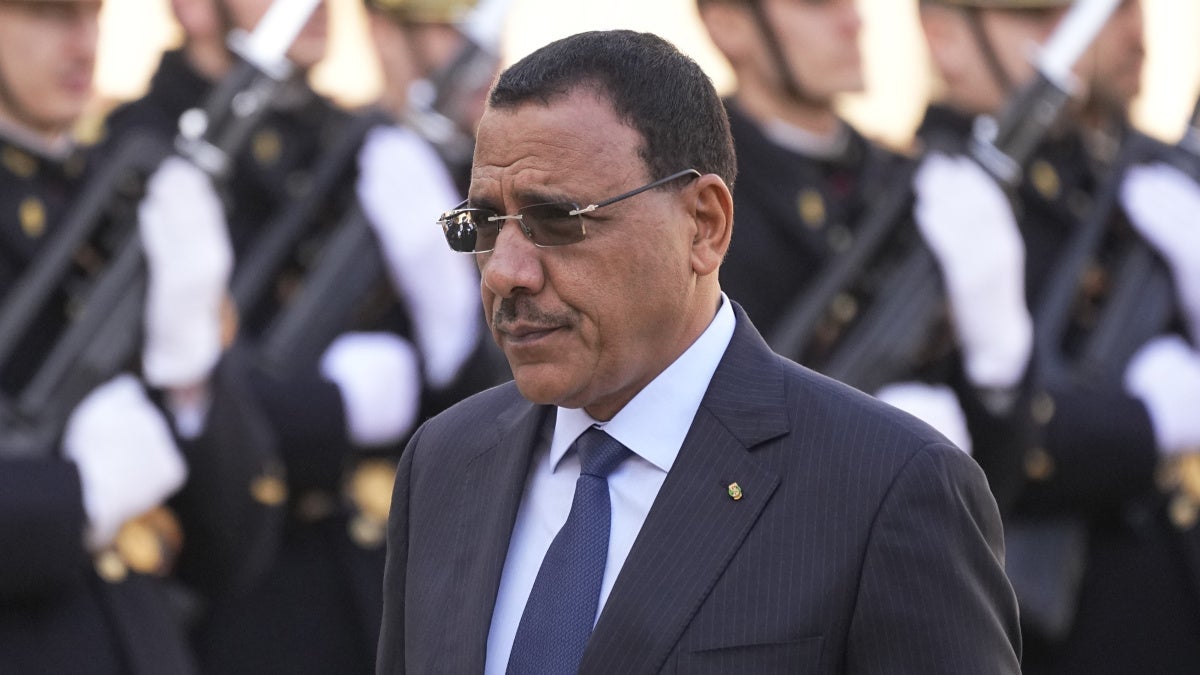
Human rights advocates are urging Niger’s military authorities to immediately release former President Mohamed Bazoum, who has been held in arbitrary detention for two years following a coup that overthrew his elected government.
The crisis began on July 26, 2023, when officers from the self-proclaimed National Council for the Safeguard of the Homeland (CNSP), led by General Abdourahamane Tiani, forcibly removed Bazoum from office. Since then, he and his wife, Hadiza Bazoum, have been confined in the presidential palace in Niamey without access to legal counsel or family visits. In 2024, the junta stripped Bazoum of his presidential immunity, paving the way for politically motivated charges, including allegations of treason and endangering national security.
international condemnation and unanswered calls for justice
Despite multiple rulings from regional and international bodies demanding his release, Bazoum remains imprisoned. In December 2023, the ECOWAS Court of Justice ruled that his detention was arbitrary and ordered his immediate freedom. The United Nations Working Group on Arbitrary Detention echoed this stance in February 2025, declaring his confinement a violation of international human rights law and calling for his unconditional release.
Meanwhile, the junta has continued its legal maneuvers. In April 2024, authorities initiated proceedings to strip Bazoum of his immunity, and by June, a Nigerien court had ruled against him in a process criticized by observers for failing to meet fair trial standards. Though no trial date has been set, the charges of high treason remain a looming threat.
a pattern of repression under military rule
The detention of Bazoum exemplifies the junta’s broader crackdown on dissent. Reports from human rights organizations document systematic suppression of political opposition, peaceful protests, and independent media since the coup. Analysts warn that the prolonged detention not only undermines democratic aspirations but also signals the military’s intent to prolong its grip on power, delaying a return to civilian governance and credible elections.
« The junta’s refusal to release Mohamed Bazoum—despite clear international rulings—demonstrates a blatant disregard for the rule of law, » said a legal expert advocating for his case. « His continued imprisonment serves as a stark reminder of how far the current regime is willing to go to silence dissent and consolidate control. »
As the second anniversary of his detention approaches, calls for justice grow louder. Advocates emphasize that Bazoum’s release is not only a matter of human rights but a critical step toward restoring democratic norms in Niger and reinforcing the country’s standing on the global stage.