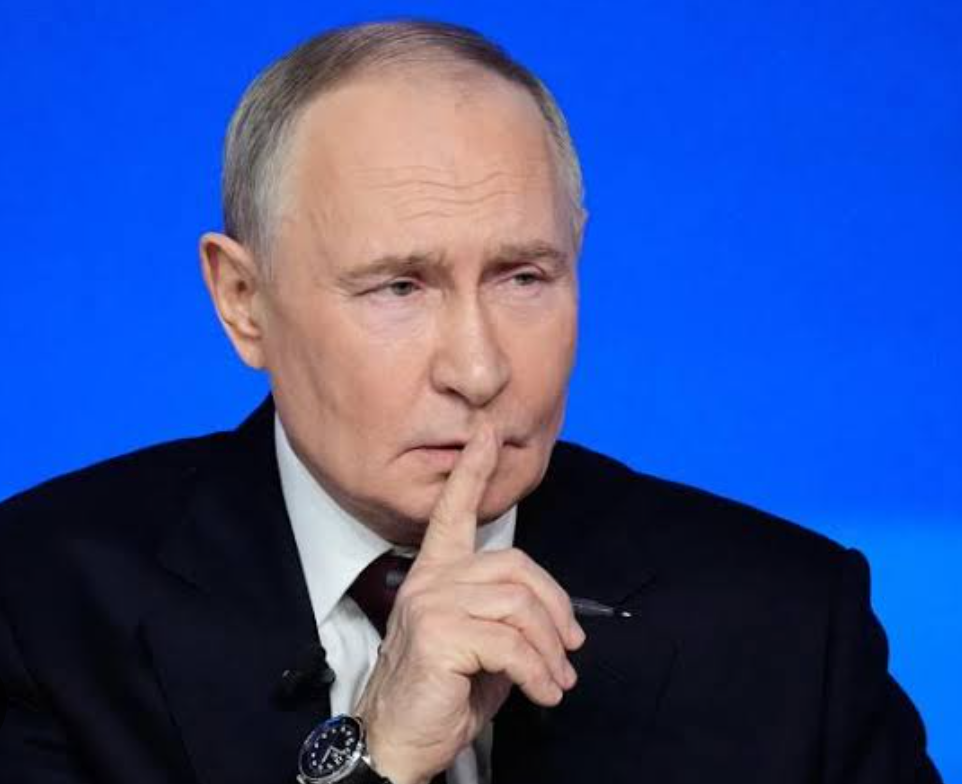
The scale of United Russia’s victory in the 2026 State Duma elections is now clear. With 355 of the chamber’s 450 seats, Vladimir Putin’s party has secured a two-thirds majority that will shape the country’s legislative direction for years to come. But the immediate question in Moscow and beyond is not simply what this majority can pass — it is what the vote revealed about the limits of political choice inside Russia today.
What the numbers show — and what they leave out
According to preliminary results, United Russia took 57.83% of the vote after more than 95% of ballots were counted. That translates into a commanding parliamentary presence and a strengthened hand for the Kremlin on legislation requiring a constitutional majority.
Yet the headline figure tells only part of the story. This was the first national parliamentary election since Russia’s full-scale invasion of Ukraine in February 2022 — a contest in which voters opposed to the war found no genuinely anti-war party on the federal ballot.
Yabloko’s absence: the defining fact of the ballot
The most consequential detail is the exclusion of Yabloko, the last remaining liberal party with an explicitly anti-war platform. The party had campaigned under the slogan “For Peace and Freedom.” On 10 August, Russia’s Supreme Court annulled Yabloko’s federal list registration following a challenge brought by the Rodina party.
The court cited issues related to donations from individuals who had themselves received foreign funding, digital publications, and copyright questions in campaign materials. Yabloko disputes these grounds and maintains that its actual offence was its pacifist programme — a claim the party has pressed in the Constitutional Court after its appeal to the Supreme Court failed.
One more restriction in a long series
Yabloko’s removal from the federal ballot was not an isolated event. For years, Russian authorities have steadily narrowed the space available to opposition figures and organisations. Before the 2026 vote, groups linked to Alexei Navalny had been designated “extremist,” while several opposition leaders were jailed, driven into exile, or barred from running. In the 2021 Duma elections, legal provisions were used to prevent activists associated with Navalny from standing.
Several parties did contest the vote — the Communist Party, the LDPR, A Just Russia, and New People among them — but none offered a genuine anti-war alternative. As one European broadcaster noted, no anti-war party was permitted on the federal ballot.
The OSCE’s absent observers and the credibility question
Russia did not invite the Organisation for Security and Co-operation in Europe to send an election observation mission. The OSCE’s Office for Democratic Institutions and Human Rights criticised the decision in August, saying Moscow had not substantively responded to its requests to organise an assessment mission.
The organisation also pointed to restrictions on candidates labelled “foreign agents,” on campaign financing, on parties’ ability to appoint representatives at polling stations, and on the working conditions of citizen observers. It further noted the dissolution of Golos, the independent election-monitoring movement, after years of pressure.
The absence of independent oversight does not by itself prove that any individual result was falsified. It does, however, deprive voters and foreign observers of an independent mechanism to assess the process as a whole.
A supermajority that exceeds the vote itself
With 355 seats, United Russia retains a two-thirds majority in the Duma, giving it substantial capacity to support Kremlin priorities and pass legislation requiring enhanced majorities.
A simple conclusion would be misleading: the result does not automatically mean that 57.83% of all Russians support the war in Ukraine or the entirety of Putin’s policies. An election result reflects votes cast within a given institutional framework — and in this case, the range of choices was itself heavily constrained.
That distinction sits at the heart of the debate over the 2026 election. The question is not only how many votes United Russia won, but which voices and which political alternatives were allowed to compete.
Reactions and what comes next
The announced results give United Russia uncontested dominance. But the fallout from this election extends beyond the seat count.
The exclusion of Yabloko, the restrictions on opposition candidates and organisations, the absence of OSCE observers, and the broader climate of political repression are all factors that frame how this vote will be read — at home and abroad.
The Duma that emerges will be overwhelmingly dominated by Putin’s party. Its composition, however, must be understood against a competition in which open anti-war opposition had no real national platform to present its programme to voters.
In these conditions, United Russia’s 355 seats are a major electoral fact. They do not, on their own, measure the support of Russian society as a whole for the war in Ukraine. What they do show is the government’s ability to maintain parliamentary dominance in a political system where the terms of participation for its adversaries have become extremely restrictive — and where the debate over what comes next is already underway.
Comments are closed, but trackbacks and pingbacks are open.