Why vaccination is a lifelong shield for children in Burkina Faso
Fada N’Gourma — Polio may be a severe and devastating illness, but it is entirely preventable through vaccination. In Burkina Faso, mothers like Nadège Thiombiano are taking proactive steps to safeguard their children from vaccine-preventable diseases, ensuring they grow up healthy and strong.
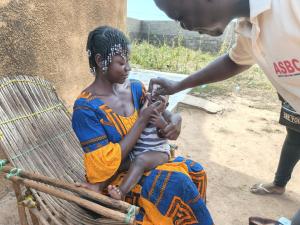
Nadège’s commitment to vaccination stems from firsthand experience. As a resident of Fada N’Gourma and mother to 13-month-old Mouzaratou, she witnessed the crippling effects of polio up close. Determined to prevent her daughter from suffering the same fate, she ensured Mouzaratou received all scheduled vaccines, including the polio shot. “I’ve seen what polio does to a child,” she says. “As long as I live, none of my children will miss a vaccine.” For Nadège, vaccination is more than a routine—it’s a solemn promise to protect her family.
In November 2025, a nationwide polio vaccination campaign took place across Burkina Faso, targeting children aged 0 to 59 months. In Fada N’Gourma’s Sector 09 health center (CSPS), health workers vaccinated 5,290 children, surpassing the initial goal of 5,060—a coverage rate exceeding 104%. This success reflects the dedication of parents, vaccinators, and community mobilizers who worked tirelessly to reach every child.
How Burkina Faso’s health system achieved remarkable vaccination coverage
André Yonli, head nurse at CSPS Sector 09, attributes the campaign’s success to meticulous planning and collaboration. “The numbers speak to the hard work of our teams and the trust parents place in vaccination,” he explains. To overcome challenges, health workers organized advocacy meetings, identified barriers, and deployed mobile teams to underserved areas, including informal settlements and displacement sites. Strengthening data management and interpersonal communication further enhanced outreach efforts.
Community engagement played a pivotal role. Health workers collaborated with religious leaders, traditional authorities, and women’s associations to dispel myths and promote vaccination. Talato Lompo, a mother of four, admits she once doubted vaccines due to misinformation. “After speaking with health workers, I realized how critical vaccination is,” she says. “Since my children started their shots, they rarely fall ill. That’s why I continue to vaccinate them.”
Partners amplify vaccination efforts in Burkina Faso
The World Health Organization (WHO) provided critical support, including vaccine transportation, team supervision, and data collection. Over 20 experts—epidemiologists, communication specialists, and administrators—were deployed to ensure smooth operations. “WHO’s involvement was instrumental in maintaining high standards,” says Dr. Sandrine Bienvenue Sam, district medical chief in Fada N’Gourma. “Our goal is to keep Burkina Faso polio-free since 2015 and prevent any resurgence.”
At the district level, the campaign vaccinated over 134,000 children, achieving a coverage rate of 103%. These results highlight the power of community-driven health initiatives and the importance of sustained partnerships. For Nadège, the impact is personal: “A simple vaccine today protects a child for life.”
As vaccination campaigns continue, parents in Burkina Faso hold the key to maintaining a polio-free future. By vaccinating their children, families not only protect their health but also contribute to a society where preventable diseases are a thing of the past. With collective effort and trust in science, every child in Burkina Faso can thrive.
Comments are closed, but trackbacks and pingbacks are open.