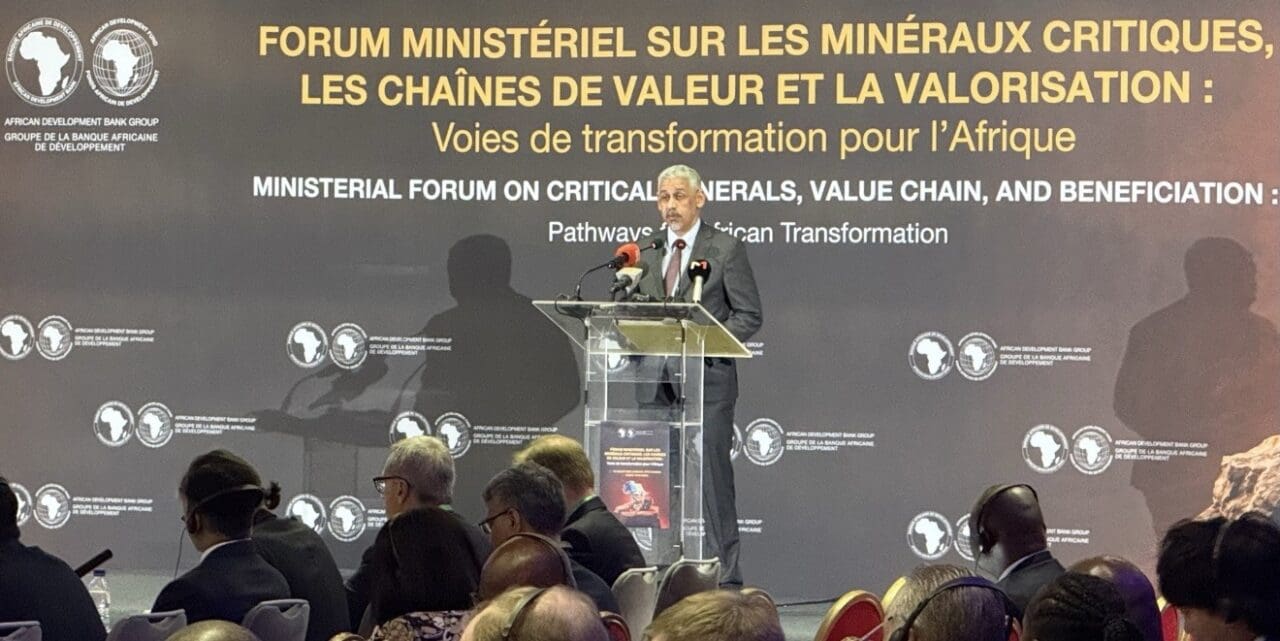
The future of Africa’s vast mineral wealth took center stage in Abidjan this week, where ministers from mineral-rich nations and global development partners convened to chart a bold new course for the continent’s economic transformation. The focus? Turning critical minerals into a springboard for industrialization, job creation, and sustainable growth—while ensuring local communities reap the rewards.
Over 100 delegates, including ministers of Mines, Energy, Industry, and Green Economy, alongside representatives from the African Union, the African Continental Free Trade Area (AfCFTA) secretariat, the United Nations Economic Commission for Africa, regional development banks, financial institutions, and international investors, gathered for a high-stakes ministerial conference on July 10.
Abidjan summit seeks to rewrite Africa’s mining future
The gathering wasn’t just another policy forum—it was a declaration of intent. African leaders and their partners aim to shift the continent’s role from raw material supplier to industrial powerhouse by fostering homegrown value chains, securing fair financing, and breaking free from decades of extractive dependency.
A call for paradigm shift in resource governance
Opening the conference, the President of the African Development Bank (AfDB), Sidi Ould Tah, issued a rallying cry for systemic change. He emphasized that Africa must overhaul how it manages its natural resources, warning that current models leave the continent shortchanged despite its mineral bounty.
“This isn’t just about extracting wealth—it’s about creating wealth where it matters most: in our factories, our labs, and our communities,” he stated. “We need to localize processing, strengthen our development finance institutions, and build infrastructure that turns minerals into engines of prosperity.”
The AfDB chief highlighted a stark imbalance: Africa boasts over 100 development finance institutions, yet their combined assets represent a mere 1% of global development finance. “We cannot industrialize on borrowed funds alone,” he argued. “Recapitalizing these institutions is not optional—it’s essential.”
Côte d’Ivoire’s bold play for mineral-driven growth
The Ivorian delegation, led by Minister of Mines Mamadou Sangafowa-Coulibaly, brought a clear message: collaboration is non-negotiable. “No single country can unlock its mineral potential in isolation,” he said. “We must weave regional value chains that connect mines to factories, ensuring every franc invested generates lasting benefits.”
The Minister revealed that nearly three-quarters of Côte d’Ivoire’s territory sits atop untapped critical minerals, positioning the country as a potential powerhouse in the global energy transition. This geological advantage aligns with President Alassane Ouattara’s ambition to elevate Côte d’Ivoire to upper-middle-income status by 2030—a goal backed by a sweeping 2026-2040 mineral and energy strategy.
With an estimated budget of 38 trillion West African CFA francs, the plan hinges on private sector participation, aiming to mobilize 88% of financing from domestic and international investors. “We’re not just selling raw materials,” the Minister stressed. “We’re selling a vision of shared prosperity.”
The stakes: Africa’s minerals in a world hungry for change
Africa holds a staggering 30% of the world’s reserves of minerals critical to the energy transition—from lithium and cobalt to graphite and rare earths. With an estimated in-ground value of $29.5 trillion—more than eight times the continent’s annual GDP and nearly 20% of global mineral wealth—Africa’s potential is undeniable.
Yet, despite this colossal endowment, 80% of its critical minerals currently leave the continent in unprocessed form. Meanwhile, global demand is exploding. By 2040, platinum group metals could see demand surge by 1,000%, lithium by 842%, and copper by 88% compared to 2023 levels. The electric vehicle and battery supply chain alone is projected to grow from $7 trillion in 2030 to $59 trillion by 2050.
Seizing an historic opportunity
The timing couldn’t be more urgent. As the world races to decarbonize, Africa stands at a crossroads: continue exporting raw materials at a fraction of their value, or seize this moment to build homegrown industries, create millions of jobs, and redefine its place in the global economy.
Delegates in Abidjan left no doubt about their choice. “This is Africa’s moment,” declared one senior official. “We’re done being the supplier of last resort. We’re here to build the supply chains of tomorrow.”